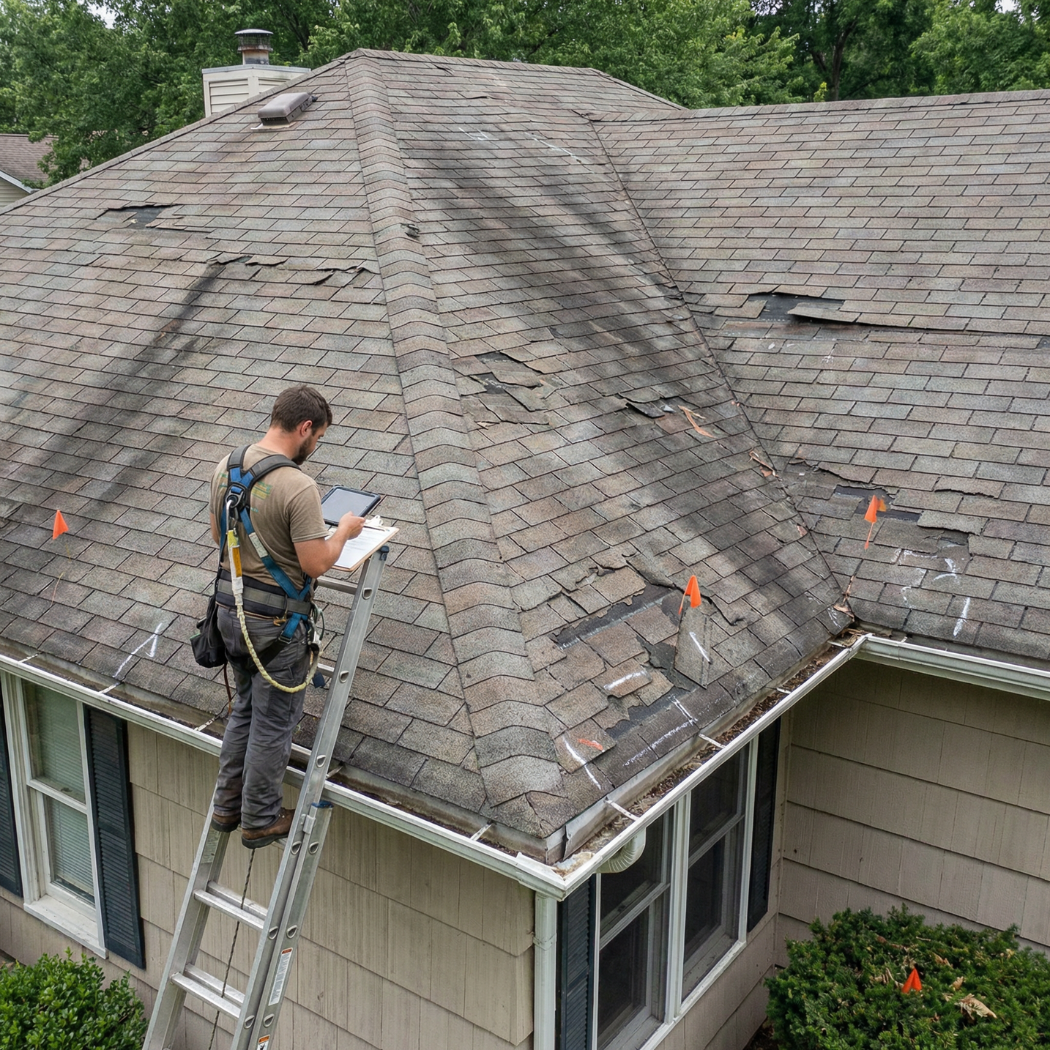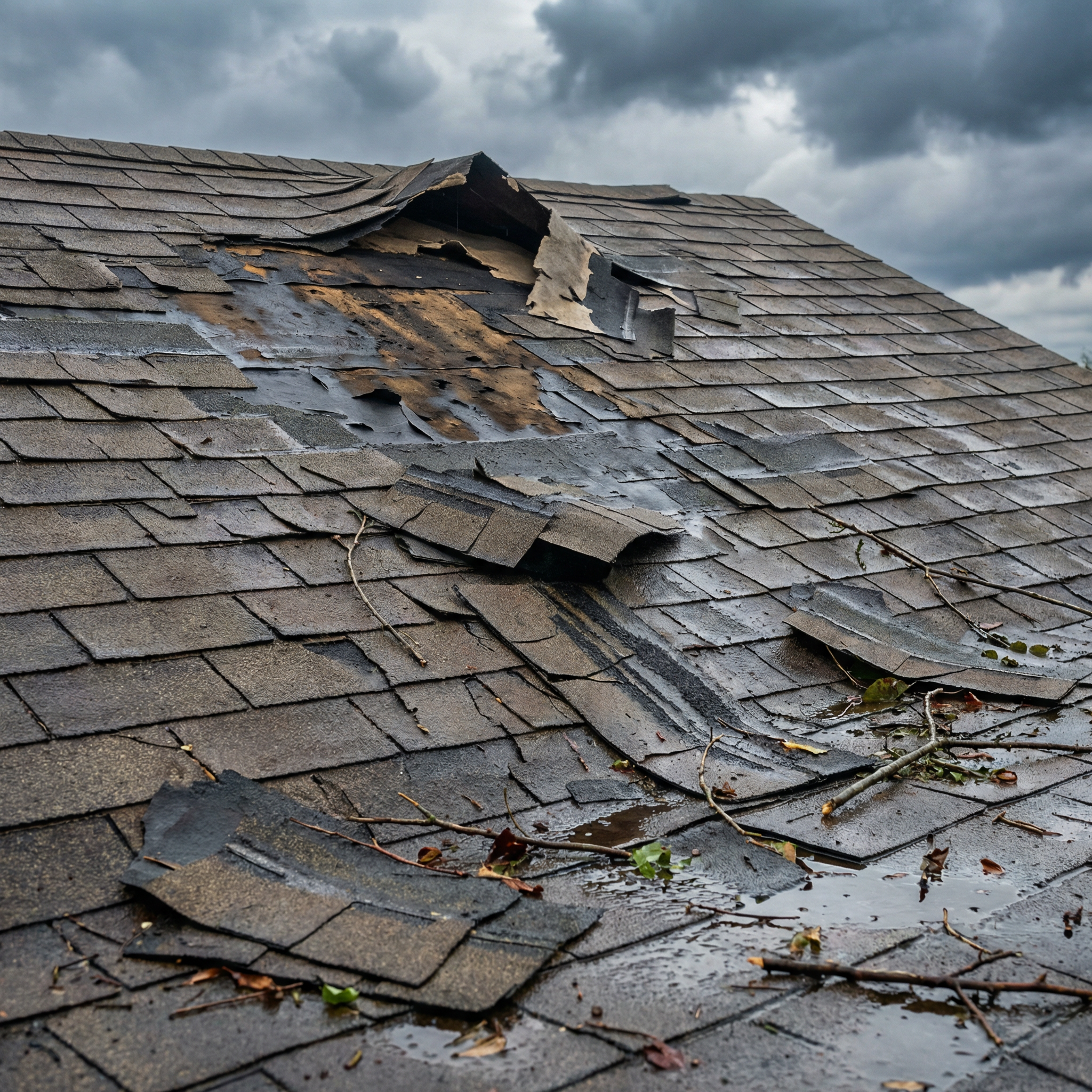

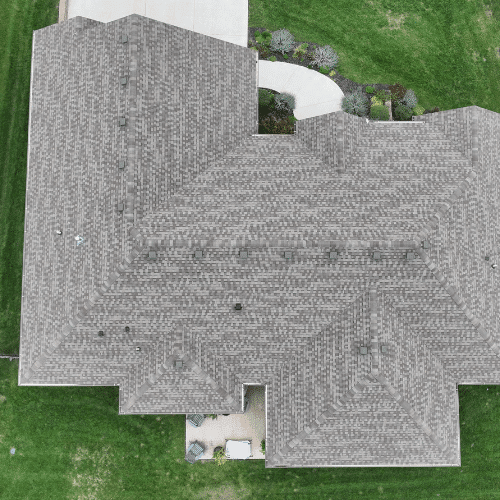
A storm doesn’t have to create an obvious hole to do real damage. Hail, high winds, and flying debris across Southwest Missouri weaken shingles, flashing, and gutters long before water drips inside. This guide covers 10 warning signs visible from the ground, what each one means, and what steps protect your home and your insurance claim.
TLDR: Most serious storm damage is visible from your yard. Shingles in the grass, granules in gutters, dented metal, and bent flashing all demand action. Document everything with photos right after the storm, note the date, and get a professional inspection scheduled fast — insurance claim windows have real deadlines.
You heard the hail hit. Now the storm has passed and you’re in the yard wondering what happened up there. Homeowners in Nixa, Bolivar, and Marshfield face this moment every storm season. Most have no idea what they’re looking for.
The good news: you don’t need to climb anything. According to the National Weather Service on severe thunderstorm damage, storms producing hail one inch or larger or winds over 58 mph cause significant roof damage that isn’t always visible from the street — and both happen regularly across Southwest Missouri. Here’s how to read the signs before they become a much bigger problem.
Signs 1 Through 5: Walk Your Yard First
Walk the full perimeter of your home right after a storm passes. These five signs appear at ground level.
| Sign | What You See | What It Means |
|---|---|---|
| 1. Shingles in the yard | Flat asphalt pieces on the ground | Wind tore them loose; the wood decking below is now exposed to water |
| 2. Dark or bare patches on the roof | Uneven color or bald spots visible from the street | Hail knocked granules off; UV and water protection is gone in those spots |
| 3. Lifted or curling shingles | Corners or edges pointing upward | Wind broke the adhesive seal; the next storm can pull them completely off |
| 4. Ridge cap pieces on the ground | Small folded shingle pieces near your foundation | The peak of your roof took wind damage; a critical waterproofing point is now open |
| 5. Granules in the gutters | Coarse black grit washing out of downspouts | Shingles shed their protective coating; accelerated wear is underway |
Pro tip: Look at your roof from multiple angles, including from across the street. Different lighting reveals bare patches that are invisible head-on.
Pro tip: One shingle on the ground is enough reason to call a professional. A single missing shingle exposes the wood layer below to moisture within hours.
Pro tip: If your neighbor’s roof shows visible damage after a storm, yours likely does too. Hail doesn’t skip houses.
Real example: After a June hailstorm in Marshfield, a family noticed black grit pouring from their downspouts during the next rainfall. They assumed it was dirt. A Roov inspection confirmed major granule loss across the entire back slope — enough to support a full insurance replacement claim.
Signs 6 Through 10: Check the Metals and the Interior
Soft metals like gutters and vent caps show hail impact before shingles do. Flashing is the metal that seals joints where chimneys, skylights, and vents meet your roof. Damage here is serious and often overlooked.
| Sign | What You See | What It Means |
|---|---|---|
| 6. Dented gutters or vent caps | Round dents on aluminum or soft metal | Hail hit hard enough to dent metal; your shingles absorbed similar force |
| 7. Bent or loose flashing | Metal around a chimney or skylight is lifted or pulled away | A water entry point is open; leaks can begin immediately |
| 8. Sagging gutters or loose downspouts | Gutters pulling from the fascia board (the trim behind them) | Water now dumps near your foundation rather than being directed away |
| 9. New water stains inside the home | Yellow or brown ceiling spots or wet attic insulation | Storm damage already let water in; mold can begin within 24 to 48 hours |
| 10. Impact damage on other surfaces | Dented AC unit, cracked window screens, or damaged siding | Debris hit multiple surfaces; your roof likely absorbed the same level of impact |
Pro tip: Walk your attic with a flashlight 24 hours after a storm. Wet spots on wood rafters or stained insulation confirm water entry before it shows up on your ceiling.
Pro tip: Check your outdoor AC unit after every significant storm. Dented aluminum fins are one of the most reliable signs that hail was large enough to bruise shingles.
Pro tip: Soft metals and window screens are like a hail-impact receipt. If they show damage, your adjuster will take your roof claim more seriously.
Real example: A homeowner in Willard noticed dented aluminum soffit (the panel under the roof overhang) after a September windstorm. That one detail triggered a full adjuster inspection and a covered roof replacement.
Real example: In Forsyth, a family spotted a new brown stain on their living room ceiling three weeks after a major storm. Roov found the chimney flashing had cracked from wind pressure. The claim was still within the policy window and was fully approved.
What Happens If You Wait
Storm damage grows fast. A lifted shingle lets water under the underlayment — the protective layer between your shingles and the wood deck. That moisture causes rot, mold, and structural issues over time.
Missouri insurance policies often have strict deadlines for filing storm damage claims. Waiting too long gives your insurer grounds to deny coverage even when the original storm damage was legitimate.
Pro tip: Request your inspection within 30 days of the storm whenever possible. Some policies require notice in as few as 14 days.
Real example: An Ava homeowner delayed calling after a spring hail event. By the time Roov arrived, secondary rot had developed beneath three shingles. The hail damage was covered. The delayed repair cost came out of pocket.
Storm Damage vs. Normal Wear: Key Differences
Knowing the difference helps you have the right conversation with your insurance company.
| Category | Storm Damage | Normal Wear |
|---|---|---|
| Granule loss | Sudden and concentrated following a specific storm date | Gradual, spread evenly across the roof over years |
| Shingle lifting | Multiple shingles on one slope after a wind event | Isolated curling from years of UV and heat exposure |
| Flashing gaps | Bent or torn from wind force or impact | Slow separation from seasonal temperature changes |
| Gutter dents | Visible round craters from hail impact | Sagging from age and debris weight, but no dents |
Pro tip: When you call for an inspection, give the roofer the exact storm date. That date ties your damage to a specific weather event in your insurance documentation.
Pro tip: Search your county’s storm reports on weather.gov after a major event. Documented hail size and wind speed from official sources can support your claim directly.
Real example: A Springfield homeowner noticed granules in her gutters and a slightly darker patch on her back slope after an April storm. She almost skipped calling because the damage looked minor. The inspection found hail bruising across two full slopes and her insurer approved a full replacement.
Your Post-Storm Action Plan
Follow these steps in the right order. Sequence matters for your claim.
- Do a ground-level walkthrough immediately after the storm. Do not get on the roof yourself.
- Photograph everything: yard debris, gutters, metal vents, and any roof surface visible from the ground.
- Write down the storm date, approximate time, and weather conditions.
- Check ceilings and the attic for new stains or wet areas.
- Schedule a free roof inspection before contacting your insurance company.
The GAF storm damage homeowner guide recommends a three-part inspection covering the attic, exterior, and roof surface. A professional catches what a ground-level walkthrough misses every time.
Pro tip: Always call a roofer before calling your insurance company. Your adjuster works for the insurer. A professional inspection documents damage in your favor first.
Pro tip: Take photos within 24 hours of the storm. Time-stamped documentation is your strongest evidence during a claim review.
Pro tip: Keep a folder — physical or digital — with storm dates, photos, and any inspector reports. If your policy renews or your insurer changes, this history protects you.
Frequently Asked Questions
Q: Do I need to get on my roof to check for storm damage? No. Every sign in this guide is visible from the ground. Getting on a wet or damaged roof yourself is genuinely dangerous. A storm damage roof repair professional has the training and safety equipment to assess it properly.
Q: Does homeowner insurance cover hail and wind damage in Missouri? Most standard policies cover sudden storm damage from hail and wind. Coverage depends on your policy terms, the age of your roof, and how quickly you document and file. Getting a professional inspection before you call your insurer puts you in a much stronger position.
Q: How long do I have to file a storm damage claim? Deadlines vary by insurer and policy. Many carriers require notice within 30 to 60 days. Some have shorter windows. Do not assume you have unlimited time. Get an inspection and document the storm date as soon as possible.
Q: What if my roof looks fine from the street? A roof can look completely intact and still have serious hail bruising, lifted shingle tabs, or open flashing gaps. According to professional roof inspection guidelines from the NRCA, most storm damage requires a trained professional to identify. A street-level check is a starting point, not a final answer.
Q: What does a Roov storm inspection cost? Nothing. Roov provides free, no-pressure inspections with a detailed Roof Condition Report. If there is no damage, we will tell you that honestly — no upselling and no pressure.
Q: Can storm damage lead to mold inside my home? Yes. Water entering through open flashing or lifted shingles soaks into wood and insulation fast. Mold can begin growing within 24 to 48 hours in the warm, humid conditions that follow summer storms in Southwest Missouri.
Key Takeaways
- No ladder required. Shingles on the ground, granules in gutters, dented metal, and uneven roof color are all visible from your yard.
- Soft metals confirm hail. Dented gutters or vent caps mean the storm hit hard enough to affect your shingles too.
- Waiting costs money. Delayed repairs can turn a covered claim into an out-of-pocket loss from secondary damage.
- Document right away. Time-stamped photos within 24 hours are your strongest insurance tool.
- Call a roofer before your insurer. A professional inspection works in your favor before the adjuster shows up.
- Free inspections remove the guesswork. There is no cost and no pressure to find out where your roof stands.
Don’t Let the Next Storm Find Old Damage
You now know what to look for and why acting fast matters. The next step is simple: get a professional set of eyes on your roof before conditions get worse or your claim window closes.
Roov has helped hundreds of Southwest Missouri homeowners document storm damage and navigate the roof insurance claim assistance process from inspection through final repair — often for just the cost of their deductible. We inspect, document, and advocate for you from the first call through the last nail.
- Free, no-pressure Roof Condition Report
- In-house insurance claims experts on every job
- GAF Master Elite certified installation
- Local crews serving Nixa, Springfield, Ozark, Bolivar, Branson, Willard, and surrounding communities
Schedule your free storm damage inspection today. Don’t wait for the next storm to make an existing problem worse.
Roov | Roofing with a Purpose | Serving Southwest Missouri