
Spring storms in Southwest Missouri bring hail, high winds, and heavy rain every year. Most homeowners in Nixa, Springfield, and Republic don’t think about their roof until water drips through the ceiling. This guide walks you through seven simple checks you can do right now to avoid costly emergency repairs. By the end, you’ll know exactly what to look for and when to call a pro.
TLDR: Spring storms can wreck a roof that already has hidden damage. Check your shingles, gutters, flashing, attic, trees, and pipe boots before the first storm hits. Most of these checks take minutes from the ground. If anything looks off, a free professional roof inspection catches problems you can’t see and saves you thousands.
Why Spring Storm Prep Matters in Missouri
Southwest Missouri sits in a high-risk zone for severe spring weather. Hail, straight-line winds, and tornadoes roll through from March to June nearly every year. Homeowners in Battlefield and Marshfield know this firsthand.
The problem? Many roofs already have damage from winter ice, freeze-thaw cycles, or last year’s storms. One more hit can turn a small issue into a full leak or even a total loss.
Pro tip: The best time to find roof problems is before a storm, not after. A 30-minute check now can save you $5,000 or more in emergency repairs.
Here’s how spring storm damage compares to other seasons in our area:
| Season | Common Damage | Risk Level | Most Affected Areas |
|---|---|---|---|
| Spring | Hail, wind, heavy rain | High | Shingles, flashing, gutters |
| Summer | UV damage, heat expansion | Medium | Shingles, sealant |
| Fall | Debris, leaf buildup | Low-Medium | Gutters, downspouts |
| Winter | Ice dams, freeze-thaw | High | Flashing, pipe boots, attic |
Spring and winter cause the most damage in Southwest Missouri. That’s why a pre-storm check is so important.
1. Check Your Shingles from the Ground
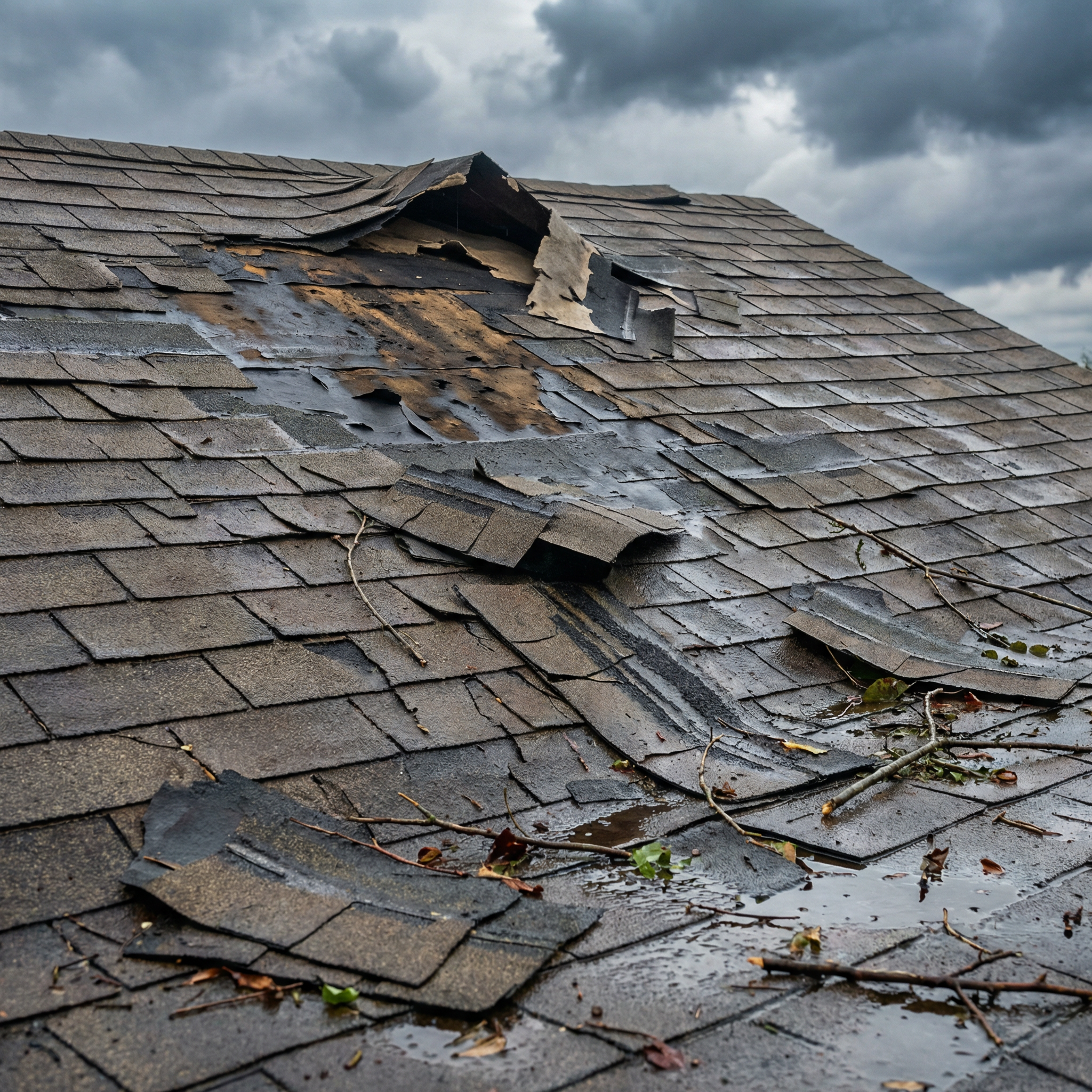
Walk around your home and look up. You’re looking for missing shingles, curling edges, or dark spots where granules have worn off. Binoculars make this easy. You don’t need to climb up there.
Pro tip: If you see bare spots, lifted tabs, or shingles in your yard, your roof may not survive the next big storm without serious damage.
Real example: A family in Republic noticed three missing shingles after a windy February. They called Roov for a free roof inspection and found hail bruising across the entire south-facing slope. Their insurance covered a full replacement.
| Warning Sign | What It Means | Action Needed |
|---|---|---|
| Missing shingles | Wind damage or age | Call for inspection |
| Curling edges | Heat or moisture damage | Monitor or repair |
| Granule loss (dark spots) | Shingle aging fast | Plan for replacement |
| Lifted tabs | Wind vulnerability | Immediate attention |
Pro tip: Take photos during your ground check. These help your roofer and your insurance adjuster later.
2. Clean and Inspect Your Gutters
Clogged gutters force water under your shingles and into your walls. Clean them out and look for shingle granules in the bottom. A lot of granules means your shingles are wearing down fast.
Pro tip: Make sure your downspouts push water at least 3 feet away from your foundation. Extensions are cheap and prevent basement flooding.
Real example: A Bolivar homeowner ignored clogged gutters for two seasons. Water backed up under the drip edge, rotted the fascia board, and caused a $3,200 repair. Cleaning the gutters twice a year would have prevented it all.
3. Inspect Your Flashing and Sealant
Flashing is the thin metal strips around your chimney, vents, and skylights. It seals the gaps where water loves to sneak in. Look for rust, gaps, or pieces pulling away from the surface.
Pro tip: Flashing failures cause about 90% of roof leaks. If yours looks worn, don’t wait for rain to confirm the problem.
Real example: After a hailstorm near Willard, a homeowner noticed water stains on the ceiling near the chimney. Roov found the chimney flashing had separated during the storm. A quick storm damage roof repair fixed it before any interior damage spread.
4. Check Your Attic for Moisture
If you can safely get into your attic, look for water stains on the wood, damp insulation, or daylight coming through the roof boards. These signs mean you already have leaks that will get worse fast.
Pro tip: Bring a flashlight and check around pipe penetrations and along the ridge line. Those are the most common leak spots.
Pro tip: Damp insulation loses its ability to keep your home warm or cool. Catching this early saves you on both repair costs and energy bills.
| Attic Warning Sign | Likely Cause | Urgency |
|---|---|---|
| Water stains on wood | Active or past leak | High |
| Damp insulation | Ongoing moisture | High |
| Daylight through boards | Missing or damaged shingle | Immediate |
| Mold or mildew smell | Persistent moisture | High |
5. Trim Overhanging Tree Branches
Branches that hang over your roof are a major hazard during spring windstorms. They can snap and punch through shingles. Even small branches scrape and wear down your roof surface over time.
Pro tip: Trim anything hanging within 6 feet of your roof. This also reduces leaf buildup in your gutters.
Real example: During a 2024 spring storm in Ozark, a large oak branch fell across a homeowner’s ridge line. It cracked several shingles and damaged the ridge vent. The repair cost $1,800. Trimming that branch beforehand would have cost under $200.
6. Examine Roof Vents and Pipe Boots
The rubber boots around pipe vents crack and dry out over time. Missouri winters are especially hard on them. Cracked boots are one of the top leak sources we see.
Pro tip: Look for cracking, splitting, or gaps around any pipes sticking out of your roof. You can often spot these from the ground with binoculars.
Pro tip: Pipe boots typically last 10-15 years. If your roof is older than that and you’ve never replaced them, they’re probably due.
7. Schedule a Professional Roof Inspection
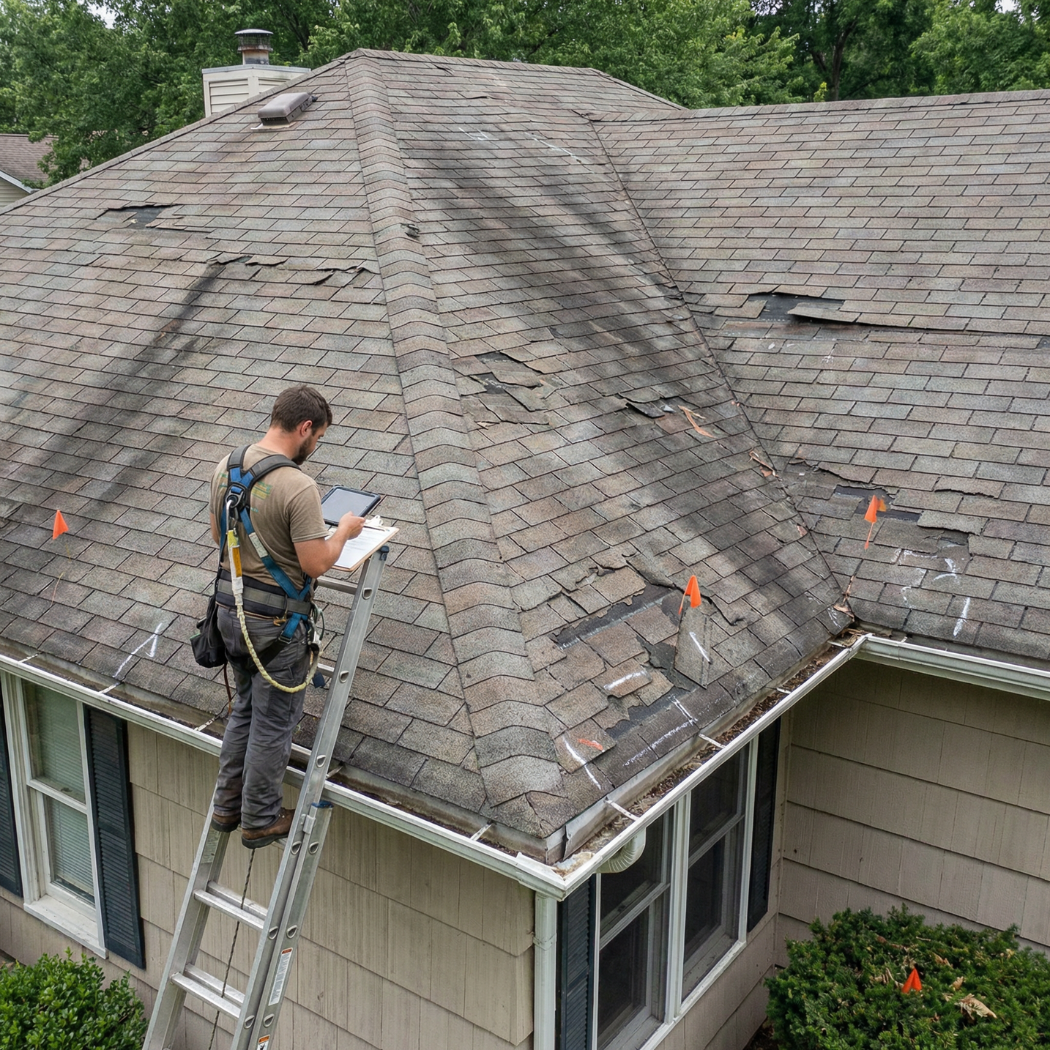
Even if everything looks fine from the ground, hidden damage from past storms could be waiting. A professional inspector catches things you can’t see. That includes bruised shingles from old hail, worn underlayment, and flashing that’s about to fail.
Roov offers free, no-pressure inspections with a detailed Roof Condition Report. You’ll know exactly where your roof stands before storm season starts.
Pro tip: If your roof is over 10 years old, get a professional inspection every spring. It’s free with Roov and could save you thousands.
Real example: A Springfield homeowner thought their roof was fine. Roov’s inspection found hail damage from a storm eight months earlier. They filed an insurance claim and got a full roof replacement covered. If they had waited, the damage would have been classified as “wear and tear” instead of storm damage.
Here’s a quick comparison of what you can check versus what a pro catches:
| Check Type | DIY from Ground | Professional Inspection |
|---|---|---|
| Missing shingles | Yes | Yes |
| Hail bruising | No | Yes |
| Underlayment condition | No | Yes |
| Flashing integrity | Partial | Full |
| Attic ventilation issues | Partial | Full |
| Remaining roof life estimate | No | Yes |
A ground check is great for obvious problems. A professional inspection catches everything else.
When to Repair vs. Replace Your Roof
Not every issue means you need a new roof. Minor repairs like replacing a few shingles or resealing flashing can extend your roof’s life for years. But if you have widespread damage, multiple leaks, or a roof over 20 years old, replacement is usually the smarter choice.
Pro tip: Roov will never sell you a roof replacement if a repair will do the job. That’s our promise.
Frequently Asked Questions
How long does a pre-storm roof check take?
A ground-level check takes about 20-30 minutes. Walk around your home, look at the roof, check gutters, and peek in the attic. A professional inspection from Roov takes about 45 minutes and covers everything you can’t see from the ground.
Does insurance cover spring storm damage?
Most Missouri homeowner policies cover hail and wind damage. The key is documenting the damage quickly. File your claim within the window your policy allows. Roov’s team can meet with your adjuster to make sure nothing gets missed.
How often should I get my roof inspected?
At minimum, once a year. We recommend a check every spring before storm season, especially if your roof is over 10 years old. After any major storm with hail or high winds, schedule an inspection right away.
Can I check my roof myself or do I need a professional?
You can catch many problems from the ground. But hail bruising, underlayment damage, and flashing issues often need trained eyes. A free inspection from Roov gives you the full picture with no obligation.
What’s the biggest mistake homeowners make before storm season?
Waiting. Most homeowners don’t check their roof until they see a leak. By then, the damage is worse and more expensive. A quick check before storm season catches problems early and keeps repair costs low.
Key Takeaways
- Check shingles: Look for missing, curling, or granule-bare shingles from the ground.
- Clean gutters: Remove debris and check for excessive granules. Extend downspouts 3+ feet from the foundation.
- Inspect flashing: Look for rust, gaps, or separation around chimneys, vents, and skylights.
- Check the attic: Water stains, damp insulation, and daylight through boards all signal leaks.
- Trim trees: Cut branches within 6 feet of your roof before spring winds arrive.
- Examine pipe boots: Cracked rubber boots are a top leak source after 10-15 years.
- Get a professional inspection: Free from Roov. Catches hidden hail damage, worn underlayment, and failing flashing.
Ready to Protect Your Home Before Storm Season?
You now know the seven things to check on your roof before spring storms hit Southwest Missouri. The next step is simple: get a professional set of eyes on your roof for the full picture.
Roov has helped hundreds of Southwest Missouri homeowners catch storm damage early and protect their homes. As a GAF Master Elite contractor and 5-star Google rated company, we bring “Roofing with a Purpose” to every inspection.
- Free, no-pressure Roof Condition Reports
- Expert insurance claim assistance
- GAF Master Elite and Owens Corning Preferred quality
- Local crews who live and work in your community
Ready to get started? Contact us today:
Call: [417-370-1259]
Email: [email protected]
Visit: roovmo.com
We serve Nixa, Ozark, Springfield, Branson, and all surrounding communities across 8 counties. Schedule your free pre-storm roof inspection today.
Roov | Roofing with a Purpose | Serving Southwest Missouri