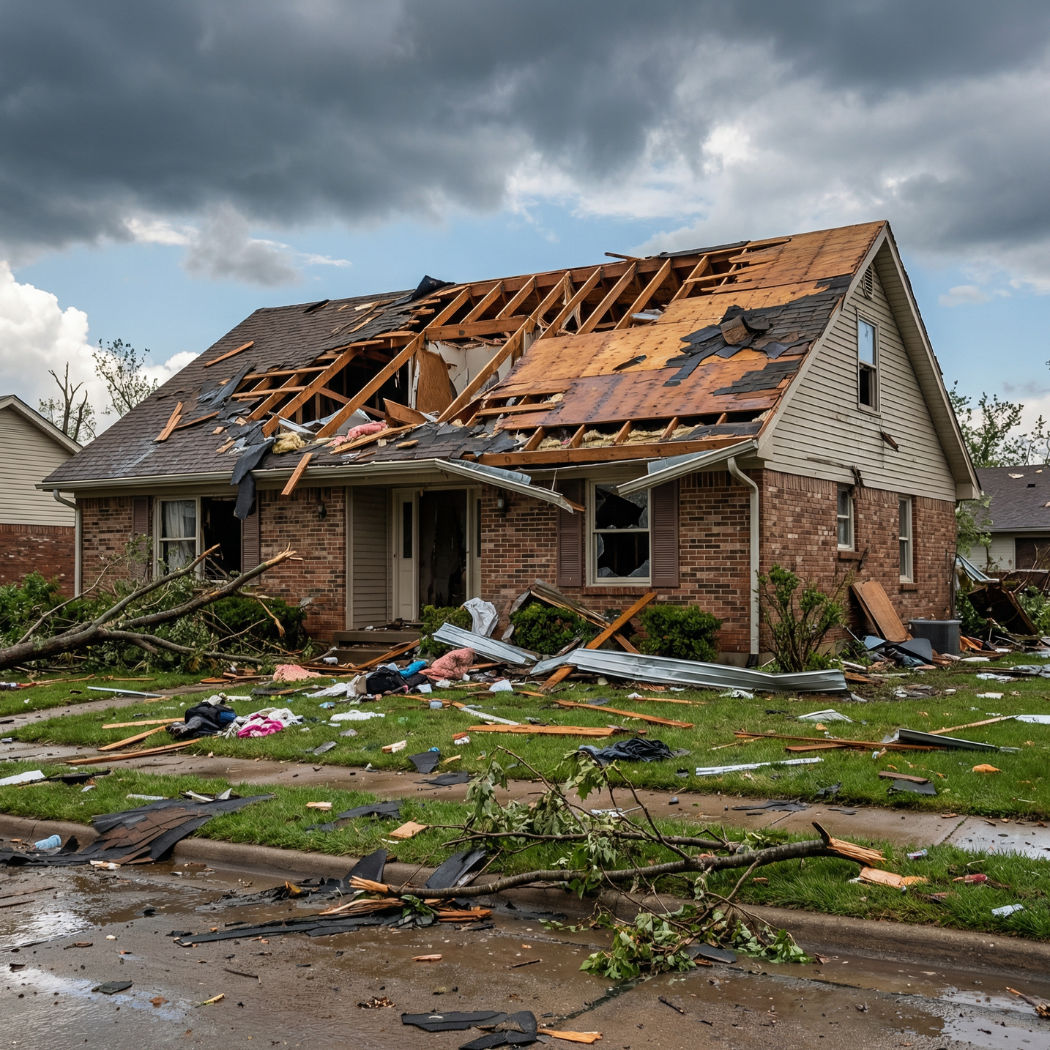

After a storm rolls through Southwest Missouri, most homeowners face the same two questions: how bad is it, and how much is this going to cost? Whether hail just hammered a home in Ozark or straight-line winds tore through Bolivar, the answer you need most is a practical one: repair or replacement?
This guide breaks down exactly how to tell the difference. You will learn what signs point toward a targeted fix, what signs point toward a full tear-off, and how your insurance company looks at each option.
TLDR: Most storm-damaged roofs in Southwest Missouri can be repaired if the damage is limited and the roof is under 15 years old. Once hail bruising spreads across multiple slopes or the decking underneath is soft and wet, replacement becomes the smarter path. Insurance often covers both options, but documented inspection speed matters. Keep reading to understand exactly where your roof falls.
You heard the hail hit. Maybe you spotted shingles on the ground afterward. Or maybe the storm passed quietly and now you are just not sure.
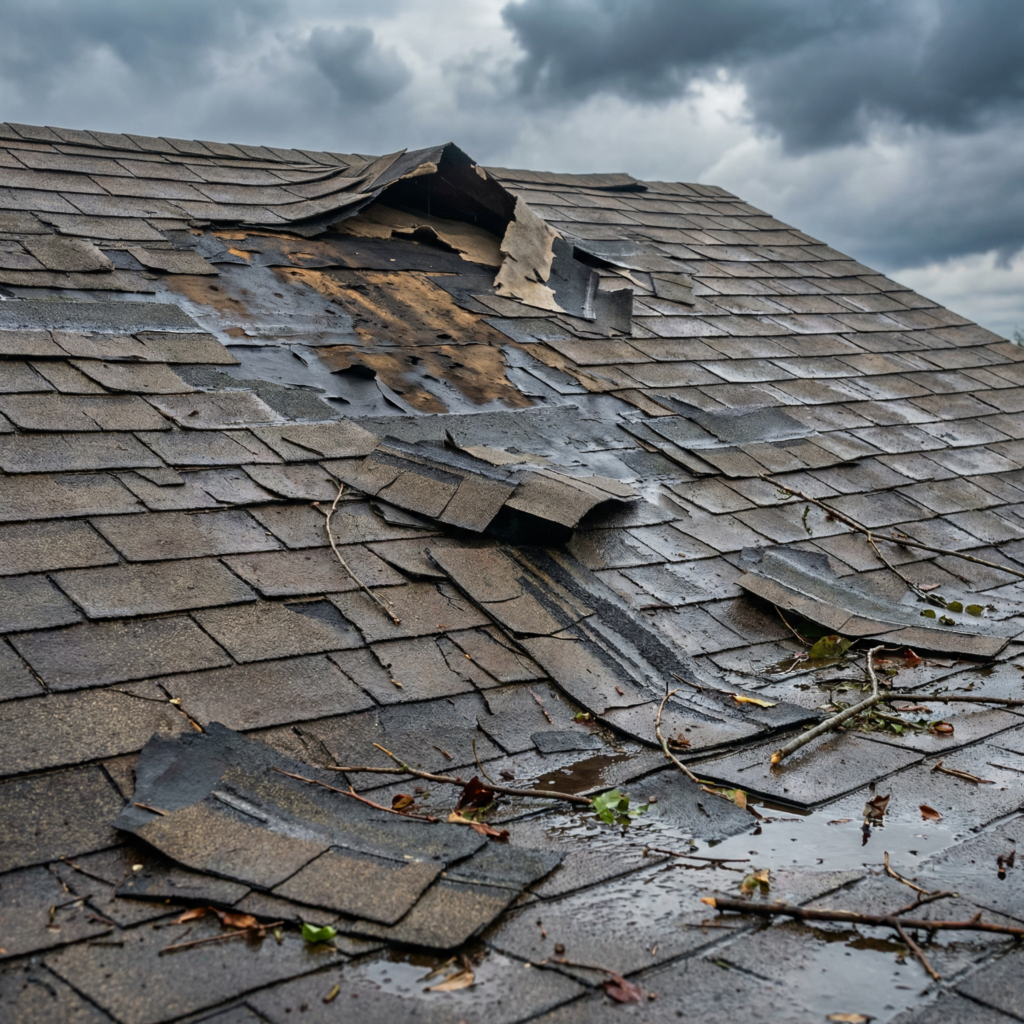
That uncertainty is normal. The tricky part about storm damage is that it hides. Hail bruises asphalt shingles without leaving a hole. Wind can lift and reseat shingles so they look fine from the ground but the adhesive seal underneath is broken. What looks minor today can become an active leak by spring.
The good news: there are clear, measurable signs that separate a repairable roof from one that needs to come off. Understanding them removes the guesswork.
How Storms Actually Damage Your Roof
Southwest Missouri sees hail, high winds, and severe thunderstorms on a consistent basis. Each type of storm hits your roof differently.
Hail knocks the granules off asphalt shingles. Those granules protect the asphalt layer underneath from UV and daily wear. When hail removes them, the shingle ages much faster. Larger stones can crack or split shingles directly.
Wind peels shingles up at the edges and ridge caps, breaks the adhesive seal between shingle layers, and tears flashing away from chimneys and vents. Flashing is the thin metal that seals joints where your roof meets walls, pipes, and penetrations.
Flying debris can punch punctures through shingles and into the wood decking underneath.
The weak spots inspectors check first are ridge caps at the roof peak, flashing around pipe penetrations, the leading edges of each slope, and gutters, which catch the highest volume of granule runoff.
Pro tip: Check your gutters after any storm. A small amount of granules is normal. A thick, sandy buildup that looks like coarse grit is a sign of significant shingle wear and a clear reason to schedule an inspection.
When Roof Repair Is Enough
A targeted storm damage roof repair makes sense when damage is isolated and the rest of your roof is still in solid shape.
| Condition | Repair Likely Makes Sense |
|---|---|
| Roof age | Under 10 to 15 years |
| Damage area | One or two slopes, isolated spots |
| Granule condition | Most granules intact on undamaged areas |
| Decking | Dry and solid under damaged sections |
| Leak history | No prior leaks, no interior water staining |
Real example: A homeowner near Strafford had wind lift a section of ridge cap shingles on the back slope. The rest of the roof was seven years old and in good condition. A repair crew replaced the ridge caps, resealed the lifted field shingles, and re-nailed loose flashing at the chimney. Insurance covered it with no hassle.
Pro tip: Get a written Roof Condition Report from your contractor before filing an insurance claim. It documents exactly what was damaged and gives the adjuster a solid baseline to work from.
Pro tip: Repairs that match your existing shingle style and color are far easier on roofs under 15 years old. Older roofs often have discontinued products, which forces insurance carriers toward full replacement approval.
When You Need a Full Replacement
Some storm damage crosses a threshold where patching simply stops making sense.
| Condition | Replacement Likely Needed |
|---|---|
| Roof age | 20 or more years |
| Damage area | Multiple slopes, widespread granule loss |
| Hail size | 1 inch or larger across a significant portion |
| Decking condition | Soft, wet, or visibly rotted sections |
| Repair history | Multiple patches over several years |
When an adjuster evaluates a hail-damaged roof, they use “test squares,” which are measured sections where they count hail hits per 100 square feet. Most carriers approve replacement when they find a threshold number of hits across multiple slopes. Once a roof reaches 20 years, approval often shifts toward replacement even for moderate damage because matching materials are no longer available.
Real example: A family in Marshfield had a 22-year-old roof struck by hail. The front slope looked fine from the ground. On the roof, Roov’s team found widespread granule loss on two slopes, soft decking sections, and lifted flashing at three penetrations. A patch would have been a short-term fix on a failing system. The adjuster agreed, and the family received full replacement approval for just their deductible.
Pro tip: Never let a contractor assess your roof from the ground alone. A hands-on inspection with photos is the only reliable way to know your actual damage level.
How Insurance Looks at Repair vs. Replacement
Insurance adjusters follow a documented process, and understanding it helps you protect your claim.
Adjusters measure the roof, assess hit counts per test square, check the roof’s age, and match damage against your policy type. Two key policy types affect your payout:
| Policy Type | What It Means for Your Claim |
|---|---|
| ACV (Actual Cash Value) | Pays replacement cost minus depreciation |
| RCV (Replacement Cost Value) | Pays full replacement cost minus your deductible |
The biggest mistakes homeowners make are filing too late, not having a contractor present during the adjuster visit, and accepting an initial low estimate without question.
Roov’s roof insurance claim assistance team can meet your adjuster on-site, walk the roof with them, and ensure every area of damage gets documented. According to GAF’s guidance on navigating roof insurance claims, contractor involvement during the adjuster visit is one of the most effective ways to make sure the full scope of damage is recorded.
Coverage depends on your specific policy. Always review your terms or consult your insurance agent.
Pro tip: Know your policy type before storm season. If you have ACV coverage, depreciation is deducted upfront. RCV pays the full replacement cost after work is complete. The difference on a full replacement can be substantial.
What Roov’s Inspection Process Looks Like
When you call Roov after a storm, here is exactly what happens.
- We schedule a free, no-pressure inspection at a time that works for you.
- Our team gets on the roof and photographs every area of damage with detailed measurements.
- We produce a written Roof Condition Report with our findings and our honest recommendation.
- We give you a straight repair vs. replacement call. If a repair is all you need, that is what we say.
- If a claim makes sense, we support you through the process and can be on-site for your adjuster visit.
No inflated scope. No sales pressure. The NRCA’s roofing industry guidelines reinforce this standard: a credentialed contractor inspection is the most reliable foundation for any roof decision.
What to Do in the First 72 Hours After a Storm
Acting fast protects your home and strengthens your claim.
- Take photos and video of your yard, fallen shingles, and any visible damage from the ground.
- Do not climb on the roof yourself. Wet shingles and unknown structural conditions are dangerous.
- Cover any active interior leaks with plastic sheeting to limit further water damage.
- Do not sign any contracts until you have had an independent inspection completed.
- Call Roov for a free inspection. We prioritize storm response and typically schedule within a few days.
- Notify your insurance company that a storm occurred and that an inspection is in progress.
- File within your policy’s claim window. Most have a deadline, and secondary damage from Missouri weather compounds quickly.
Pro tip: Save all receipts for emergency tarps or interior damage mitigation. These costs are often reimbursable under your homeowners policy.
Repair vs. Replacement at a Glance
| Scenario | Likely Outcome |
|---|---|
| 8-year-old roof, one slope damaged | Repair |
| 12-year-old roof, a few missing shingles | Repair |
| 18-year-old roof, widespread granule loss | Replacement |
| 22-year-old roof, any significant hail event | Replacement |
| Any age, soft or rotted decking found | Replacement |
| Any age, flashing damage only | Repair |
Frequently Asked Questions
Q: How do I know if I have hail damage if nothing looks obviously broken? Hail damage often shows as small circular bare spots where granules are missing, or dents on metal gutters and vent caps. If hail hit your area, a professional inspection is the only reliable way to confirm damage. Roov offers free inspections with no obligation attached.
Q: My roof is 10 years old. Does it still need full replacement after a storm? Not necessarily. A younger roof with isolated damage is a strong repair candidate if the decking is solid and the affected area is contained to one or two sections. Your contractor and the adjuster will assess hit density and overall system condition.
Q: Will my insurance cover this? Most standard Missouri homeowners policies cover sudden storm damage from hail, wind, and falling debris. Coverage depends on your deductible, policy type, and roof age. Coverage terms vary; always review your specific policy or consult your insurance agent before assuming what is covered.
Q: What if the adjuster and Roov’s inspection disagree? This happens. You have the right to request a re-inspection or hire a public adjuster. Roov can provide detailed written documentation to support a supplemental claim when our inspection finds damage the adjuster missed.
Q: How long will a repair last versus a full replacement? A quality repair on a younger roof can add several years of service life if the rest of the system is sound. On an aging or widely damaged roof, repair is usually a short-term fix. GAF’s resource on when to repair vs. replace your roof offers a practical framework based on roof age and damage scope.
Q: Does Roov charge for inspections? No. All inspections are completely free with zero pressure. If a repair is all you need, that is what we will tell you.
Key Takeaways
- Roof age is the first filter. Under 15 years with limited damage usually means repair. Over 20 years with significant storm impact usually means replacement.
- Damage scope is the second filter. Isolated damage on one slope is repairable. Widespread bruising across multiple slopes points toward replacement.
- Decking condition is the deciding factor. Wet or soft wood underneath the shingles means a repair only delays the real fix.
- Documentation protects your claim. Written reports, photos, and contractor presence during the adjuster visit make a measurable difference in outcomes.
- Policy type affects your payout. Know whether you have ACV or RCV coverage before you ever need to file.
- Act in 72 hours. Document fast, inspect fast, and notify your carrier fast. Missouri’s weather creates secondary damage quickly.
- Roov will tell you the truth. If a repair is the right call, that is what you will hear from us.
Schedule Your Free Inspection Today
You now know what to look for and how the process works. The next step is getting a trained set of eyes on your actual roof.
Roov has helped hundreds of homeowners across Southwest Missouri figure out exactly what their storm-damaged roof needs. We never push you toward a replacement when a repair will do. We bring GAF Master Elite expertise and the honesty of “Roofing with a Purpose” to every job.
Here is what a call to Roov gets you:
- A free, no-pressure inspection with a written Roof Condition Report
- Straight repair vs. replacement guidance backed by photos and measurements
- Expert support navigating your insurance claim from start to finish
- Top-tier materials from GAF, CertainTeed, and Owens Corning
- Local crews who respect your home and your time
Call: 417-370-1259
We serve Nixa, Ozark, Springfield, Branson, Bolivar, Marshfield, Lebanon, Strafford, and all of Southwest Missouri. Schedule your free inspection today and take the guesswork out of storm damage.
Roov | Roofing with a Purpose | Serving Southwest Missouri