
Someone just knocked on your door the day after a storm. They are wearing a polo with a roofing logo you have never seen before. They say they noticed damage on your roof while driving by and are offering a free inspection. This guide explains what a legitimate roof inspection actually looks like, what red flags separate honest contractors from storm chasers, and exactly what Roov checks on every free inspection we do in Southwest Missouri.
TLDR: A real professional roof inspection takes 45 to 90 minutes, covers every slope, the attic, all flashing points, gutters, and ends with a detailed written report. If someone spends 10 minutes on your roof and comes down with a big estimate and no paperwork, that is a sales trap, not an inspection. Keep reading to understand exactly what you should expect and how to tell the difference.
Free roof inspections are not all the same. Some are honest, thorough evaluations from certified local contractors who genuinely want to help you protect your home. Others are high-pressure sales tactics from out-of-town crews who want to lock you into a contract before you have had time to think.
The difference matters more than most homeowners realize. It can mean the difference between an accurate repair and a botched job from a company that disappears once the insurance check clears.
Here is a complete breakdown of what a real inspection covers, what red flags to watch for, and how to protect yourself.
What a Legitimate Roof Inspection Actually Covers
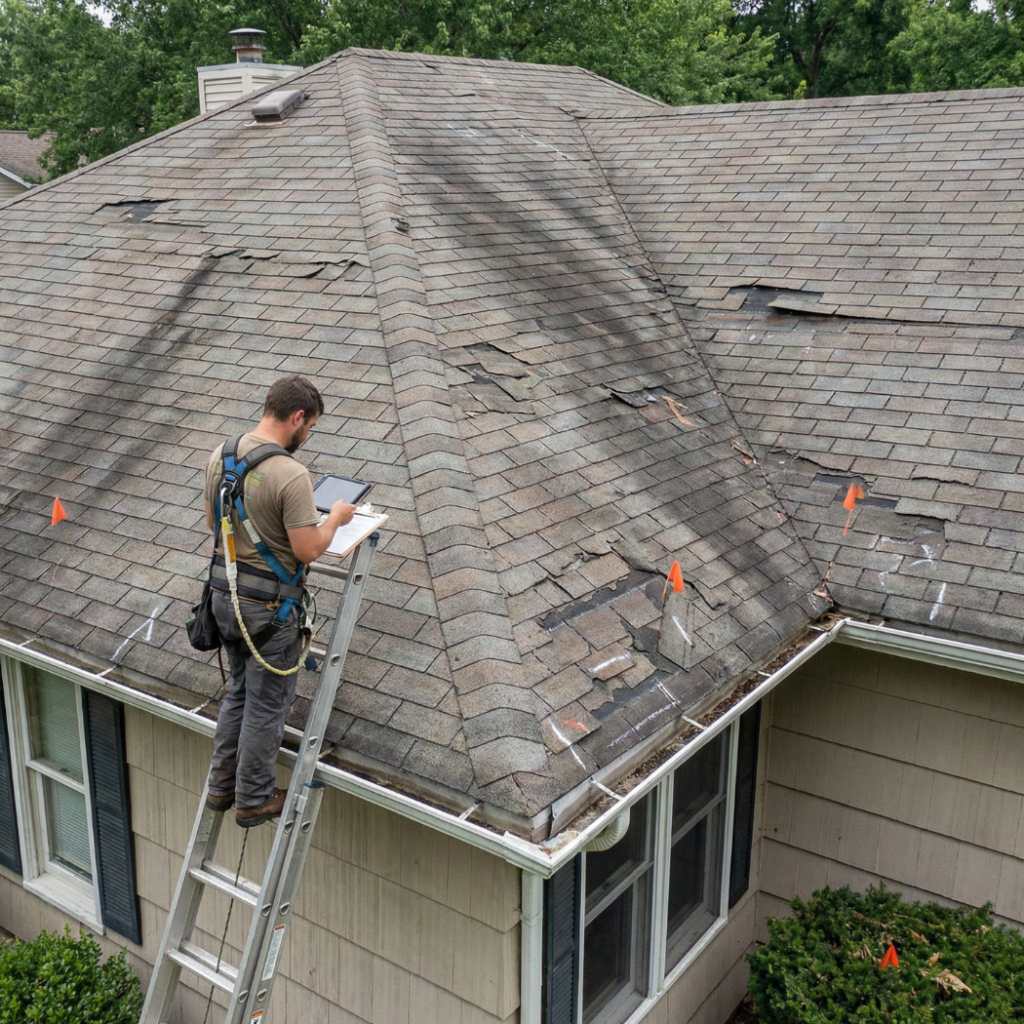
A professional roof inspection is not a quick peek from a ladder. It is a systematic, section-by-section evaluation of your entire roofing system. GAF’s guide on how to conduct a roof inspection from the ground recommends biannual inspections and specifically notes that a full assessment includes the attic, gutters, fascia, soffits, and the full exterior surface. A hands-on professional goes further than any ground-level check.
Here is what a qualified inspector examines.
Exterior roof surface. Every slope is checked for missing, cracked, curled, or hail-bruised shingles. The inspector looks for granule loss, exposed nail heads, and aging patterns across the full shingle field.
Ridge caps and hip shingles. These run along the peaks and edges and absorb the hardest wind impacts. The inspector checks for lifting, cracking, or missing pieces in these high-exposure zones.
Flashing. All metal flashing around chimneys, skylights, pipe penetrations, walls, and valleys is inspected for bending, gaps, rust, or separation. Flashing failures are one of the leading causes of residential roof leaks, and they are one of the most commonly missed items on a rushed inspection.
Pipe boots and vent caps. The rubber seals around plumbing pipes crack over time from UV exposure and temperature cycling. Vent caps can dent or blow off entirely in high winds. Both are common water entry points that require close physical inspection.
Gutters and downspouts. The inspector checks for hail dents, clogs, granule buildup from shingle wear, and proper drainage slope away from the foundation.
Attic. This is the step most storm chasers skip entirely. A thorough inspection includes the attic because that is where early water damage actually shows up first. The inspector looks for moisture on the wood decking, wet or compressed insulation, daylight showing through the roof deck, mold, and ventilation problems that contribute to premature shingle aging.
Documentation. Everything gets photographed and recorded. A real inspection produces a detailed written Roof Condition Report with photos, measurements, and specific findings by section. If a contractor cannot hand you a written report, that is not an inspection. It is a sales call.
A quality inspection takes 45 to 90 minutes depending on roof size and complexity. Anything significantly shorter than that should raise a question.
| Inspection Area | What a Qualified Inspector Checks |
|---|---|
| Shingle field | Bruising, granule loss, cracking, lifting, age patterns |
| Ridge and hips | Lifting, cracking, wind damage at peaks |
| Flashing | Gaps, rust, separation at chimneys, vents, and walls |
| Pipe boots and vents | Cracked seals, dents, missing caps |
| Gutters | Hail dents, granule buildup, clog points, drainage |
| Attic | Moisture, daylight gaps, mold, insulation condition, ventilation |
| Documentation | Written report with photos for every finding |
What Roov’s Free Inspection Includes
Roov’s free professional roof inspection follows the complete checklist above for every homeowner in Southwest Missouri. A certified inspector examines every part of your roof, including the attic, and photographs every section. At the end, we give you a written Roof Condition Report showing exactly what we found, section by section, with photos tied to specific areas of concern.
If your roof is in good shape, that is exactly what we tell you. If it needs a minor repair, we explain what, where, and why. If it needs a full replacement, we walk you through your options and help with the insurance process if that is the right path.
We do not pressure you to sign anything on the spot. We do not inflate damage findings to justify a sale. We are GAF Master Elite certified, CertainTeed Shingle Master certified, Owens Corning Preferred, and Google Guaranteed. We have a physical office in Nixa and we will be here long after storm season is over.
Pro tip: When you call to schedule an inspection, mention any interior symptoms you have noticed, such as ceiling stains, attic moisture, or musty smells. Sharing that context helps our inspector prioritize the right areas and connect interior signs to their likely exterior source.
Pro tip: You do not need active damage to benefit from an inspection. Roov’s Roof Condition Report gives you a documented baseline that strengthens any future insurance claim and helps you plan for maintenance before small issues become big ones.
Red Flags That a Free Inspection Is a Sales Trap
Not every offer of a free inspection is honest. These are the warning signs that indicate a high-pressure sales operation rather than a legitimate evaluation.
| Red Flag | What It Signals |
|---|---|
| Showed up uninvited, day after a storm | Storm chaser actively targeting post-storm traffic |
| Out-of-state plates, no local office | Will be gone before problems from their work show up |
| Pressure to sign before reviewing the report | Contract-first model; inspection is just the opener |
| Finds damage on every single roof | Predetermined outcome, not an honest evaluation |
| Offers to waive your deductible | Insurance fraud under Missouri law |
| Spends less than 15 minutes on roof | Not a real inspection; cannot assess full system in that time |
| Refuses to give written report without a signature | Report is a sales tool, not documentation |
The deductible waiver offer is worth pausing on specifically. In Missouri, a contractor who covers or waives your insurance deductible is committing insurance fraud. It exposes you to legal liability alongside the contractor. The offer feels like a deal. It is not.
Real example: A homeowner in Highlandville had an out-of-town crew knock on their door two days after a hail storm. The crew spent about 12 minutes on the roof and came down with a verbal estimate for a full replacement. When asked for a written report before signing, they said the paperwork would come with the contract. The homeowner called Roov instead. Roov’s inspection found moderate hail damage on two slopes, well short of full replacement territory. The insurance claim was filed for a targeted repair and approved.
Pro tip: Before any contractor gets on your roof, ask two questions: “Can I have a written inspection report before signing anything?” and “Do you have a local physical office address?” An honest contractor answers both without hesitation.
Storm Chasers vs. Local Certified Roofers
After every significant storm in Southwest Missouri, out-of-town roofing crews move in quickly. They set up temporary operations, knock on hundreds of doors, and push for fast signatures. Once the insurance money clears, they do the work and leave. When problems emerge months later, the company is unreachable.
The Missouri Attorney General has issued official consumer warnings about storm contractor fraud after severe weather events, specifically calling out deductible waiver fraud, unlicensed work, and contractors who demand large upfront payments. Their consumer hotline is 800-392-8222.
GAF Master Elite certification means something concrete in this context. Less than 2% of all roofing contractors in North America qualify. The program vets contractors annually for proper insurance, current licensing, documented reputation, and demonstrated workmanship standards. It is one of the most reliable signals that a contractor can be held accountable.
| Storm Chaser Traits | Local Certified Contractor Traits |
|---|---|
| Unsolicited door knock after storms | You initiated contact |
| Out-of-state plates, no local office | Physical local presence, verifiable address |
| Pressure to sign immediately | Written report before any contract discussion |
| Deductible waiver offer | Legal, transparent deductible discussion |
| No verifiable local references | Years of local Google reviews |
| Leaves after job; no warranty follow-through | Local accountability, manufacturer warranties backed |
| Cannot show valid Missouri contractor license | Licensed, insured, certified credentials on request |
Roov is based in Nixa and serves all of Southwest Missouri. We were here before this storm, and we will be here when the next one comes.
Pro tip: Verify any contractor’s Missouri contractor license before signing. The Missouri Secretary of State business registry confirms whether a company is properly registered to operate in the state. A company that hesitates when you ask for their license number is telling you something important.
Pro tip: Check Google reviews that are more than six months old. Storm chasers accumulate recent reviews in a target market, then move on. A contractor with consistent reviews across multiple years has a real, sustained local reputation.
When Should You Get a Roof Inspection?
You do not need a storm to justify scheduling an inspection. These are the key triggers.
| Trigger | Reason |
|---|---|
| Storm with 1-inch+ hail or 58+ mph winds | High probability of hidden damage worth documenting |
| Spring and fall, as preventive maintenance | Catches small issues before they become expensive |
| Before buying or selling a home | Protects transaction and surfaces deferred maintenance |
| Roof age 15 years or older | Shingles near end of designed service life |
| Interior signs: stains, mold, attic moisture | Active water intrusion already in progress |
GAF’s homeowner guide on identifying roof damage covers the “IOU method,” which stands for Inside, Outside, and Up close. The inside check (attic moisture and ceiling stains), the outside check (gutters, fascia, ground-level visual), and the up-close professional evaluation together give a complete picture of your roof’s condition. The inside check is often the first place water damage shows up, which is why Roov always includes the attic in every inspection.
Real example: A couple in Kimberling City scheduled Roov for a pre-sale inspection before listing their home. The inspection found a slow leak at a valley flashing joint that had not yet produced visible interior stains. Catching it before the sale avoided a potential renegotiation and gave them time to address it properly.
Pro tip: A spring inspection after Missouri’s ice and freeze-thaw season catches any damage from winter. A fall inspection before storm season helps you go into spring with a documented clean bill of health or a repair plan in place.
How to Prepare for Your Inspection
Preparing for an inspection takes less than 10 minutes and makes the process more efficient.
Clear access around the perimeter of your home if possible. Move vehicles, outdoor furniture, or anything that blocks ground-level access around the foundation. Make your attic accessible before the inspector arrives if it requires moving storage. Have your insurance declarations page nearby if you have it. This is not required, but knowing your coverage type and deductible helps Roov give you a more complete picture of your options if damage is found. Write down anything you have noticed, such as a ceiling spot after heavy rain, a shingle in the yard, or a musty smell in an upstairs room. These observations give the inspector a starting point.
Pro tip: If you have a history of prior repairs on specific areas of the roof, mention them at the start of the inspection. Prior repair locations are higher-probability spots for recurring issues, and flagging them helps the inspector prioritize.
Frequently Asked Questions
Q: How long does a professional roof inspection take? A thorough inspection on a standard single-family home takes 45 to 90 minutes. Larger or more complex roofs take longer. If an inspector is done in under 20 minutes, the attic was not checked and significant areas were likely skipped.
Q: What does Roov’s inspection cost? Nothing. Roov’s inspections are completely free with zero obligation. If the inspection finds no issues, you receive a written Roof Condition Report confirming that. If issues are found, you receive the same report with documented findings and a clear explanation of your options.
Q: Do I need to be home during the inspection? Yes. Being present allows you to walk through the findings with the inspector directly, ask questions in real time, and receive your Roof Condition Report with a full explanation of what was found and what it means.
Q: What happens if Roov finds storm damage? We explain exactly what was found, what it means for your roof’s performance, and whether filing an insurance claim makes sense for your situation. If you decide to file, we can support the claims process and meet your adjuster on the roof.
Q: Can I use any licensed contractor for an insurance claim, or does my insurer choose? You have the right to choose your own licensed contractor in Missouri. Your insurance company may suggest names, but they cannot require you to use a specific contractor. Choosing a locally certified, credentialed contractor protects the quality of the work and the warranty behind it.
Q: Will a roof inspection void my manufacturer’s warranty? No. A professional inspection by a certified contractor does not void a manufacturer warranty. In fact, most manufacturer warranties require documented maintenance and inspections to remain valid. Roov is certified by GAF, CertainTeed, and Owens Corning, which means our inspections and work meet the standards these manufacturers require.
Q: How often should I have my roof professionally inspected? Twice per year is the standard recommendation from GAF and most roofing industry authorities. Spring and fall inspections catch seasonal damage and set you up heading into the year’s most active weather periods. After any significant storm event, an additional inspection is warranted regardless of where you are in the calendar.
Q: What certifications should I look for in a roofing contractor? GAF Master Elite is the most rigorous independent certification, qualifying less than 2% of contractors nationally. CertainTeed ShingleMaster and Owens Corning Preferred Contractor are also meaningful manufacturer credentials. Google Guaranteed adds a layer of background verification and insurance protection. Roov holds all four.
Key Takeaways
- A real inspection takes 45 to 90 minutes. Anything significantly shorter skipped important areas, most likely the attic and close flashing inspection.
- Written documentation is non-negotiable. If a contractor will not give you a Roof Condition Report with photos before you sign anything, that is a red flag, not a service.
- Deductible waivers are fraud. Any contractor who offers to cover your deductible in Missouri is exposing you to legal liability. Walk away.
- Local certification matters. GAF Master Elite, CertainTeed ShingleMaster, and Google Guaranteed are independently verified credentials that hold contractors accountable.
- Inspections are not just for storm response. Twice-yearly preventive inspections and pre-sale inspections are both standard, practical uses for a professional evaluation.
- Storm chasers follow a predictable pattern. Unsolicited visits, out-of-state trucks, pressure to sign fast, and a willingness to waive your deductible are the signature moves. Recognize them and call a local contractor instead.
- Roov’s inspection is free and honest. If nothing is wrong, we tell you. If something needs attention, we explain exactly what and why with photos to back it up.
Schedule Your Free Inspection with Roov
The best time to know the true condition of your roof is before a problem forces your hand.
Roov provides free, no-pressure roof inspections for homeowners across Southwest Missouri. You get a certified inspector on your roof, a full attic check, and a detailed written Roof Condition Report with photos. No sales pressure. No contract required. Just an accurate, documented picture of your roof’s condition.
Serving Reeds Spring, Highlandville, Kimberling City, Nixa, and all of Southwest Missouri.
Call: 417-370-1259 Email: [email protected] Visit: roovmo.com
Roov | Roofing with a Purpose | Serving Southwest Missouri