
Your roof does more than keep rain out. On a hot Missouri summer afternoon, a standard dark roof can hit 150 degrees or higher. That heat pushes into your attic, radiates into your living space, and forces your AC to run overtime. The result? Higher energy bills every single month from May through September. But there is a better option. Energy-efficient roofing, often called “cool roofing,” reflects more sunlight and absorbs less heat. It keeps your home cooler without changing how your roof looks. This guide breaks down what cool roofs are, how they work, what they cost, and which options make sense for Southwest Missouri homes.
TLDR: Cool roofs reflect sunlight instead of absorbing it, keeping roof surfaces up to 50 degrees cooler than standard dark shingles. Missouri homeowners can save $38 to $76 per year on cooling costs, and reflective shingles look identical to standard options. The best part? When you replace your roof, upgrading to reflective shingles adds little to no extra cost. Read on for the full material comparison and savings breakdown.
You just opened your July electric bill. Again, it is higher than you expected. You have already adjusted the thermostat, closed the blinds, and changed your air filter. But the number keeps climbing.
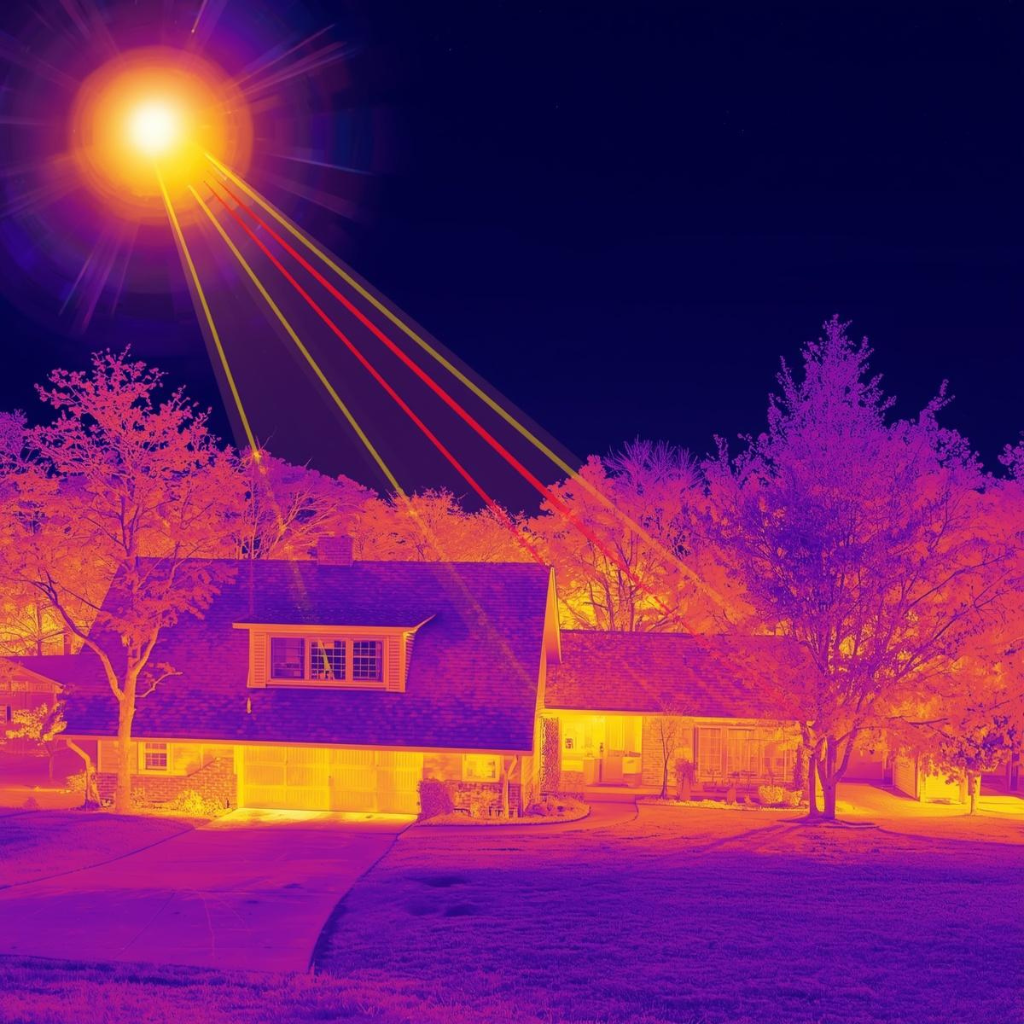
Here is something most homeowners do not realize: your roof plays a direct role in how hard your AC works. A dark roof absorbs heat like a black car sitting in a parking lot. That heat transfers through the decking and into your attic. From there, it radiates into your living space. Your AC has to fight that heat all day long.
In Marshfield, Bolivar, and across Southwest Missouri, summer temperatures regularly push past 95 degrees. Combined with our humidity, that means your roof surface can easily reach 150 to 170 degrees on a standard afternoon. Energy-efficient roofing is designed to change that equation.
What Is a Cool Roof and How Does It Work?
Think of wearing a white shirt versus a black shirt on a sunny day. The white shirt reflects sunlight and keeps you cooler. A cool roof works the same way.
Cool roofs use two measurable properties to reduce heat:
Solar Reflectance measures how much sunlight bounces off your roof. A standard dark shingle reflects only 5 to 15 percent of sunlight. A reflective shingle reflects 20 to 30 percent. A white metal roof can reflect up to 70 percent.
Thermal Emittance measures how quickly your roof releases any heat it does absorb. Higher emittance means heat leaves faster instead of soaking into your attic.
These two numbers combine into a single score called the Solar Reflectance Index (SRI). The scale runs from 0 to 100. Standard black roofing scores near 0. White roofing scores near 100. The higher the SRI, the cooler your roof stays under the sun.
Pro tip: You do not need a white roof to get cool roof benefits. Manufacturers like GAF now make reflective shingle options in dark colors, including Charcoal, that still meet cool roof standards. The secret is specially engineered granules that reflect invisible infrared radiation. Ask Roov about what reflective products are available for your specific project.
How Hot Does Your Roof Actually Get?
The temperature difference between a standard roof and a cool roof is dramatic. Here is what the numbers look like on a typical Missouri summer afternoon.
| Roof Type | Surface Temperature | Solar Reflectance |
|---|---|---|
| Standard dark asphalt shingles | Up to 170 to 190 degrees | 5 to 15% |
| Standard light gray shingles | 130 to 150 degrees | 20 to 30% |
| Cool-pigment reflective shingles | Significantly lower | 20 to 30% |
| Light-colored metal roof | Much cooler | Up to 70% |
Under the same conditions, a reflective roof can stay more than 50 degrees cooler than a conventional dark roof. Oak Ridge National Laboratory found that cool roof systems can reduce attic temperatures by more than 20 degrees compared to standard roofs.
Real example: A family in Aurora replaced their 18-year-old dark gray shingles with GAF Timberline reflective shingles during a storm damage claim. Same Charcoal color. Their attic temperature dropped noticeably that first summer, and their August electric bill came in $28 lower than the previous year.
Pro tip: If your attic feels like an oven in summer, your roof is transferring too much heat. A cool roof addresses the source of the problem rather than just treating the symptom with more AC.
Pro tip: Attic temperatures above 130 degrees do not just raise your energy bills. They also accelerate shingle aging, dry out roof components, and shorten your roof’s overall lifespan.
How Much Can a Cool Roof Save on Energy Bills in Missouri?
Let’s talk real dollars. Missouri homeowners spend hundreds of dollars each summer on cooling costs, and with electricity rates rising over 34 percent since 2020, that number keeps climbing. Cool roofs reduce peak cooling demand by 11 to 27 percent in residential buildings.
Here is how those savings break down for a typical Southwest Missouri home.
| Savings Metric | Estimated Range |
|---|---|
| Annual cooling cost reduction | 10 to 20% |
| Dollar savings per year | $38 to $76 |
| 20-year lifetime savings (reflective shingles) | $700 to $2,100 |
| Peak AC demand reduction | 11 to 27% |
The U.S. Department of Energy estimates that cool roofs can reduce annual AC energy use by up to 15 percent for a single-story building.
Real example: A homeowner in Bolivar with a 2,100-square-foot ranch-style home upgraded to reflective shingles during a full roof replacement. Their summer electric bills dropped an average of $18 per month. Over the expected 25-year shingle lifespan, that adds up to over $1,300 in cooling savings alone.
Pro tip: The biggest savings come during the hottest months. June through August is when your AC works hardest and when reflective roofing makes the most noticeable difference on your bill.
Pro tip: If you are already replacing your roof through an insurance claim, the cost difference between standard and reflective shingles is often minimal. The labor cost is identical. Ask your contractor about the upgrade before materials are ordered.
Does a Cool Roof Hurt You in Winter?
This is the most common concern. If a roof reflects heat in summer, does it make your home colder in winter?
The short answer: no. The winter heating penalty is minimal, and multiple authoritative sources confirm this.
Here is why. In winter, the sun sits at a lower angle. Days are shorter. The sky is often cloudy. Most heating happens during early morning and evening hours when solar intensity is already low. On top of that, Missouri roofs are frequently covered in snow during peak heating season, and snow itself is highly reflective. Any roof covered in snow is already acting like a cool roof.
The U.S. Environmental Protection Agency, Oak Ridge National Laboratory, and the Department of Energy have all studied this. Their conclusion: summer cooling savings easily outweigh any marginal winter heating increase. GAF’s own modeling confirms net cost savings from cool roofs across all U.S. climate zones, even after accounting for aged reflectivity values.
Pro tip: If someone tells you a cool roof will raise your winter heating bill significantly, ask them for the data. The research consistently shows the opposite. Missouri summers are long and hot. The math works in your favor.
Your Cool Roofing Options for Southwest Missouri Homes
Not all cool roofing materials are the same. Here is a comparison of what is available for residential homes and how each option performs.
| Material | Solar Reflectance | SRI Range | Best For |
|---|---|---|---|
| Standard dark asphalt shingles | 5 to 15% | 15 to 25 | Lowest cost, lowest performance |
| Cool-pigment reflective shingles | 20 to 30% | 25 to 35 | Best upgrade for standard replacements |
| Light-colored metal roofing | Up to 70% | 60 to 75 | Maximum residential performance |
| Cool roof coatings (retrofit) | 60 to 90% | Varies | Budget-friendly for existing roofs |
Reflective Asphalt Shingles
This is the most practical option for most Missouri homeowners. These shingles use specially engineered granules that reflect infrared radiation instead of absorbing it. They look identical to standard shingles. GAF makes reflective shingle options including the Timberline HDZ Reflector Series, which features enhanced EcoDark granule technology that delivers rich dark colors while meeting cool roof standards. Ask Roov about what is available for your specific project.
Pro tip: When comparing quotes for a roof replacement, ask specifically about reflective shingle options. The material cost difference is often negligible, and the labor cost is exactly the same.
Metal Roofing
Metal roofs are among the most energy-efficient residential options available. A light-colored or Galvalume metal roof can reflect up to 70 percent of sunlight. Metal also cools down quickly after sunset, reducing nighttime heat transfer into your home. Lifespan runs 40 to 70 years.
Real example: A homeowner in Willard installed a standing seam metal roof after a severe hailstorm. They chose a light stone color specifically for energy efficiency. Their summer cooling costs dropped by about 22 percent compared to the dark asphalt roof they replaced.
Pro tip: Metal roofing costs more upfront than asphalt, but the combination of longer lifespan, energy savings, and potential insurance discounts often makes it the better long-term investment.
Cool Roof Coatings
For existing roofs that still have useful life remaining, reflective coatings offer a retrofit option. These liquid-applied membranes create a UV-resistant reflective layer on your current roof. Cost runs $1 to $4 per square foot installed. Coatings work best on flat or low-slope roofs and metal surfaces.
Pro tip: Coatings are not a substitute for a roof that needs replacement. If your shingles are already failing, a coating will not fix structural problems. Get a professional roof inspection first to know where you stand.
Cool Roofs Last Longer Too
A benefit many homeowners overlook: cool roofs extend roof lifespan. Excessive heat is one of the biggest factors that degrades roofing materials. High temperatures cause repeated expansion and contraction throughout each day. That cycle cracks shingles and breaks down adhesive seals over time.
By keeping surface temperatures lower, a cool roof experiences less thermal stress. That means less daily expansion and contraction. Less cracking. Less granule loss. A well-maintained cool roof coating retains about 85 percent of its original reflectivity even after years of exposure.
| Factor | Standard Roof | Cool Roof |
|---|---|---|
| Daily thermal cycling | Severe (hot days) | Reduced |
| Shingle cracking risk | Higher | Lower |
| Granule loss rate | Faster | Slower |
| Expected lifespan impact | Shortened by heat | Extended by lower temps |
Pro tip: Think of a cool roof as two investments in one. You get immediate energy savings, and you get a roof that holds up better over its full lifespan. Both benefits add up.
What Southwest Missouri Homeowners Should Know
Missouri sits in ASHRAE Climate Zone 4A, which is classified as Mixed-Humid. That means hot, humid summers and cold winters. This combination is especially hard on roofs. Our intense summer sun and high humidity push dark roof temperatures to extremes that accelerate wear.
In Seymour, Lebanon, and the surrounding areas, attic spaces without proper ventilation or cool roofing can reach 150 degrees in midsummer. That heat radiates directly into living spaces and forces air conditioning systems to work far beyond their designed capacity.
Here is the good news: Missouri currently has no SRI mandate for residential roofing. That means choosing a higher-SRI material is entirely voluntary. But the savings are real and measurable.
Real example: A couple in Marshfield was planning a retail roof replacement for their 1990s-era home. Their Roov project manager walked them through the reflective shingle option during the material selection meeting. Same color palette. Same warranty coverage. Minimal price difference. They chose the reflective option and noticed a cooler upstairs the very first summer.
Pro tip: When Roov replaces your roof, we walk you through every material option available. If reflective shingles make sense for your home, we will explain exactly why and let you decide. No pressure. No upsell. Just information.
Pro tip: If you are filing an insurance claim for storm damage, your replacement materials are typically covered at current market pricing. That often means reflective shingles are available at no additional out-of-pocket cost beyond your deductible.
Frequently Asked Questions
Q: Do cool roof shingles look different from standard shingles?
No. Modern reflective shingles like GAF’s Timberline HDZ Reflector Series come in the same colors and styles as standard architectural shingles. The difference is in the granule technology, not the appearance. Your neighbors will not be able to tell the difference from the street. Ask Roov about which reflective options are available in your area.
Q: How much more do reflective shingles cost compared to standard shingles?
The price difference is small. In most cases, reflective shingles add only a few hundred dollars to a full roof replacement. Since labor costs are identical, the upgrade is one of the most cost-effective energy improvements you can make during a roof replacement.
Q: Will a cool roof lower my insurance premiums?
Cool roofing alone does not typically trigger an insurance discount. However, if you upgrade to Class 4 impact-resistant reflective shingles, many Missouri insurers offer premium reductions. Ask your insurance agent about available discounts before finalizing your material selection.
Q: Can I add a cool roof coating to my existing shingles?
Cool roof coatings work best on metal and flat roof surfaces. For steep-slope asphalt shingle roofs, replacing with reflective shingles during your next roof replacement is the more effective and longer-lasting approach.
Q: Does Roov install reflective shingles?
Yes. As a GAF Master Elite contractor, Roov has access to the full GAF product line, including reflective shingle options like the Timberline HDZ Reflector Series. That certification means we offer warranty coverage that the vast majority of roofers in Missouri cannot access. We can walk you through what is available and help you decide whether reflective shingles are the right fit for your home and budget.
Q: Is a metal roof always better than reflective shingles for energy savings?
Metal roofs have higher solar reflectance and longer lifespans, so they offer better overall energy performance. But they also cost significantly more upfront. Reflective asphalt shingles offer a strong middle ground: meaningful energy savings at a fraction of the metal roof price.
Q: What is the Solar Reflectance Index and why should I care?
SRI is a scale from 0 to 100 that measures how cool a roofing material stays under the sun. Higher numbers mean cooler surface temperatures. A standard dark shingle scores around 15 to 25. A reflective shingle scores 25 to 35. Light metal scores 60 to 75. Knowing the SRI helps you compare materials objectively.
Q: How long do energy savings from a cool roof last?
As long as the roof is in good condition. Reflective properties do decrease slightly over time due to dirt and weathering, but quality reflective shingles retain the majority of their performance throughout their lifespan. A well-maintained cool roof coating keeps about 85 percent of its original reflectivity after years of exposure.
Key Takeaways
Energy savings are real and measurable. Missouri homeowners can save $38 to $76 per year on cooling costs with reflective roofing, adding up to $700 to $2,100 over a 20-year shingle lifespan.
Cool roofs stay dramatically cooler. A reflective roof stays up to 50 degrees cooler than a standard dark roof under the same sun, reducing attic temperatures by more than 20 degrees.
The winter penalty is a myth. Every major authority, including the DOE, EPA, and Oak Ridge National Lab, confirms that summer savings outweigh any minor winter impact.
Reflective shingles look identical to standard shingles. GAF and other manufacturers now offer reflective shingle options that use advanced granule technology to deliver dark colors while meeting cool roof performance standards.
Upgrading costs little to nothing during replacement. When you are already replacing your roof, the material cost difference for reflective shingles is minimal, and labor cost is exactly the same.
Cool roofs extend roof lifespan. Lower surface temperatures mean less thermal stress, less cracking, and slower degradation of your roofing materials over time.
Ready to See What a Cool Roof Can Do for Your Home?
You now understand how energy-efficient roofing works and why it matters for Southwest Missouri homes. The next step is finding out what condition your current roof is in and whether an upgrade to reflective materials makes sense for your situation.
Roov is Southwest Missouri’s trusted roofing partner. We bring “Roofing with a Purpose” to every job. That means honest answers, quality materials, and a team that treats your home like our own. We are GAF Master Elite certified, CertainTeed ShingleMaster certified, and Owens Corning Preferred Contractor.
Here is what we offer:
- Free, no-pressure Roof Condition Reports
- Expert assistance with insurance claims
- Access to reflective shingle options from GAF and other top manufacturers
- Local crews who live and work in your community
Ready to get started? Contact us today:
Call: 417-370-1259
Email: [email protected]
We serve Marshfield, Bolivar, Aurora, Willard, Seymour, Lebanon, and all surrounding Southwest Missouri communities. Schedule your free inspection today. Let’s find out if a cool roof is the right move for your home.
Roov | Roofing with a Purpose | Serving Southwest Missouri