
Most homeowners think of their roof and gutters as two separate things. The roof keeps rain out. The gutters catch the water. But they are actually one connected water management system, and when one part fails, the other suffers. In Southwest Missouri, where spring storms dump heavy rain in short bursts and hail dents everything in sight, understanding that connection can save you thousands in preventable damage. This guide explains how the roof-gutter system works, what breaks when one side fails, and how to keep the whole thing running right.
TLDR: Your roof and gutters are one system. Clogged or damaged gutters back water up under your shingles, rot your fascia boards, and can destroy your foundation over time. A perfect roof with bad gutters still causes serious damage. Roov inspects both together during every free inspection so nothing gets missed. Keep reading to understand exactly where the system is most vulnerable and how to protect it.
Rain hits your shingles, gravity pulls it down the slopes, it flows off the drip edge into the gutters, travels to the downspouts, and gets pushed away from your foundation. Every step in that chain matters. The shingles shed the water. The drip edge directs it into the gutter instead of behind it. The gutters collect and channel it. The downspouts move it safely away from your home.
When any link in that chain breaks, water ends up somewhere it should not. Behind the gutter. Under the shingles. Into the fascia board. Down the foundation wall.
A brand-new roof with clogged gutters still causes water damage. Clean, functional gutters under a leaking roof still let water into your home. The whole system only works when every part works.
How Your Roof and Gutters Actually Work Together
The connection point between your roof and your gutters is a thin metal strip called the drip edge. It runs along the bottom edge of every slope and directs water off the last inch of the roof deck and into the gutter rather than behind it. That one component is doing more work than most homeowners realize.
Above the drip edge, your shingles are shedding water downhill across their entire surface area. The drip edge catches all of that flow at the lowest point of each slope and hands it off cleanly to the gutter below. If the drip edge is damaged, missing, or improperly installed, water bypasses the gutter entirely and soaks directly into the fascia board behind it.
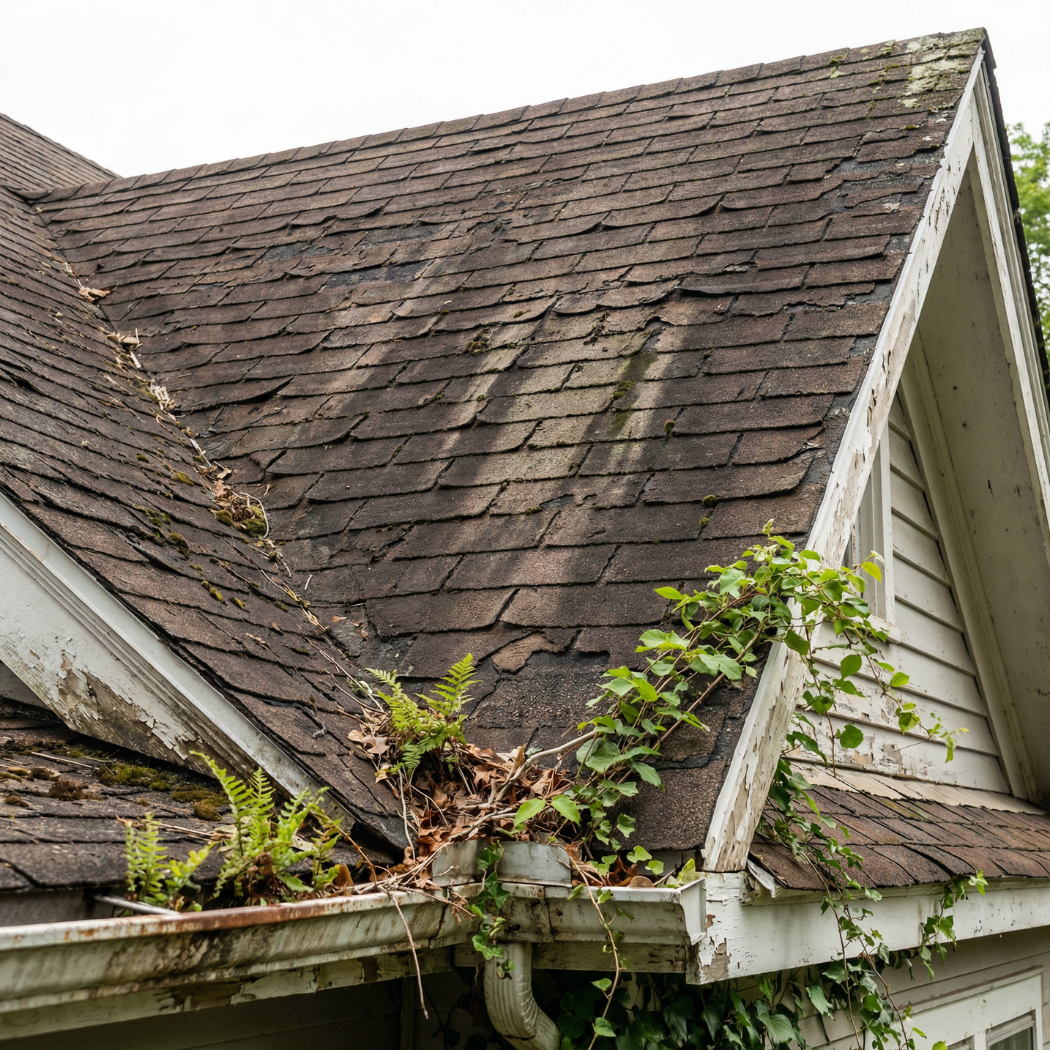
The fascia board is the flat wooden board your gutters physically hang on. Once that board starts absorbing moisture and rotting, the gutters have nothing solid to anchor to. They begin to sag and pull away from the house, and the entire drainage system starts to fail from that single weak point.
GAF’s official homeowner roof maintenance guide specifically highlights gutters as a critical part of the roofing system, noting that clogged gutters cause water to sit on the roof and create leak conditions. The guide recommends inspecting and cleaning gutters twice per year and after every major storm event.
| System Component | What It Does | What Fails Without It |
|---|---|---|
| Shingles | Shed water down the slope | Water pools on roof surface |
| Drip edge | Directs water into gutter, not behind it | Fascia rot, gutter bypass |
| Gutters | Collect and channel water off the roof | Water dumps at foundation |
| Downspouts | Move water away from the house | Foundation erosion and basement leaks |
| Fascia board | Anchors gutters to the structure | Gutter sag and separation |
Pro tip: Walk around your home during a heavy rain if it is safe to do so. Watch where water is actually going. You will see immediately if gutters are overflowing, if downspouts are directing water toward the foundation, or if any section of gutter has separated from the fascia.
What Happens When Gutters Fail
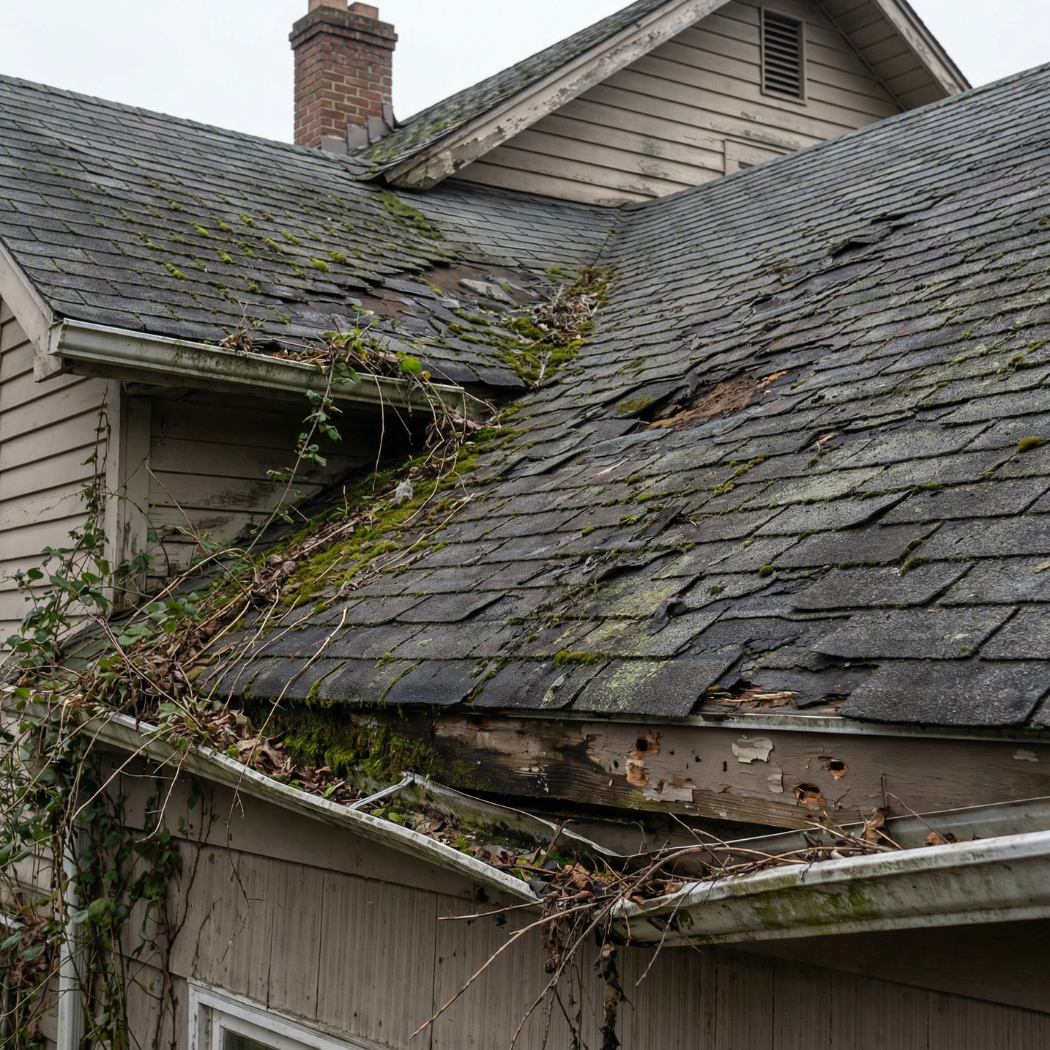
Clogged gutters are the most common problem and the one most homeowners underestimate. When leaves, twigs, and roofing granules block water flow, water backs up and sits at the edge of the roof. That standing water soaks the fascia board, works its way under the shingles at the eave, and in winter freezes into ice dams that push water even further under the roof deck.
A sagging or detached gutter dumps water directly next to your foundation. Over time, that concentrated flow erodes the soil around your footing, creates pathways for water into your basement, and can contribute to foundation cracks. The repair that gets ignored at $200 often turns into a foundation problem at $5,000 or more.
Undersized gutters overflow during heavy rain. Many homes in the Ozark and Nixa area have standard 5-inch K-style gutters. During Missouri’s intense spring downpours, those gutters can overflow even when perfectly clean. Upgrading to 6-inch gutters or adding more downspouts is often the right solution for homes with steep slopes or large roof areas.
A GAF technical bulletin on shingle damage from gutter and downspout discharge documents a specific failure mode worth knowing: when gutter outlets or downspouts discharge water onto a lower roof section, that concentrated flow erodes shingle granules and can force water between shingles. The resulting leaks often take years to show up inside the home, which is exactly why they are so expensive by the time they do.
Real example: A homeowner in Rogersville noticed a faint ceiling stain in a first-floor bedroom over the garage. The roof on that slope was only 11 years old and appeared undamaged. Roov’s inspection found that a second-floor downspout had been discharging directly onto the garage roof slope for years. The concentrated flow had stripped granules from the impact zone and eventually forced water under the shingles. The roof was not old enough to replace, but the shingle damage in that zone required a targeted repair and a downspout extension to redirect the flow to the ground.
| Gutter Failure Type | What Happens to the Roof and Home |
|---|---|
| Clogged gutters | Water backs up under shingles, rots fascia, creates ice dams in winter |
| Sagging or detached gutters | Water pours next to foundation, causes erosion and basement leaks |
| Undersized gutters | Overflow during heavy rain, soaks siding and fascia |
| Downspout onto lower roof | Erodes shingle granules, forces water between shingles, hidden leaks |
| Missing downspout extensions | Concentrates water at foundation instead of directing it away |
Pro tip: Every downspout should extend at least 3 to 4 feet away from your foundation. Splash blocks and flexible extensions are inexpensive fixes. If your downspouts empty against your foundation wall, that is a problem worth solving today regardless of the condition of anything else.
What Happens When Your Roof Fails Above the Gutters
The failure relationship runs both directions. Just as bad gutters damage the roof, a failing roof above the gutter line causes its own set of problems.
Damaged or missing shingles at the eave let water under the roof deck before it ever reaches the gutter. When water enters at that point, it soaks the decking directly, can run down the inside of the fascia, and may not show up as an interior leak for months.
A failed drip edge or one that was never installed correctly is one of the most common findings on older homes. Without it, water consistently runs behind the gutter during every rain event, even light ones. Over years, that repeated moisture exposure destroys the fascia board and the soffit below it.
Failed ice and water shield at the eave, which is the self-sealing waterproof membrane installed under shingles along the bottom edge of the roof, means there is no backup protection when gutters overflow or ice dams form. On an older roof, that layer has often degraded to the point where it provides little real protection.
Real example: A couple in Strafford had their gutters replaced by a handyman who did not realize the drip edge on the front slope was missing. Over the next two winters, water ran behind the new gutters with every rain, slowly rotting the fascia. By the time Roov inspected the roof, two sections of fascia board had to be replaced before new gutters could be properly attached. A drip edge installation that would have cost very little at the time of the gutter job ended up costing significantly more in combined repairs.
Pro tip: If you ever have gutters installed or replaced, confirm with your contractor that the drip edge is present and in good condition before the gutters go up. Once gutters are attached, inspecting the drip edge requires removing them. It is a five-second check that prevents a much larger problem.
Gutter Maintenance Checklist for Missouri Homeowners
Consistent maintenance is the difference between a gutter system that lasts 20 years and one that causes damage within five. Here is what to do and when.
Clean gutters at least twice per year, once in spring after pollen and seed pods drop and once in fall after leaves come down. Clean them again after any storm that drops significant debris. If you have oaks, maples, pines, or sweet gum trees near your roofline, plan on three to four cleanings per year.
Check for granule buildup in the gutters every time you clean them. A light dusting of granules is normal. A thick, sandy accumulation that looks like coarse coffee grounds is a sign your shingles are shedding granules faster than normal, which indicates aging or cumulative storm damage worth having inspected.
Inspect downspout extensions every spring. Freeze-thaw cycles and yard maintenance can knock them loose or bury them. Make sure each downspout is still directing water at least 3 to 4 feet away from the foundation.
Walk the gutters and look for rust spots, hairline cracks, sagging sections, separated seams at joints, and water staining on the fascia board immediately behind the gutter. Any of these signals a problem that will get worse before it gets better.
Check gutter hangers and brackets for tightness. Gutters filled with water and debris are heavy, and loose hangers let them sag under that load, pulling away from the fascia and creating the gaps where water bypasses the system.
If you have significant tree coverage over your roof, consider gutter guards. They are not completely maintenance-free, but quality guards reduce cleaning frequency dramatically and prevent the debris accumulation that leads to backed-up water at the eave.
| Maintenance Task | Frequency |
|---|---|
| Full gutter cleaning | Twice per year minimum, plus after major storms |
| Downspout extension check | Every spring |
| Hanger and bracket inspection | Annually |
| Granule buildup check | Every cleaning |
| Gutter seam and damage inspection | Annually or after hail events |
| Fascia condition check | Annually |
Pro tip: After a hail storm, check your gutters for dents before you do anything else. Hail dents on aluminum gutters are one of the fastest ways to document storm damage for an insurance claim. They are easy to photograph, easy for an adjuster to measure, and often covered under the same claim as roof damage.
Pro tip: If you are cleaning gutters yourself, use a garden hose to flush the downspouts after removing debris. A clog in the vertical run of a downspout is common and will not be obvious until you flush it. Water that backs up in a downspout has nowhere to go but over the gutter edge.
Should You Replace Gutters When You Replace Your Roof?
This is one of the most practical questions that comes up during a roof replacement project, and the honest answer depends on the condition of your existing gutters.
If your gutters are under 10 years old, free of rust and cracks, properly sized, and firmly attached, keeping them through a roof replacement is reasonable. A quality roofing crew can work around them carefully and reinstall them to the new roof system.
If your gutters are 15 or more years old, showing hail dents, rusting at seams, sagging, or have separated sections, roof replacement time is the best opportunity to replace them. The crew is already there, the fascia is accessible, and coordinating both projects eliminates the extra labor cost of a separate gutter job. New seamless aluminum gutters matched to a new roof give you a complete, coordinated water management system where everything is properly sized, attached to fresh or repaired fascia, and draining correctly from day one.
GAF’s guidance on whether to remove gutters during a roof replacement makes this point clearly: if contractors find cracks, rust, or open seams during the roofing process, replacing the gutters at the same time ensures the full system functions together as intended.
If insurance is covering your roof replacement after a storm and your gutters show hail dents or wind damage, they may be covered under the same claim. Roov documents gutter damage as part of every storm inspection so nothing gets left out of the claim.
Pro tip: When budgeting for a roof replacement, get a gutter assessment at the same time. Even if you decide not to replace them, knowing their condition helps you plan. A gutter that is borderline now will be a separate expense within two to three years regardless.
How Roov Inspects the Whole System
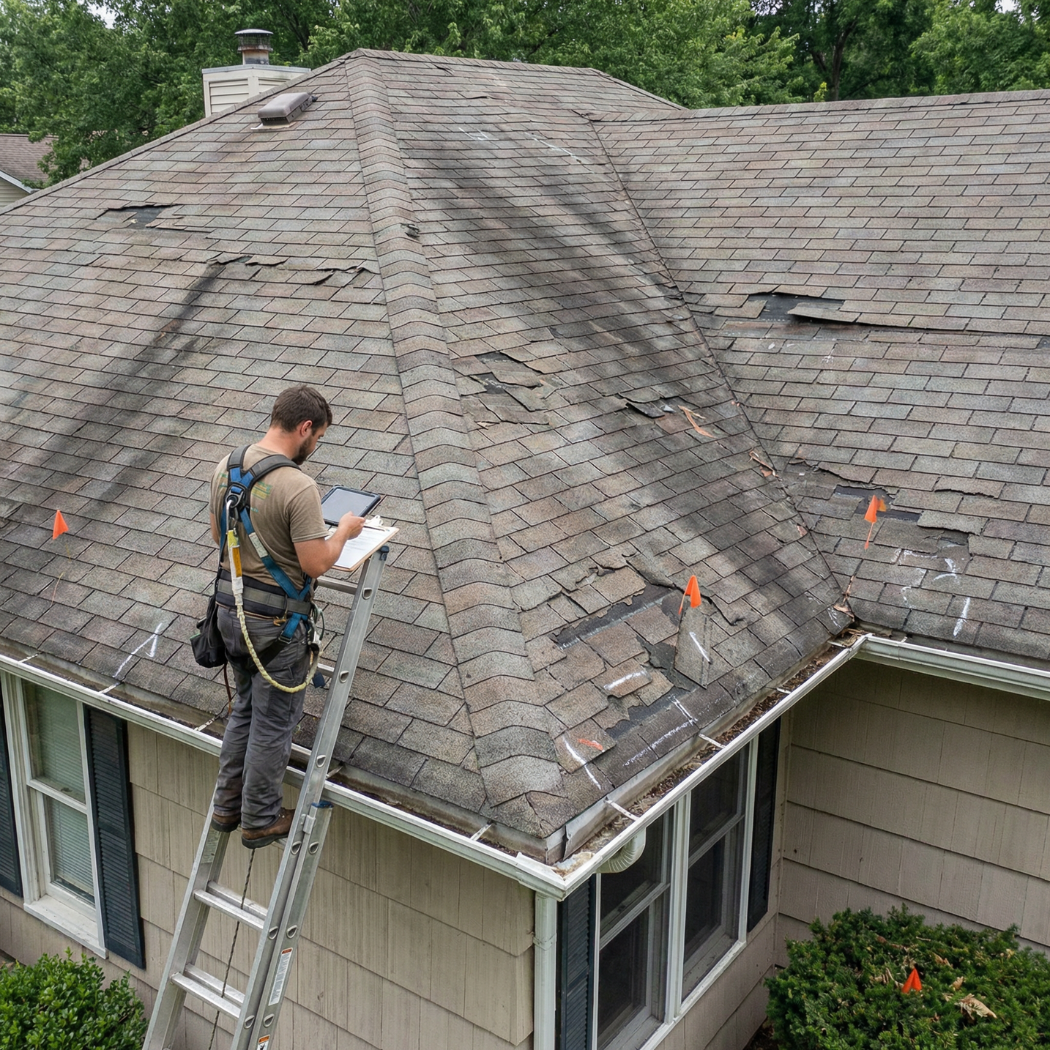
When Roov does a free roof and gutter inspection for a homeowner in Southwest Missouri, we evaluate the full water management system, not just the shingles.
We check gutter condition across every run, including hanger tightness, seam integrity, slope and drainage, and any signs of rust or separation. We inspect the fascia board behind every gutter for moisture staining or soft spots that indicate rot. We verify drip edge installation at the eave line of every slope. We check downspout placement and whether extensions are directing water an appropriate distance from the foundation.
If your gutters are fine, that is exactly what we tell you. If they need a repair or replacement, we explain what we found, why it matters, and what your options are. If a roof replacement is the right path forward, we evaluate the gutters as part of that same project and can handle both under one contractor with one coordinated job.
For homeowners navigating an insurance claim after a storm, Roov’s storm damage roof and gutter claims assistance team documents both roof and gutter damage together to make sure the full scope of storm impact is in the claim file.
Real example: A homeowner in Willard called Roov after a hail storm primarily to discuss the roof. During the inspection, Roov found 27 hail dents on the aluminum gutters across the front and east elevations. Those gutters were documented in the Roof Condition Report and included in the insurance claim alongside the roof damage. The carrier approved both, and the homeowner received a complete new roof and gutter system for the cost of their deductible.
Pro tip: Do not assume your gutters are excluded from a storm claim just because you called about the roof. A thorough contractor inspects the full system. Gutters are a common supplemental item that gets added to claims when documented correctly at the outset.
Frequently Asked Questions
Q: How often should I clean my gutters in Missouri? At minimum, twice per year: once in spring after tree pollination and once in fall after leaf drop. If you have significant tree coverage over your roofline, three to four cleanings per year is more realistic. After any major storm that drops debris, a cleaning is warranted regardless of where you are in the calendar.
Q: Do I need gutter guards? It depends on your tree situation. If you have oak, maple, pine, or sweet gum trees near your roofline, gutter guards reduce maintenance frequency significantly and help prevent the debris buildup that causes water backup at the eave. They are not maintenance-free, but quality guards are a worthwhile investment for heavily wooded properties.
Q: Does insurance cover gutter replacement? Yes, if the damage was caused by a covered storm event like hail or wind. Hail dents on aluminum gutters are common and frequently covered. Damage from neglect, age, or normal wear is not. Roov documents gutter damage as part of every storm inspection to make sure it is included in the claim when it qualifies.
Q: Should I replace my gutters at the same time as my roof? If your gutters are 15 or more years old, show rust, sagging, or hail damage, roof replacement time is the ideal moment to replace them. The crew is already there, the labor savings are real, and you end up with a fully coordinated system. If your gutters are in good shape, keeping them is perfectly reasonable.
Q: What size gutters do I need? Most homes in Southwest Missouri use 5-inch K-style gutters. Homes with steep roof slopes, large roof surface areas, or histories of overflow during heavy rain often benefit from 6-inch gutters or additional downspouts. Roov assesses gutter sizing as part of every full system evaluation.
Q: Can clogged gutters really damage my roof? Yes. When gutters back up, standing water at the eave line can work under the shingles, soak the fascia board, and in cold weather create ice dams that force water further under the roof. This is one of the most common and preventable causes of eave-line roof damage.
Q: What are the signs my gutters need replacing? Look for visible rust spots, cracks, sections that have separated at the seams, persistent sagging even after cleaning, water stains on the fascia behind the gutter, and any section that has pulled away from the house. Hail dents after a storm are also a sign worth documenting, even if the gutters are still functional.
Q: Do gutters affect my roof warranty? Indirectly, yes. Most manufacturer warranties require that the roofing system be properly maintained, which includes functional drainage. Gutters that back water up onto the roof surface and cause damage could complicate a warranty claim if it can be shown the drainage system was neglected. Keeping gutters clean and functional is part of protecting your roof investment.
Key Takeaways
- One connected system. Your roof and gutters are not independent. When one fails, the other is at risk. Both need to be evaluated and maintained together.
- Clogged gutters damage roofs. Standing water at the eave backs up under shingles, rots fascia, and creates ice dams. Cleaning gutters is not optional maintenance.
- Downspout direction matters. Every downspout should send water at least 3 to 4 feet from the foundation. Water concentrating at your foundation will eventually find a way in.
- Drip edge is the critical connection point. A missing or damaged drip edge lets water run behind your gutters on every rain event. It is inexpensive to install and very expensive to ignore.
- Hail damages gutters too. After any hail event, check your gutters for dents and document them. They are frequently covered under the same insurance claim as the roof.
- Roof replacement time is the best time for gutter replacement. If your gutters are aging, doing both projects together saves labor and gives you a complete, coordinated system.
- Roov inspects both. Every Roov inspection covers the full water management system: roof, drip edge, fascia, gutters, and downspouts together.
Schedule a Free Roof and Gutter Inspection
Roov evaluates your roof and gutter system together on every free inspection. You get an honest, photo-documented assessment of the full water management system, not just the shingles. If something needs attention, we explain exactly what it is and why it matters. If everything is sound, we tell you that too.
Serving Aurora, Sparta, Rogersville, Strafford, Nixa, Ozark, Willard, and all of Southwest Missouri.
Roov | Roofing with a Purpose | Serving Southwest Missouri