
Missouri homeowners in Springfield, Nixa, and Ozark face a unique roofing challenge most people never consider. Our wild winter temperature swings create freeze-thaw cycles that quietly destroy roofs from the inside out. This guide explains the physics behind this damage, why Missouri is especially vulnerable, and practical steps you can take to protect your home before costly problems develop.
TLDR: Water expands about 9% when it freezes. Missouri averages 30 to 50 freeze-thaw cycles each winter, meaning repeated expansion and contraction in your roof materials. This cycle causes more damage than consistently cold or warm climates. Understanding how freeze-thaw works helps you protect your roof before small cracks become expensive repairs.
You’ve probably noticed your roof seems to age faster than homes in Texas or Minnesota. There’s a scientific reason for that.
Missouri sits in a climate sweet spot for roof destruction. Our winters swing above and below freezing constantly, creating conditions no other region handles quite the same way. One day it’s 45°F and sunny. The next morning it’s 20°F with ice on everything.
This guide walks you through exactly how freeze-thaw damages roofs, why Southwest Missouri gets hit hardest, and what you can do about it.
The Physics Behind Freeze-Thaw Roof Damage
How Water Expansion Destroys Roofing Materials
Water does something unusual when it freezes. It expands by about 9%. A tiny amount of water in a 1-inch crack becomes 1.09 inches of ice, forcing that crack wider.
When temperatures rise, the ice melts. But the crack stays open. Next freeze, more water enters the larger crack. This creates exponential damage growth throughout winter.
Why Your Roof is Vulnerable
Asphalt shingles, flashing, and roof decking all contain microscopic cracks and pores. Water from rain, sleet, or melting snow seeps into these tiny openings. In Missouri’s freeze-thaw climate, this water freezes and thaws repeatedly, widening cracks with each cycle.
Beyond water, materials themselves expand and contract. Shingles expand in afternoon sun and contract in overnight cold. Metal flashing moves at different rates than surrounding shingles. This mismatch creates separation and stress.
| Freeze-Thaw Concept | What Happens | Roof Impact | Cumulative Winter Effect |
|---|---|---|---|
| Water expansion (9%) | Ice forces cracks wider | Creates entry points | Cracks double/triple in size |
| Thermal stress | Materials expand/contract | Flashing separates | Gaps widen progressively |
| Repeated cycles (30-50x) | Damage compounds | Accelerates aging | Years of wear in months |
| Exponential growth | Each cycle adds to previous | Small becomes big | Minor issues become major |
Pro tip: After 40+ freeze-thaw cycles, schedule a professional roof inspection. Damage accelerates quickly past this threshold.
Why Missouri’s Climate Creates Maximum Roof Damage
Southwest Missouri’s Unique Weather Pattern
Missouri averages 30 to 50 freeze-thaw cycles per winter. Greene County (Springfield area) and Christian County (Nixa, Ozark) typically see 35 to 40 cycles. That’s among the highest in the nation.
Compare this to Minnesota, where water stays frozen most of winter. Or Texas, where freezing rarely happens. Our climate crosses that critical 32°F threshold constantly, creating ideal conditions for freeze-thaw roof damage.
| Region | Avg Cycles/Winter | Climate Pattern | Damage Severity |
|---|---|---|---|
| Missouri (Springfield) | 35-40 | Frequent swings | Severe |
| Minnesota | 10-15 | Stays frozen | Moderate |
| Texas | 5-10 | Rarely freezes | Low |
| California | 8-12 | Limited freeze events | Low-Moderate |
The 2024-25 winter in Springfield had 42 freeze-thaw cycles. Roofs that looked fine in January showed significant damage by March. This pattern repeats year after year in our area.
Pro tip: Track local temperature swings each winter. When you hit 40+ cycles, your roof needs urgent attention.
Which Materials Suffer Most from Freeze-Thaw Cycles
Asphalt Shingles
Standard asphalt becomes brittle in cold weather. Repeated freeze-thaw cycles accelerate this brittleness. Shingles over 10 years old are especially vulnerable because the asphalt has already lost flexibility.
Flashing and Roof Penetrations
Metal and rubber flashing around chimneys, vents, and valleys expand and contract at different rates than adjacent shingles. This creates gaps where water enters and freezes.
| Material | Vulnerability | Why It’s Vulnerable | Missouri Lifespan |
|---|---|---|---|
| Standard asphalt | High | Becomes brittle | 12-18 years |
| Impact-resistant shingles | Moderate | Maintains flexibility | 20-30 years |
| Metal flashing | High | Different expansion rate | 15-20 years |
| Roof decking | Moderate-High | Absorbs moisture | 25-35 years |
Pro tip: If your roof is over 10 years old, consider upgrading to impact-resistant shingles during your next replacement. They handle freeze-thaw cycles significantly better.
What Freeze-Thaw Damage Looks Like
The Sneaky Nature of This Damage
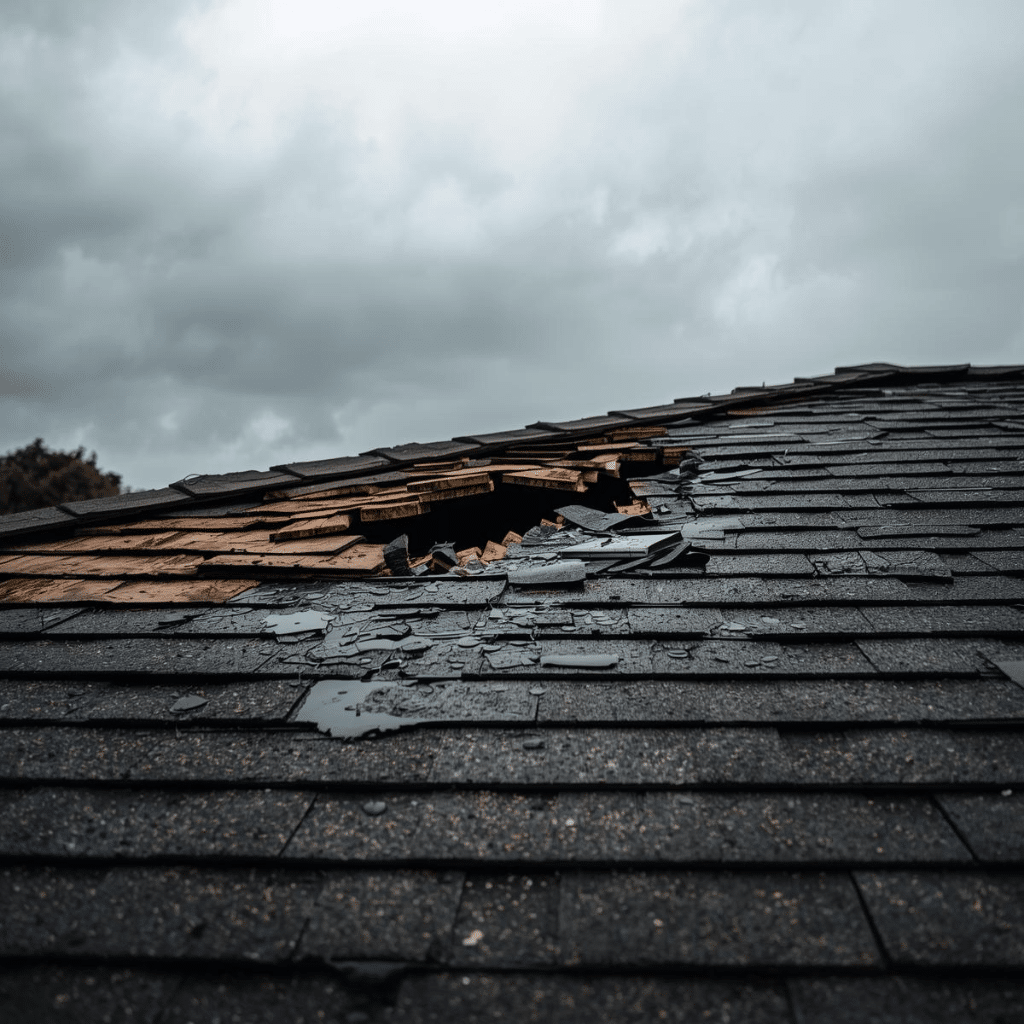
Freeze-thaw damage often goes unnoticed until spring. Water enters through tiny cracks, travels inside your roof structure, and appears as ceiling stains far from the actual damage point.
The Patterson family in Ozark noticed a musty smell in their attic during March. They assumed it was old insulation. A Roov inspection found extensive freeze-thaw damage and early decking rot from water entering through roof valleys all winter. Catching it early prevented structural damage.
| Damage Pattern | Location | Warning Signs | Severity |
|---|---|---|---|
| Shingle cracking | Roof surface | Granules in gutters | Moderate |
| Flashing separation | Chimneys, vents | Visible gaps | Serious |
| Valley buckling | Where slopes meet | Wavy appearance | Serious |
| Attic moisture | Under roof deck | Musty smell, stains | Critical |
How to Protect Your Roof from Freeze-Thaw Damage
Upgrade Strategies That Work
Impact-resistant shingles maintain flexibility through temperature swings. They’re the single most effective upgrade for Missouri homes facing freeze-thaw cycles.
Improving attic insulation to R-38 or higher reduces heat loss. This prevents the melt-refreeze pattern that intensifies damage. Proper ventilation keeps attic air cool and dry.
| Protection Strategy | Cost Level | Effectiveness | Best For |
|---|---|---|---|
| Impact-resistant shingles | High | Excellent | Full replacements |
| Attic insulation upgrade | Medium | Very Good | Older homes |
| Proper ventilation | Low-Medium | Good | All homes |
| Annual inspections | Low | Excellent | Prevention |
Pro tip: Impact-resistant shingles plus proper attic insulation reduces freeze-thaw damage risk by up to 70%.
FAQ: Freeze-Thaw Cycles and Missouri Roofs
Q: Why does Missouri get so much freeze-thaw damage?
A: Our climate crosses 32°F constantly, 30 to 50 times each winter. This creates more expansion-contraction cycles than consistently cold or warm regions. Schedule an inspection each fall to stay ahead of damage.
Q: Can I prevent freeze-thaw damage completely?
A: Not entirely, but you can reduce it significantly. Upgrade shingles, improve insulation, and maintain gutters. Annual inspections catch problems early.
Q: What does freeze-thaw damage look like?
A: Early signs include granules in gutters and hairline shingle cracks. Later stages show flashing gaps, attic moisture, and ceiling stains. Get roof repairs at the first sign of trouble.
Q: Are impact-resistant shingles worth extra cost?
A: Yes. They extend roof lifespan 10 to 15 years in Missouri’s climate and handle freeze-thaw better than standard asphalt.
Q: When should I inspect after winter?
A: Schedule post-winter inspections in early spring, before problems compound. After harsh winters with 35+ cycles, professional inspection is essential.
Key Takeaways
- Missouri’s climate is uniquely harsh: 30 to 50 freeze-thaw cycles per winter create ideal damage conditions
- Water expansion drives damage: 9% expansion forces cracks wider with each cycle
- Age accelerates problems: Roofs over 10 years old experience faster freeze-thaw deterioration
- Attic conditions matter: Poor insulation intensifies melt-refreeze patterns
- Impact-resistant shingles help: They handle temperature swings better than standard asphalt
- Annual inspections prevent surprises: Catching damage early saves thousands
Protect Your Roof from Missouri’s Freeze-Thaw Cycles
Understanding freeze-thaw damage puts you ahead of most homeowners. Now you can protect your roof before small issues become expensive problems.
Roov brings deep expertise in Missouri’s unique climate challenges. We help homeowners make smart decisions about roof protection and replacement timing.
- Free freeze-thaw vulnerability assessments
- Expert guidance on impact-resistant shingles
- Post-winter damage inspections
- GAF Master Elite certified installation
Call: 417-370-1259
Email: office@roovmo.com
We serve Springfield, Nixa, Ozark, Branson, and all Southwest Missouri communities. Schedule your freeze-thaw assessment today.
Roov | Roofing with a Purpose | Serving Southwest Missouri