
You don’t need a tornado to lose shingles. Regular thunderstorm winds across Southwest Missouri cause real roof damage every spring and summer, and most homeowners never notice until a leak shows up weeks later. This guide breaks down exact wind speed thresholds, how to spot hidden wind damage, and what to do about insurance claims before it’s too late.
TLDR: Wind speeds as low as 45 mph can rip shingles off older roofs. At 58 mph, the National Weather Service calls it “severe,” and even newer roofs take damage. Hidden problems like broken shingle seals and nail pops cause leaks weeks after a storm. A free roof inspection catches what you can’t see from the ground.
Why Wind Damage Sneaks Up on You
Here’s what most homeowners in Kimberling City and Rogersville don’t realize: wind doesn’t have to tear your roof apart to damage it. Most wind damage is invisible from the ground.
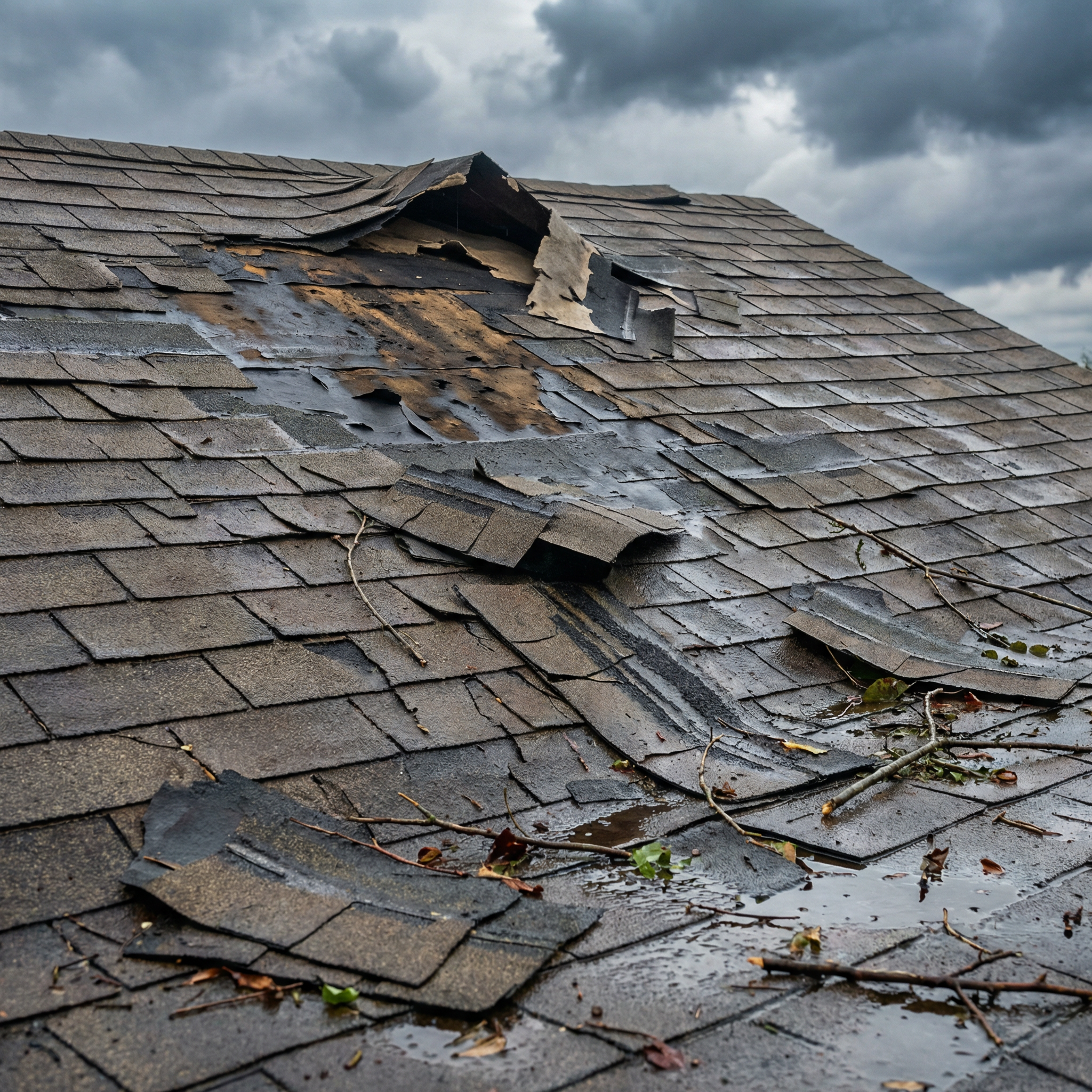
A strong gust lifts a shingle, snaps the adhesive seal holding it down, and lays it flat again. The shingle looks fine from your driveway. But that seal is gone forever. The next storm blows the shingle right off, and water gets in.
Pro tip: Wind damage is sneaky because it often looks normal from the ground. If your area had 50+ mph winds, assume your roof needs a professional look.
Wind Speed Breakdown: When Damage Starts
The NWS wind speed damage scale shows that roof damage starts well below tornado-level winds. Here’s what each range does to your home:
| Wind Speed | NWS Classification | What Happens to Your Roof |
|---|---|---|
| 25-40 mph | Breezy to windy | Older or loose shingles may lift. Minimal risk on healthy roofs. |
| 40-57 mph | Wind advisory | Aging shingles curl, lift, and blow off. Tree branches hit roofs. Gutters pull away. |
| 58-74 mph | Severe thunderstorm | Shingles rip off, flashing bends, ridge caps blow away, vents get crushed. |
| 75+ mph | Near-hurricane force | Large sections peel back. Wood decking exposed. Structural damage possible. |
Most spring thunderstorms in Southwest Missouri produce 40-65 mph gusts. That range sits right in the sweet spot for shingle damage, especially on roofs over 10 years old.
Pro tip: Your roof’s age matters more than the wind speed. A 20-year-old roof takes far more damage at 50 mph than a 3-year-old roof does at 60 mph.
Real example: A homeowner in Branson West lost a dozen shingles during a 52 mph thunderstorm. The roof was 17 years old. From the street, only two missing spots showed. Roov’s inspection found 30+ shingles with broken adhesive seals across both slopes. Insurance covered a full replacement.
The Hidden Damage You Can’t See
Wind causes four types of damage that stay invisible from the ground. Every one of them leads to leaks if you don’t catch it early.
| Hidden Damage Type | What Happens | Why It Matters |
|---|---|---|
| Broken shingle seal | Wind lifts shingle and snaps the adhesive bond | Shingle looks flat but blows off in next storm |
| Nail pops | Wind uplift backs nails out of the wood decking | Creates tiny gaps where water gets under shingles |
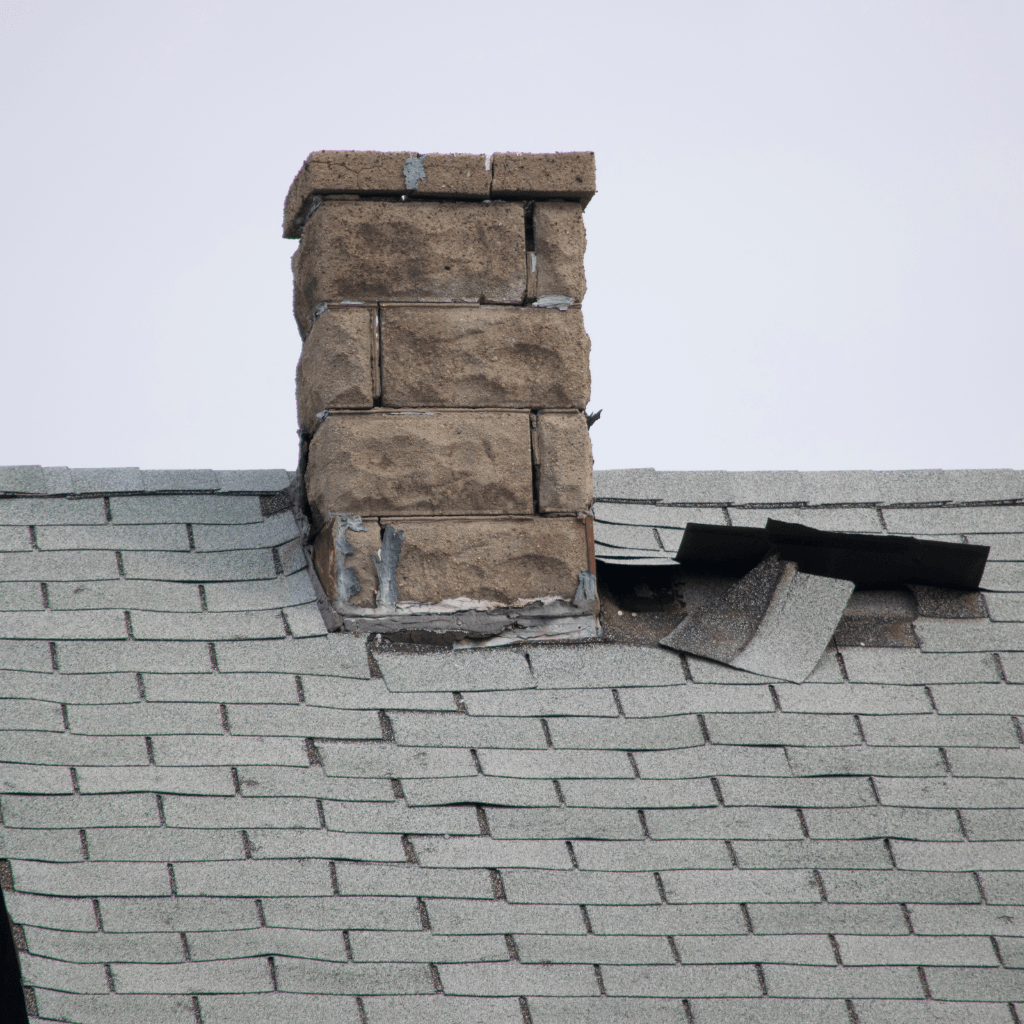
| Flashing separation | Metal strips around chimney/vents bend or pull loose | Opens a direct path for water into your home |
| Ridge cap loosening | Caps along the roof peak take the hardest wind hit | Without ridge caps, rain pours straight into your attic |
Pro tip: Check your metal mailbox, outdoor AC unit, and car for dents after a storm. If soft metals show impact marks, your roof likely took hits too.
Pro tip: Flashing (the thin metal strips around your chimney, vents, and skylights) fails in wind more often than shingles do. Always ask your inspector to check it.
Real example: A family near Ava had a 60 mph storm pass through with no visible roof damage. Six weeks later, water stains appeared on their living room ceiling. Roov found two areas where flashing had pulled away from the chimney during the storm. A quick wind damage roof repair stopped the leak before it spread.
How to Spot Wind Damage After a Storm
GAF recommends a full storm damage roof assessment that checks inside and outside your home. Here’s what to look for from the ground:
| What to Check | What You’re Looking For | DIY or Pro? |
|---|---|---|
| Yard and driveway | Shingles, ridge cap pieces, flashing on the ground | DIY |
| Roof surface | Missing shingles, bare spots, lifted or flipped tabs | Both |
| Gutters and vents | Dents, bends, pulling away from roofline | DIY |
| Granule buildup | Coarse sandy material filling gutters | DIY |
| Ceiling and walls inside | New water stains within days of the storm | DIY |
| Attic | Daylight through boards, damp insulation | Pro recommended |
Pro tip: Take photos of every piece of damage you find, including the date. This documentation helps your insurance claim later.
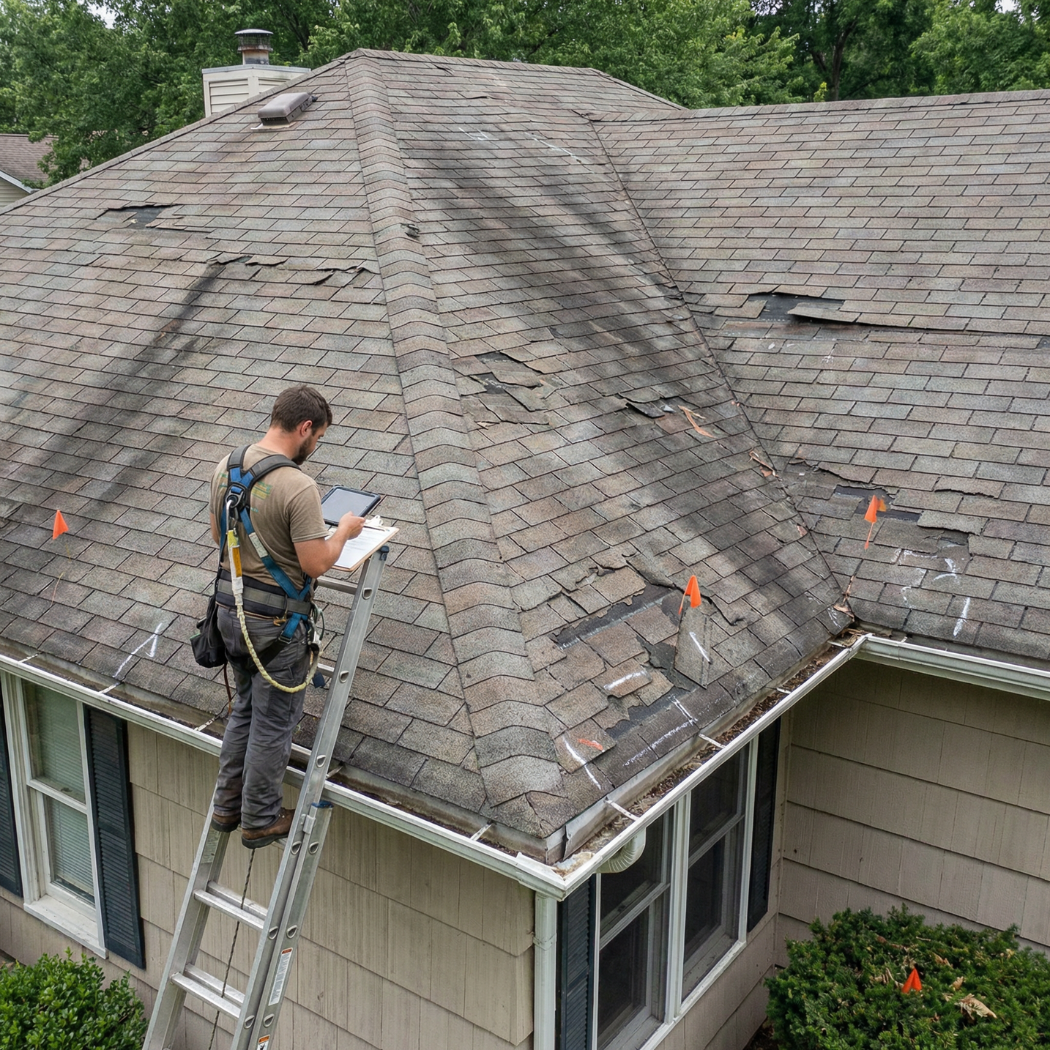
Pro tip: Don’t climb on your roof. A professional with safety equipment can check things you’ll never see from a ladder.
Real example: After a severe thunderstorm near Reeds Spring, a homeowner found three shingles in the yard and assumed that was the full extent of the damage. Roov’s free roof inspection found 15 additional shingles with broken seals plus a loose ridge cap. What looked like a minor repair turned into a full insurance claim.
Does Insurance Cover Wind Damage in Missouri?
Yes. Most homeowner policies in Missouri list wind as a “named peril,” meaning it’s specifically covered. But timing and documentation make all the difference.
| Insurance Factor | What You Need to Know |
|---|---|
| Filing deadline | Report damage promptly. Many insurers want notice within 60 days. |
| Documentation | Photos, videos, and a professional inspection report strengthen your claim. |
| Adjuster visit | Having your roofer present helps make sure all damage gets documented. |
| Coverage outcome | Wind damage confirmed = repair or replacement minus your deductible. |
| “Wear and tear” risk | Insurers sometimes reclassify wind damage as aging. A certified contractor’s report fights that. |
Pro tip: File your wind damage claim as soon as possible. The longer you wait, the easier it is for insurance to argue the damage came from normal aging.
Pro tip: Ask your roofer to meet your insurance adjuster on the roof. Roov does this at no extra cost. Adjusters miss things. Your roofer won’t.
Real example: A homeowner in Strafford filed a wind damage claim four months late. The insurance company denied half the claim, saying the delay made the damage worse. If they had called for an inspection within the first week, the full claim would have been approved.
Note: Strafford does not currently have a dedicated Roov location page, but we serve this area as part of Greene County.
Can You Protect Your Roof from Wind?
You can’t stop storms, but you can choose shingles that fight back. GAF’s wind-resistant roofing shingles with LayerLock technology feature a wider nailing zone and carry a WindProven limited wind warranty with no maximum wind speed limitation.
| Shingle Type | Wind Rating | Best For |
|---|---|---|
| Standard 3-tab | 60-70 mph | Budget-friendly, low-wind areas |
| Architectural | 110-130 mph | Most Southwest Missouri homes |
| GAF HDZ with LayerLock | WindProven (no max) | Maximum wind protection |
Pro tip: If you’re replacing your roof after a wind damage claim, ask about upgrading to architectural or GAF HDZ shingles. The cost difference is small, and the wind protection jumps dramatically.
Pro tip: For a deeper look at shingle options for Missouri weather, check out our storm damage repair guide.
What to Do After a Windstorm
- Stay safe. Never climb on your roof.
- Walk your property and look for debris, missing shingles, and downed branches.
- Check your attic for daylight through the boards or new moisture.
- Take photos and note the date and storm details.
- Call a professional roofer for a free inspection before filing your claim.
- Never sign anything with door-to-door storm chasers. Work with a local, certified company.
Pro tip: Call your roofer before you call your insurance company. A detailed inspection report gives you leverage when you file.
Frequently Asked Questions
Can 40 mph winds damage my roof?
On newer roofs, 40 mph winds rarely cause problems. But if your roof is over 15 years old, the adhesive seals weaken, and 40 mph can start lifting and loosening shingles. After any windstorm, check your gutters for granules and your yard for shingle debris.
How do I know if wind damaged my roof or if it’s just old?
Wind damage shows specific patterns. Look for missing shingles on one side of the roof (the side facing the wind), lifted tabs, and debris in the yard. Aging looks different: even granule loss, curling on all sides, and general wear. A professional inspection can tell the difference.
Does my insurance rate go up if I file a wind claim?
Wind claims are classified as “acts of nature” in Missouri. Most insurers don’t raise your rates for weather claims. But check your specific policy. Filing quickly with proper documentation keeps the process clean.
How soon after a storm should I get my roof inspected?
As soon as possible. Within the first week is best. Waiting lets small damage grow into bigger problems, and it weakens your insurance claim. Roov offers free inspections with detailed Roof Condition Reports.
What if my roof looks fine but my neighbor’s is damaged?
Storms are unpredictable. Wind hits different angles and elevations differently. Your roof could have hidden damage even if it looks untouched. A free inspection gives you peace of mind and costs you nothing.
Key Takeaways
- Wind damage starts lower than you think. Gusts of 45-57 mph damage older roofs regularly.
- Hidden damage is the real threat. Broken seals, nail pops, and flashing separation cause leaks weeks after the storm.
- 58 mph is the “severe” line. At this speed, even newer roofs take real damage.
- File claims fast. Delays weaken your case and give insurers reasons to deny.
- Upgrade when you replace. Architectural and GAF HDZ shingles offer dramatically better wind protection.
- Free inspections are your best move. Roov catches what you can’t see and walks you through insurance step by step.
Schedule Your Free Wind Damage Inspection
You now know what wind does to your roof and when to take action. The smartest next step is getting a professional set of eyes on your roof before a hidden problem turns into a costly leak.
Roov has helped hundreds of Southwest Missouri homeowners catch wind damage early and protect their investment. As a GAF Master Elite contractor and 5-star Google rated company, we bring “Roofing with a Purpose” to every inspection.
- Free, no-pressure Roof Condition Reports
- Expert insurance claim assistance at no cost
- GAF Master Elite and Owens Corning Preferred quality
- Local crews serving 8 counties across Southwest Missouri
Ready to get started? Contact us today:
Call: 417-370-1259
Email: [email protected]
Visit: roovmo.com
We serve Kimberling City, Rogersville, Branson West, Reeds Spring, Ava, and all surrounding communities. Schedule your free wind damage inspection today.
Roov | Roofing with a Purpose | Serving Southwest Missouri