
A leaky roof can turn from a minor annoyance into a major problem fast. This guide covers common leak sources, leaky roof repair costs, and how to know when you need professional help.
TLDR: Most roof leaks come from failed flashing, damaged pipe boots, or worn shingles. Repairs typically cost $350-$1,900. Always hire a professional for leaks near chimneys, skylights, or valleys. Act within 24-48 hours to prevent mold growth.
You notice a water stain on your ceiling. Or maybe you hear dripping in the attic during a storm. Ignoring a leak, even a small one, can lead to thousands in damage. The good news: most leaks are fixable, and catching them early saves money.
Most Common Leak Sources
Understanding where leaks start helps you communicate with your roofer and catch problems early. According to the National Roofing Contractors Association, most leaks occur at penetration points and flashing, not in the middle of shingle fields.
| Leak Source | Why It Fails | Repair Difficulty |
|---|---|---|
| Pipe boots/vent flashing | Rubber seals dry and crack | Moderate |
| Chimney flashing | Rust, cracked mortar, failed sealant | Complex |
| Roof valleys | Debris buildup, improper flashing | Complex |
| Skylights | Seal failure, flashing issues | Complex |
| Missing shingles | Wind, age, storm damage | Simple to moderate |
| Clogged gutters | Water backs up under shingles | Simple |
Pro tip: Check your gutters for excessive granules. This signals shingle wear and future leak risk.
Real example scenario: A Nixa family noticed water stains but could not find the source. Their roofer discovered a cracked pipe boot on the back slope. The $300 repair prevented what could have become $3,000 in ceiling and insulation damage.
Roof Leak Repair Costs
Repair costs vary based on leak source, roof accessibility, and damage extent.
| Repair Type | Cost Range |
|---|---|
| Simple patch or sealant | $150-$300 |
| Pipe boot replacement | $250-$450 |
| Shingle replacement (up to 10) | $200-$600 |
| Chimney flashing | $400-$900 |
| Valley repair | $500-$1,200 |
| Skylight repair | $400-$1,000 |
| Roof deck repair | $1,200-$3,000 |
| Emergency surcharge | Add $200-$400 |
Missouri homeowners typically pay $300-$800 for minor repairs and $1,000-$1,500 for major work. These costs are slightly below coastal and Northeast averages.
Real example scenario: A Springfield homeowner delayed a $400 flashing repair for six months. By the time they called, water had rotted the decking beneath. Final cost: $2,800. Early action would have saved over $2,000.
When to Call a Professional
Some repairs are DIY-friendly. Most are not.
Always Hire a Professional For:
- Roofs 15-20+ years old
- Leaks near chimneys, skylights, or valleys
- Multiple leak locations
- Structural concerns (sagging, soft spots)
- Steep or high roofs
DIY Might Work For:
- Single missing shingle on low-slope roof
- Temporary tarping until professional arrives
Pro tip: Water travels along rafters before dripping down, so the stain location rarely matches the entry point. Professional roofers trace leaks to their true source.
Real example scenario: An Ozark homeowner applied roofing cement to a ceiling stain area. The leak continued because the actual entry point was 12 feet away at a valley. A professional found the real problem in 20 minutes.
Emergency Warning Signs
Some situations require immediate action. According to the EPA’s mold prevention guide, mold can begin growing within 24-48 hours of water exposure.
Call Immediately If You See:
- Active water dripping into living space
- Sagging or bulging ceiling (collapse risk)
- Water near electrical outlets
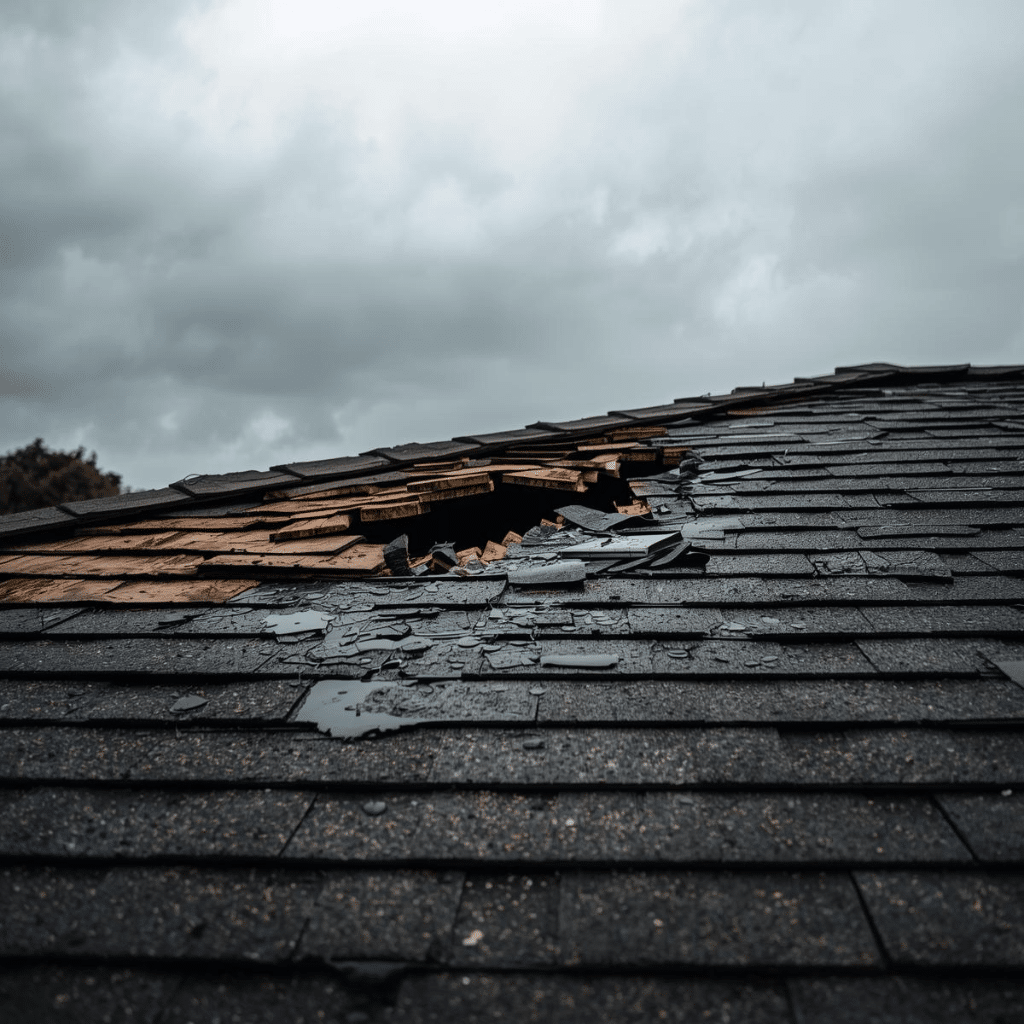
- Visible hole or puncture in roof
| Warning Sign | Risk Level | Action Required |
|---|---|---|
| Small ceiling stain | Moderate | Schedule inspection this week |
| Active dripping | High | Call same day |
| Sagging ceiling | Critical | Evacuate area, call immediately |
| Water near electrical | Critical | Turn off power, call immediately |
Pro tip: If your ceiling is bulging with water, poke a small hole in the center with a screwdriver and place a bucket underneath. This prevents sudden ceiling collapse.
Temporary Fixes While Waiting
If you cannot get a professional immediately, these measures can limit damage.
| Method | Cost | Duration |
|---|---|---|
| Tarp | $50-$150 DIY | Up to 90 days |
| Roofing cement | $15-$30 | 30-60 days |
| Roofing tape | $20-$40 | 2-4 weeks |
Safety warning: Never climb on a wet, icy, or steep roof. No temporary fix is worth a fall injury.
Real example scenario: After a late-night storm damaged their roof, a Republic family used buckets inside while waiting for their morning roof inspection. The temporary measures prevented carpet damage until Roov arrived.
Repair vs. Replacement
Sometimes repair is not the right answer. Consider replacement when:
- Your roof is 15-20+ years old
- Repair costs exceed 30% of replacement cost
- You have had multiple repairs in recent years
- Damage is widespread, not isolated
- You plan to stay in your home long-term
For isolated damage on a newer roof, roof repair makes sense. But recurring leaks often signal it is time for a full roof replacement.
FAQ: Roof Leak Questions
Q: How long can I wait to fix a roof leak? A: Not long. Mold can start growing within 24-48 hours. Even small leaks cause cumulative damage to insulation and drywall.
Q: Will my insurance cover roof leak repairs? A: Storm damage is typically covered. Leaks from wear or neglected maintenance usually are not. Contact your agent for specifics.
Q: Can I just patch a leak myself? A: For very small, accessible issues on low-slope roofs, maybe. But most leaks require professional diagnosis because water entry points are often far from visible stains.
Q: How do roofers find leaks? A: Professionals use visual inspection, water testing, and attic examination. According to Owens Corning, water travels along rafters making true entry points difficult to find.
Q: Will repairing a leak void my warranty? A: DIY repairs often void manufacturer warranties. Professional repairs using approved materials typically maintain coverage.
Q: How often should I check for leaks? A: Inspect your attic twice yearly, in spring and fall. Also check after any significant storm.
Key Takeaways
- Act fast: Mold grows within 24-48 hours of water exposure. Do not wait.
- Know common sources: Pipe boots, flashing, and valleys cause most leaks, not shingle fields.
- Professional diagnosis matters: Water travels before dripping, so visible stains rarely mark the entry point.
- Safety first: Never climb wet or steep roofs. Contain water from inside if conditions are unsafe.
- Consider age: Roofs over 15-20 years with recurring leaks may need replacement, not repair.
Ready to Fix Your Leak?
A leaky roof does not fix itself, and waiting makes everything worse. Roov provides free inspections throughout Southwest Missouri to diagnose leaks accurately and recommend the right solution.
Here is what Roov offers:
- Free leak inspections with detailed reports
- Accurate diagnosis using professional techniques
- Quality repairs backed by manufacturer warranties
- Honest advice on repair vs. replacement
Call: 417-370-1259
Email: office@roovmo.com
We serve Springfield, Nixa, Ozark, Branson, and all surrounding Southwest Missouri communities.
Roov | Roofing with a Purpose | Serving Southwest Missouri