
After a winter storm hits Southwest Missouri, homeowners in Springfield, Nixa, and Ozark often wonder if their roof survived. This guide shows you how to spot obvious damage, find hidden problems that professionals catch, and take action before small issues turn into expensive repairs. You will learn what to check yourself, why timing matters, and how professional inspections help with insurance claims.
TLDR: Most homeowners see obvious damage like missing shingles but miss costly hidden damage in their attic and walls. Small winter problems can turn into major repairs by spring. A free roof inspection documents damage for insurance and catches hidden issues before they spread. Act within 48-72 hours of storms for best results.
You heard hail pounding your roof. You saw wind whip branches across your yard. Now you wonder: did it damage my roof?
Here’s the truth. Homeowners often underestimate storm damage because the worst problems hide where you can’t see them. That small dent on your gutter might mean your shingles took the same beating underneath. Water may already be seeping into your attic.
This guide covers what you can safely check yourself, what professionals find that you’ll miss, and why acting fast saves you thousands. Let’s protect your home before hidden damage becomes a nightmare.
Why Homeowners Underestimate Roof Damage After Winter Storms
Most Springfield homeowners lack the tools and training to assess storm damage properly. A full roof damage assessment requires getting on the roof safely, understanding what counts as damage versus normal wear, checking inside the attic, and knowing building codes.
Insurance companies send trained adjusters for this exact reason. What looks fine from your driveway may hide serious problems. Missing damage now costs you exponentially more later through mold growth, structural rot, and insulation that no longer works.
| Damage Type | Obvious (Visible from Ground) | Hidden (Found by Professionals) | Cost if Missed |
|---|---|---|---|
| Shingle damage | Missing or curled shingles | Cracked underlayment, granule loss | $3,000-$8,000 |
| Flashing damage | Bent or separated metal | Gaps under shingles, seal failures | $2,000-$5,000 |
| Structural damage | Sagging roofline | Wet decking, rotted rafters | $8,000-$15,000 |
| Water intrusion | Ceiling stains | Wet insulation, mold in walls | $5,000-$12,000 |
Hidden damage spreads silently inside your walls and attic. By the time you see water stains on your ceiling, the damage has been growing for weeks.
Visible Roof Damage After Winter Storms
Missing or Damaged Shingles
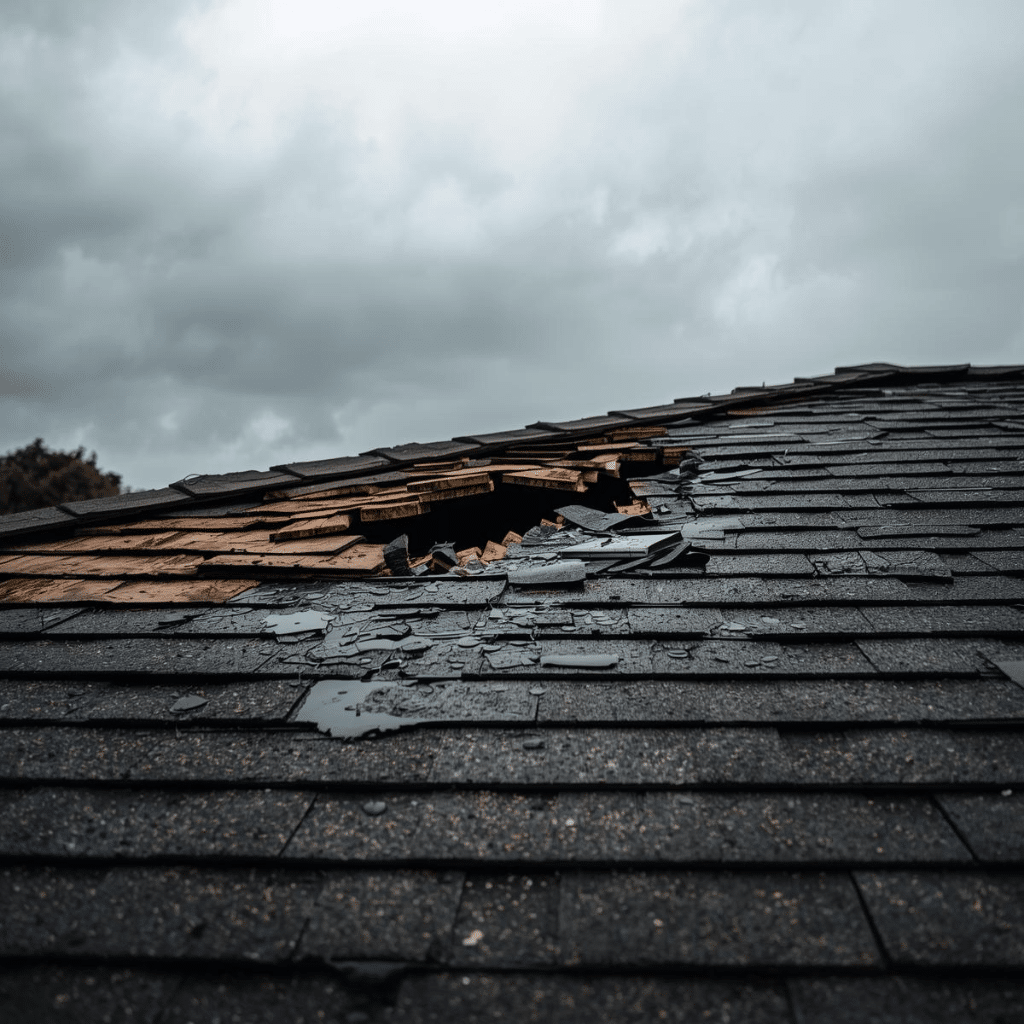
Hail, wind, and ice can rip shingles loose or crack them. Check your yard and gutters for shingle pieces. Look for dark patches on your roof where bare wood shows through.
Pro tip: Take photos and video of all visible damage right after storms. Insurance requires documentation with timestamps.
Dented Metal Vents and Gutters
Hail leaves dents in metal surfaces. Check your vent pipes, gutters, and downspouts. Dents show the energy of hail impact. If your metal is dented, nearby shingles likely took similar hits.
Damaged Flashing and Debris
Flashing around chimneys and vents may be bent or separated. Any gap between flashing and your roof is a leak waiting to happen. Check gutters for branches, leaves, and granules from damaged shingles.
Pro tip: Never walk on a wet or icy roof. Use binoculars or have someone else take photos from ground level.
| Visible Sign | What Caused It | Urgency Level | Typical Repair Cost |
|---|---|---|---|
| Missing shingles | Wind or hail | High | $300-$1,000 |
| Dented vents/gutters | Hail impact | Medium | $200-$600 |
| Pulled gutters | Ice or wind | Medium | $400-$1,200 |
| Damaged flashing | Wind or debris | High | $500-$1,500 |
| Debris in gutters | Storm impact | Low | $100-$300 |
Hidden Roof Damage That Homeowners Miss (But Professionals Find)
Underlayment and Decking Damage
Beneath your shingles sits underlayment, a waterproofing layer that can tear without visible shingle damage. Water enters through these tears and soaks the plywood decking underneath. Soft spots mean structural damage has begun.
Pro tip: Professional attic inspections after storms catch $5,000+ in hidden damage routinely.
Attic Water Intrusion
Water seeps into attics and soaks insulation long before ceiling stains appear. Wet insulation loses its R-value, mold grows, and wood components rot. Attic inspection reveals this damage immediately after storms.
The Chen family in Nixa had what looked like minor hail damage. Roov’s inspection found underlayment damage that would have caused $8,000+ in attic water damage by spring. Their insurance covered the full storm damage repair based on professional documentation.
Pro tip: Attic moisture after storms is an emergency. It means water is actively entering your home.
| Hidden Damage Type | Where It Occurs | How Professionals Detect It | Cost if Missed Until Spring |
|---|---|---|---|
| Underlayment tears | Under shingles | Lifting shingles, attic inspection | $4,000-$8,000 |
| Decking rot | Wood layer | Soft spots, moisture meters | $6,000-$12,000 |
| Attic water intrusion | Insulation, rafters | Visual inspection, moisture test | $5,000-$10,000 |
| Soffit/fascia damage | Roof edges | Exterior inspection | $2,000-$4,000 |
| Drainage failures | Gutters, downspouts | Water flow testing | $3,000-$6,000 |
How Springfield and Ozark Winter Storms Cause Unique Damage
Freeze-Thaw Cycles and Wind Patterns
Southwest Missouri experiences severe hailstorms from March through May that weaken roofs. Then freeze-thaw cycles in January and February finish the damage by opening cracks further. Wind patterns in Greene County drive rain and sleet sideways, hitting roof edges and valleys hardest.
After the December 2024 ice storm, many Springfield homes looked fine from the ground. But inspections found widespread underlayment damage. Homeowners who waited until spring discovered $15,000+ in attic damage by March.
Pro tip: Winter storm damage assessment timing matters. Inspect within 48-72 hours while damage is fresh.
Older Home Vulnerability
Older Springfield homes from the 1960s through 1990s have aging roofs with limited remaining lifespan. Storm damage to 15+ year old roofs often triggers full replacement recommendations because repeated repairs cost more than one replacement.
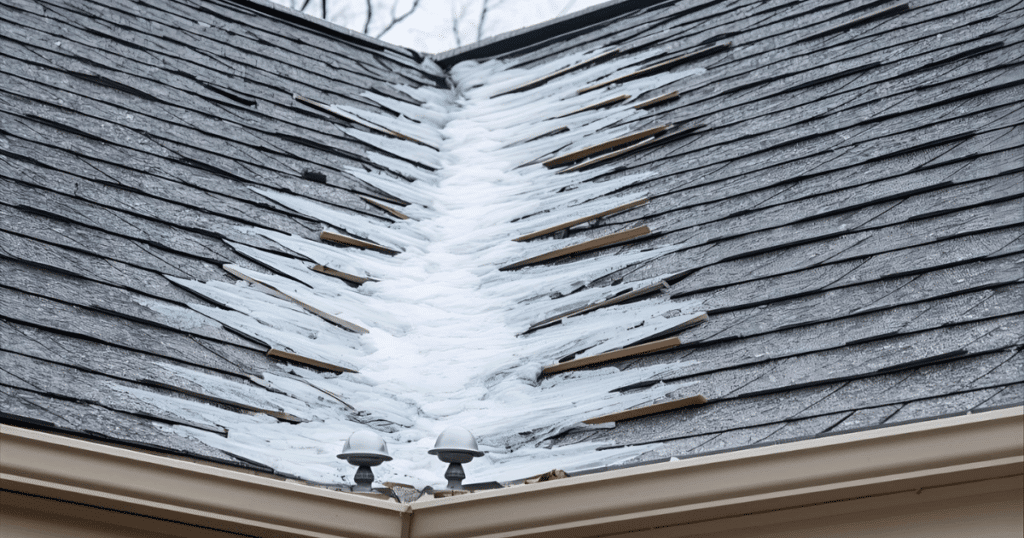
Pro tip: Ice dams form when snow melts and refreezes at roof edges. Poor attic insulation makes this worse.
Safe Post-Storm Roof Inspection Steps You Can Take Yourself
| Inspection Area | What to Check | Safety Precaution | What You’re Looking For |
|---|---|---|---|
| Ground level | Shingles, vents, flashing | Stay off ladder | Missing pieces, dents, gaps |
| Gutters/yard | Debris, granules | Watch footing | Shingle pieces, coarse sand |
| Interior (ceilings) | Water stains | Use flashlight | Discoloration, bubbling paint |
| Attic | Insulation, rafters | Use proper lighting | Wet spots, musty smell, stains |
| Foundation/siding | Water pooling | Stay clear of ice | Standing water, cracks |
Pro tip: Document damage with timestamps. Insurance needs to know the damage happened during the storm.
Pro tip: Never climb on a wet, icy, or snow-covered roof. Falls are the leading cause of roof-related injuries.
Why Professional Post-Storm Inspections Are Worth It
Call professionals after major storms if you see visible damage, your roof is over 10 years old, you have attic moisture or ceiling stains, you need documentation for insurance claims, or you’re uncertain about damage severity.
Free professional inspections provide detailed damage documentation, cost estimates, guidance on insurance claim assistance, and identification of hidden damage. Insurance often covers professional inspections when damage is storm-related.
Pro tip: Call professionals within 3-5 days of storms. Damage documentation affects insurance payout timelines.
| Situation | Call Within | Why It Matters | What We Do |
|---|---|---|---|
| Visible shingle damage | 3-5 days | Document for insurance | Full inspection, photo report |
| Active interior leaks | 24 hours | Stop water spread | Emergency tarping, repair plan |
| Attic moisture detected | 48 hours | Prevent mold growth | Moisture assessment, drying plan |
| Uncertain about damage | 1 week | Peace of mind | Complete assessment, honest answer |
| Insurance claim filing | Before filing | Maximize payout | Documentation, adjuster coordination |
Using Professional Inspections to File Insurance Claims
Insurance claims require proof of damage with photos and reports, professional assessment for credibility, cost estimates, and documentation of storm causation. Without professional documentation, homeowners often underestimate damage and leave money on the table.
The Roberts family in Springfield filed a claim based on visible damage. Their adjuster approved only $2,400. When Roov inspected, hidden damage increased the claim to $8,900. Professional documentation made the difference.
Pro tip: Insurance adjusters appreciate professional inspections. They validate damage and speed up approval.
Pro tip: Get all repair quotes and damage documentation in writing for insurance negotiations.
Why Timing Matters: Spring Discovery vs. Winter Action
| Timeframe | What’s Happening | Estimated Damage | Cost if Addressed Now | Cost if Ignored |
|---|---|---|---|---|
| Week 1 | Small leaks begin | Minimal | $1,500-$3,000 | N/A |
| Week 2-4 | Water soaks insulation | Moderate | $2,500-$5,000 | $6,000-$10,000 |
| Week 5-12 | Mold starts growing | Significant | $4,000-$7,000 | $12,000-$18,000 |
| Spring | Homeowner notices stains | Extensive | N/A | $15,000-$25,000 |
Every week of delay exponentially increases costs. Professional inspection within 48 hours and repairs within 2-3 weeks prevent secondary damage entirely.
Pro tip: Post-storm inspections within 48-72 hours prevent 80% of secondary damage.
FAQ: Roof Damage After Winter Storms in Southwest Missouri
Q: How do I know if my roof has storm damage?
A: Look for missing shingles, dented vents or gutters, debris in gutters, water stains on ceilings, or attic moisture. If you see any of these, schedule a free professional inspection immediately.
Q: Can I inspect my own roof after a storm?
A: You can do a ground-level inspection with binoculars, but never climb on a wet or icy roof. Professional inspections are safer, more thorough, and provide documentation for insurance.
Q: What if I don’t notice damage immediately?
A: Schedule a professional inspection within 3-5 days of storms. Even without obvious damage, professionals detect hidden problems before they become $10,000+ repairs.
Q: Will insurance cover storm damage?
A: Most homeowners policies cover sudden storm damage from hail, wind, and falling branches. Professional inspection documentation dramatically increases claim approval odds and payout amounts.
Q: How much does roof damage repair typically cost in Springfield?
A: Minor repairs run $300-$1,000. Moderate damage costs $2,000-$5,000. Extensive damage reaches $8,000+. Free inspections provide exact estimates, and insurance often covers most storm damage.
Q: What’s the difference between visible and hidden damage?
A: Visible damage is what you see from the ground. Hidden damage occurs in underlayment, decking, and attics. Hidden damage typically doubles repair costs if missed.
Q: When should I file an insurance claim after a storm?
A: File as soon as possible. Most policies have time limits of 30-90 days. Get a professional inspection first so you have documentation to attach to your claim.
Q: What happens if I wait until spring to assess damage?
A: Small winter leaks become major mold and structural damage by spring. Spring assessment often reveals $10,000+ problems that cost $2,000-$3,000 to fix in winter.
Key Takeaways: Post-Storm Roof Assessment in Southwest Missouri
- Obvious damage is only the beginning: Most expensive roof damage hides underneath shingles, inside walls, and in attics where you can’t see it.
- Timing is critical: Waiting 2-3 weeks allows hidden damage to spread exponentially. Professional inspection within 48-72 hours prevents this.
- Professional inspections catch hidden damage: What you see from the ground is about 20% of total damage. Professionals find the 80% homeowners miss.
- Documentation matters for insurance: Claims with professional reports get approved faster and pay out 30-50% more than claims without documentation.
- Spring discovery is expensive: Many homeowners first notice damage in spring when melting snow reveals leaks. By then, secondary damage has tripled repair costs.
- Free inspections mean no-risk assessment: You lose nothing by having professionals assess damage and document it for insurance.
Experienced a Winter Storm? Get a Free Damage Assessment
Professional post-storm inspections protect your home and wallet by catching hidden damage before it spirals into costly problems by spring.
Roov provides rapid response to storm damage with detailed inspection documentation for insurance claims and honest, transparent cost estimates.
Here’s what Roov offers after winter storms:
- Free, detailed damage inspection within 24-48 hours of your call
- Professional photo documentation for insurance claims
- Comprehensive interior and exterior assessment
- Insurance claim coordination and adjuster support
- Emergency tarping and temporary repairs if needed
- GAF Master Elite and CertainTeed ShingleMaster certified crews
Don’t wait for spring to discover expensive problems. Call Roov today:
Call: 417-370-1259
Email: office@roovmo.com
We serve Springfield, Nixa, Ozark, Branson, and all surrounding Southwest Missouri communities. After a winter storm, call Roov for a free assessment. Let’s protect your home before hidden damage becomes a financial nightmare.
Roov | Roofing with a Purpose | Serving Southwest Missouri