
After a storm hits Southwest Missouri, knowing what to do can save you thousands in storm damage repairs. This guide walks you through identifying storm damage, documenting for insurance, and getting repairs done right.
TLDR: After storm damage, document everything with photos before touching debris. Call your insurance within 48 hours, then get a professional inspection. Do not move fallen trees or make repairs before the adjuster visits. Having your contractor present during the adjuster inspection often results in better claim outcomes.
You hear the hail pounding your roof. Or maybe you wake up to find shingles scattered across your yard. Many homeowners make costly mistakes in the first 48 hours that hurt their insurance claims or cause additional damage. Following the right steps makes the process smoother.
Identifying Storm Damage by Type
Different storms cause different damage. Knowing what to look for helps you document effectively. Missouri experienced 87 significant hailstorms between 2012-2021, with peak season running May through August.
Hail Damage Signs
The National Weather Service classifies hail by size. Quarter-sized hail (1 inch) is the damage threshold for asphalt shingles.
| Hail Size | Common Name | Typical Roof Impact |
|---|---|---|
| Under 1″ | Pea to marble | Usually no damage |
| 1″ | Quarter | Damage threshold |
| 1.5″ | Golf ball | Significant damage |
| 2″+ | Egg or larger | Severe damage |
Look for dented metal vents and gutters, dark spots on shingles, granules in gutters, and cracked shingles.
Pro tip: Insurance adjusters check metal components first. Dented vents and gutters provide undeniable evidence that supports your claim.
Wind Damage Signs
| Wind Speed | Classification | Typical Damage |
|---|---|---|
| 45-57 mph | Moderate | Shingles lift |
| 58-74 mph | Severe | Shingles tear off |
| 75+ mph | Extreme | Structural damage |
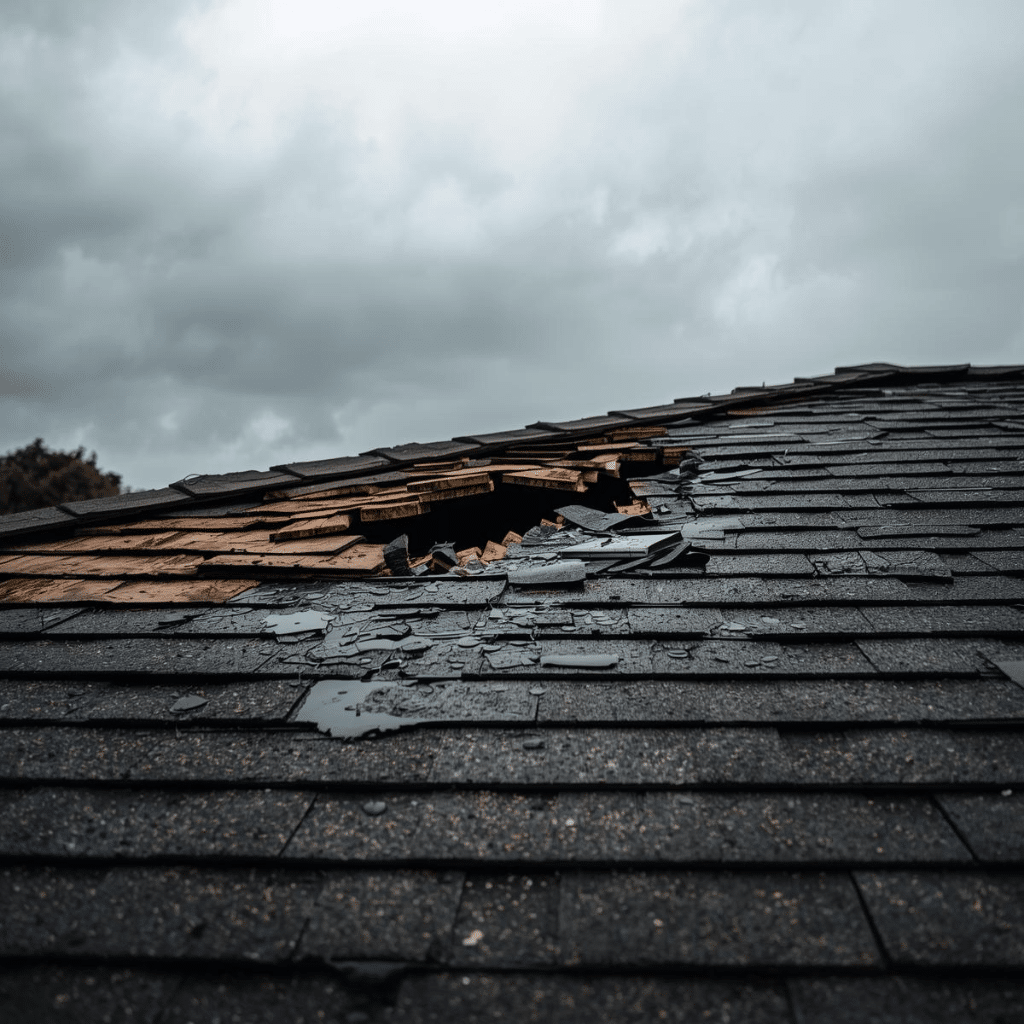
Look for missing shingles, lifted edges, exposed underlayment, and creased shingles. Most modern shingles are rated for 90 mph winds, with premium options rated up to 150 mph.
Tree Damage
If you see a punctured roof, sagging ceiling, or visible interior cracks, evacuate until a professional inspects. According to Ready.gov severe weather guidance, documenting damage before making repairs is essential for assistance eligibility.
Real example scenario: After a June storm in Nixa, the Martinez family found a large branch through their roof. They left the branch in place, photographed it thoroughly, and waited for their adjuster. This documentation helped them get full coverage.
Emergency Steps After Storm Damage
Within 24 Hours:
- Document damage with photos and videos from multiple angles
- Turn off electricity if water is near outlets
- Place buckets under active leaks
- Move valuables away from damaged areas
Within 48 Hours:
- Call your insurance company to report the claim
- Schedule a professional roof inspection
- Get emergency tarping if needed
Pro tip: Take time-stamped photos. Most smartphones automatically record date and time, creating valuable evidence for your claim. Mold can begin growing within 24-48 hours in standing water.
Emergency Repair Costs
| Service | Standard Cost | Emergency Premium |
|---|---|---|
| Roof tarping | $200-$1,500 | Add 30% after hours |
| Minor leak repair | $150-$500 | $250-$800 |
| Shingle replacement | $200-$600 | $350-$1,000 |
Real example scenario: A Springfield homeowner needed emergency tarping on a Friday night. The after-hours service cost $650 instead of the standard $500. However, this prevented an estimated $4,000 in water damage over the rainy weekend.
Working With Insurance
The Adjuster Visit
The adjuster works for the insurance company. Their job is to assess damage and calculate payouts.
Real example scenario: The Thompson family in Ozark had their contractor present during the adjuster visit. The contractor pointed out damage the adjuster initially missed. Their claim increased by $3,200.
Pro tip: Always have your roofing contractor meet the adjuster. Roov offers insurance claim assistance and will meet your adjuster on-site.
Understanding Your Coverage
| Coverage Type | What It Means |
|---|---|
| Replacement Cost (RC) | Full replacement value |
| Actual Cash Value (ACV) | Depreciated value |
| Wind/Hail Deductible | Often 1-5% of home value |
Common Mistakes to Avoid
Research from the Insurance Institute for Business and Home Safety confirms that proper documentation and timely repairs are critical for protecting your home and maximizing claim success.
- Making repairs before documentation – Insurance needs to see original damage
- Removing debris before adjuster visit – This destroys evidence
- Waiting too long to file – Most policies have 30-day to 1-year deadlines
- Hiring storm chasers – Out-of-town contractors often deliver poor work
- Ignoring hidden damage – Attic and ventilation damage often goes unnoticed
Real example scenario: A Republic homeowner removed a fallen tree before the adjuster arrived. The insurance company reduced their payout because they could not verify full damage. Always wait for documentation.
FAQ: Storm Damage Questions
Q: How long do I have to file a storm damage claim? A: Most Missouri policies allow 30 days to 1 year, but filing within 48 hours is best practice.
Q: Should I get multiple repair estimates? A: Yes. Get 2-3 estimates from licensed local contractors. Avoid anyone who shows up unsolicited after storms.
Q: Will my rates increase if I file a claim? A: Storm damage claims often do not increase rates since they result from weather events beyond your control. However, policies vary by carrier, and multiple claims may affect future premiums or coverage.
Q: Can I choose my own contractor? A: Yes. Insurance companies cannot require you to use their preferred contractors.
Q: What if my claim is denied? A: Request a second adjuster inspection, hire a public adjuster (typically 10% fee), or appeal with additional documentation.
Q: How long does the claims process take? A: Typically 2-6 weeks from filing to approval.
Key Takeaways
- Document before touching anything: Photos with timestamps are essential for claims.
- File insurance claims within 48 hours: Faster filing means faster resolution.
- Have your contractor meet the adjuster: This often results in more thorough assessment.
- Never remove debris before documentation: This can reduce or void your claim.
- Avoid storm chasers: Work with established local contractors who will be here for warranty issues.
Ready to Assess Your Storm Damage?
Storm damage is stressful, but you do not have to navigate it alone. Roov specializes in storm damage roof replacement and insurance claims throughout Southwest Missouri.
Here is what Roov provides:
- Free storm damage inspections
- On-site adjuster meeting assistance
- Thorough documentation for insurance
- Quality repairs backed by manufacturer warranties
Call: 417-370-1259
Email: office@roovmo.com
We serve Springfield, Nixa, Ozark, Branson, and all surrounding Southwest Missouri communities.
Roov | Roofing with a Purpose | Serving Southwest Missouri