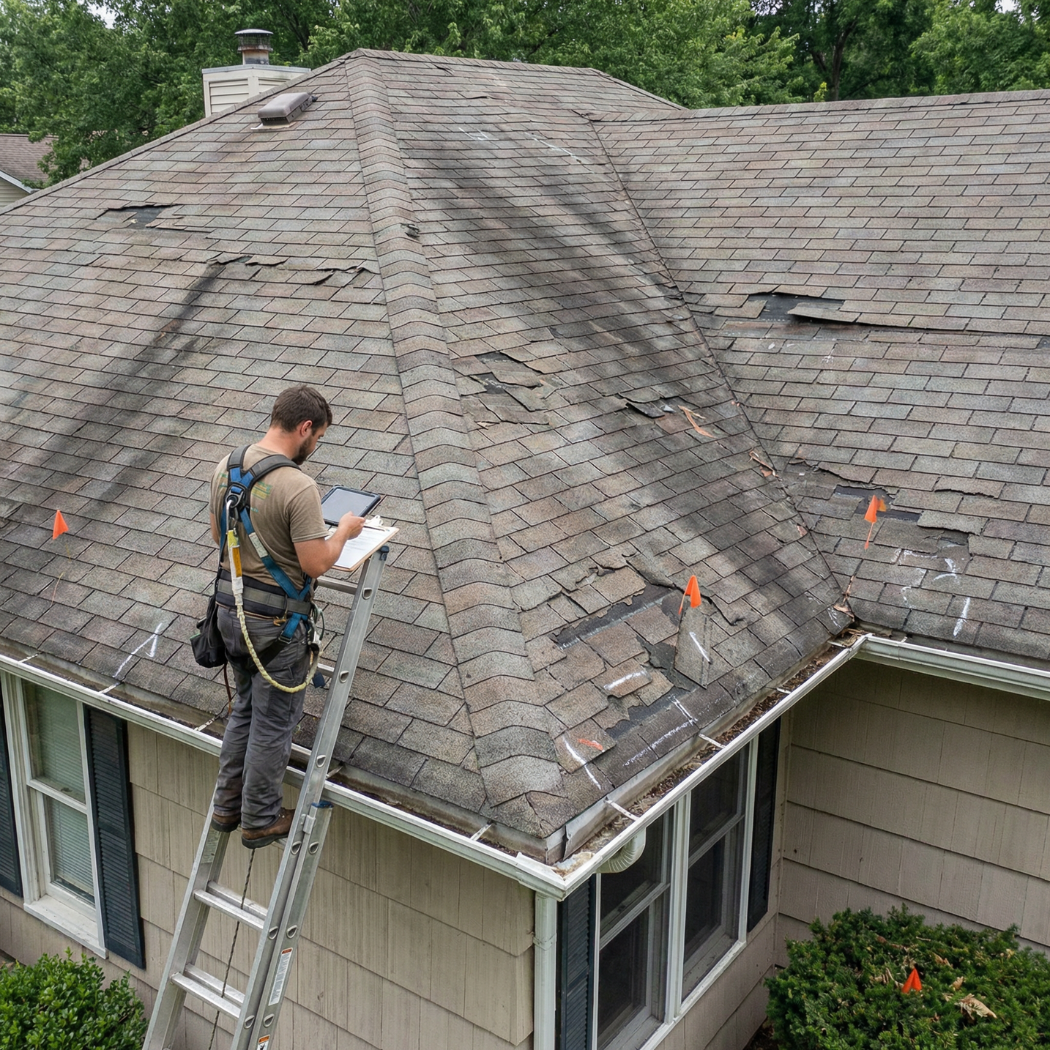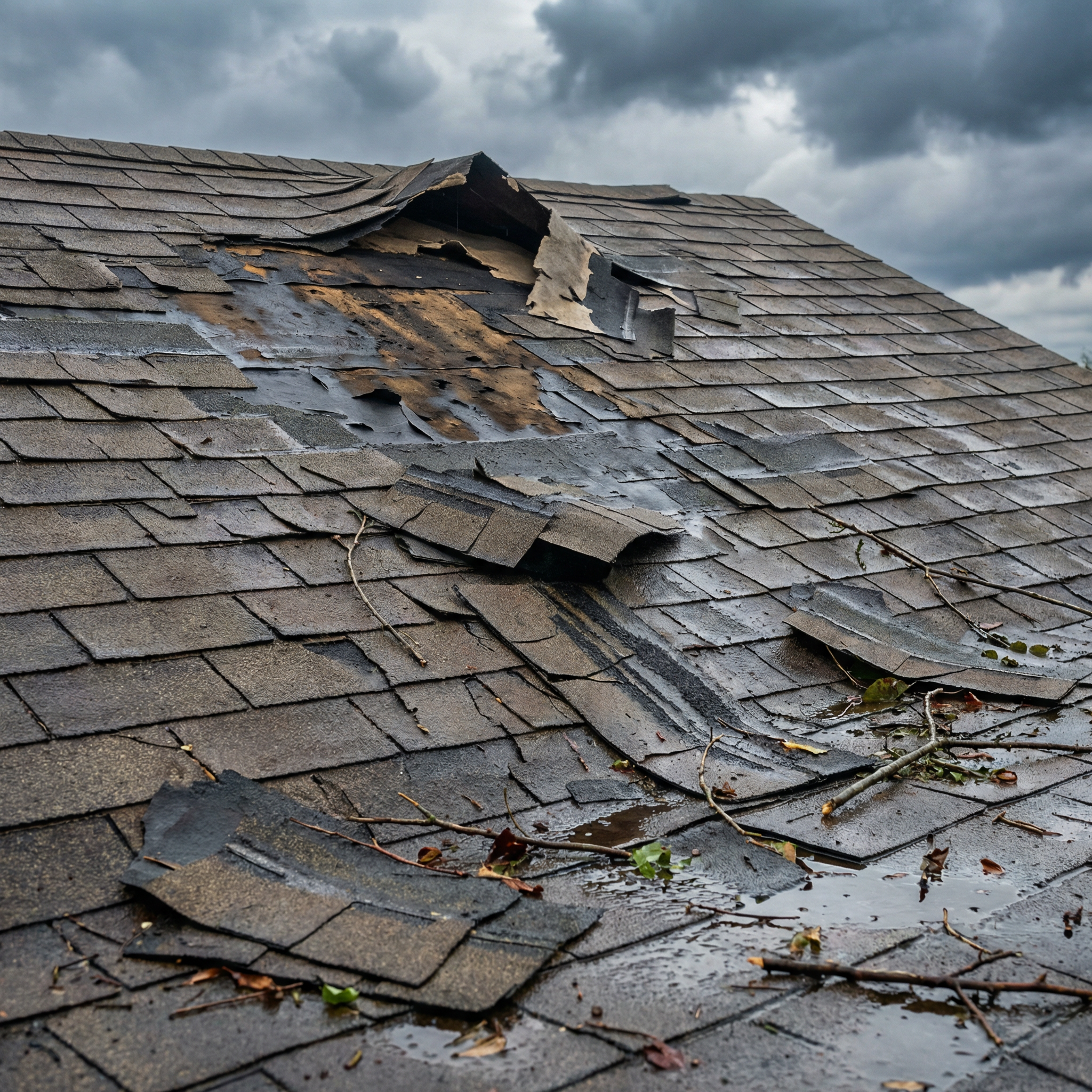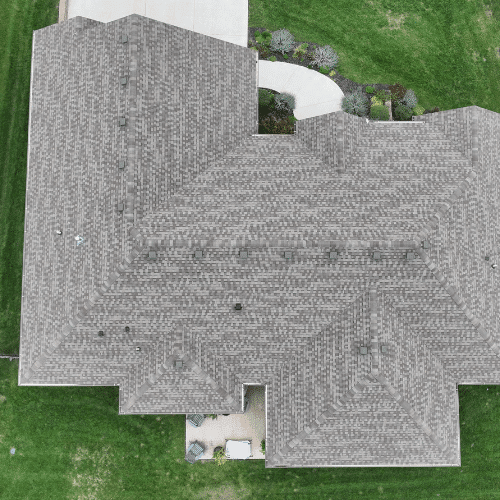


Hail season hits Southwest Missouri hard every spring and summer. If you’ve heard ice pounding your roof and wondered whether it caused real damage, the answer depends on the size. This guide breaks down exactly what each hail size does to your shingles, how to spot damage, and what to do about insurance. By the end, you’ll know when to worry and when to call a pro.
TLDR: Hail 1 inch or larger can crack shingles, dent flashing, and trigger an insurance claim. Smaller hail still wears down older roofs over time. After any significant hailstorm, a free professional roof inspection is the fastest way to catch hidden damage before it turns into leaks. Read on for the full size-by-size breakdown.
You’re lying in bed and hear it. That sharp, loud cracking sound on your roof. Hail. It lasts five minutes, maybe ten. Then it stops. You walk outside the next morning and see ice scattered across the yard. Your car has a few dings. But what about your roof?
That question keeps homeowners across Clever, Forsyth, and Seymour up at night every storm season. The truth is, not all hail damages your roof. But once it hits a certain size, your shingles are in real trouble.
Let’s walk through every hail size, what it does, and exactly when you need to take action.
Hail Size Chart: What Each Size Does to Your Roof
The National Weather Service classifies severe thunderstorm hail damage starting at 1 inch in diameter. That’s the size of a quarter. Anything that size or larger can damage roofs, siding, and vehicles.
Here’s what each size actually does to your shingles:
| Hail Size | Comparison | Roof Damage Risk | What Happens |
|---|---|---|---|
| 1/4 inch | Pea | Low | Bounces off, may speed up granule loss on older roofs |
| 1/2 to 3/4 inch | Marble | Low-Medium | Knocks granules loose, shortens shingle life quietly |
| 1 to 1.5 inches | Quarter to golf ball | High | Cracks shingles, dents flashing, exposes underlayment |
| 2.5 to 3 inches | Tennis ball to baseball | Severe | Breaks shingles apart, dents metal, damages decking |
| 4+ inches | Softball | Catastrophic | Punches through roof, causes structural damage |
Pro tip: Even marble-sized hail causes real wear. You won’t see it from the ground, but a trained inspector can spot the early granule loss. This is the hail that quietly shortens your roof’s life by years.
Pro tip: Hail doesn’t have to be huge to cause problems. An older roof in Aurora with 15-year-old shingles takes far more damage from 3/4-inch hail than a newer roof does.
When Hail Becomes a Real Problem
Quarter-sized hail (1 inch) is the threshold most insurance companies use. At this size, hail can crack shingles, create visible dents, and break through the protective granule layer. Water gets in. Leaks follow.
Real example: A homeowner in Hollister got hit by golf-ball-sized hail in spring 2024. From the ground, the roof looked fine. Roov’s inspection found cracked shingles across the entire west-facing slope plus dented ridge vents. Insurance approved a full roof replacement.
Pro tip: Don’t judge hail damage by what you see from your driveway. The worst damage hides in plain sight.
Once you reach tennis ball size (2.5 inches) or larger, you’re looking at broken shingles, crushed flashing, and damage to the wood decking (the layer under your shingles). Homes hit by this size almost always need replacement.
Pro tip: After any storm with 1-inch hail or larger, take photos of the hail next to a coin or ruler. This helps your insurance claim later.
How to Tell If Hail Damaged Your Roof
You won’t always see hail damage from the street. Some of the most expensive damage is invisible from the ground. GAF recommends a storm damage roof assessment that checks both inside and outside your home.
Here’s what to look for after a hailstorm:
| What to Check | What You’re Looking For | DIY or Pro? |
|---|---|---|
| Shingles | Dents, dark spots (bruising), cracks | Both |
| Gutters | Granule buildup, dents in metal | DIY |
| Metal vents and flashing | Dents, bending, separation | Pro |
| Attic/ceiling | Water stains within days of storm | DIY |
| Soft spots on shingles | Broken mat underneath | Pro only |
Pro tip: Check your gutters for shingle granules after every storm. A heavy layer of granules means your shingles took a beating.
Real example: A family in Lebanon didn’t notice any damage after a spring hailstorm. Three months later, they found water stains on their bedroom ceiling. Roov’s inspection showed hail bruising had cracked through several shingles over time. Because they caught it within their claim window, insurance still covered it.
Pro tip: Hail can bruise shingles without breaking them right away. That bruise weakens the shingle and leads to cracking and leaks months later. This is why a free roof inspection after hail matters so much.
Does Insurance Cover Hail Damage in Missouri?
Yes. Most homeowner insurance policies in Missouri cover hail damage to your roof. But timing and documentation make the difference between a smooth claim and a denied one.
| Insurance Factor | What You Need to Know |
|---|---|
| Filing deadline | Most policies require claims within 12 months; many insurers want notice within 60 days |
| Cosmetic damage | Dents that don’t affect function may not be covered, depending on your policy |
| Adjuster visit | Having your roofer present helps make sure all damage gets documented |
| Coverage outcome | If hail damage is confirmed, insurance often covers full replacement minus deductible |
Pro tip: File your hail damage claim as soon as possible. The longer you wait, the harder it is to prove the damage came from a specific storm.
Pro tip: Ask your roofer to meet your insurance adjuster on-site. Roov does this at no extra cost. It helps make sure nothing gets missed.
Real example: A homeowner near Strafford waited six months to file a hail claim. By then, additional rain had caused interior water damage. The insurance company denied part of the claim, arguing the delay made the damage worse. Don’t let that happen to you.
Roov’s team specializes in insurance claim assistance for storm damage. We handle the paperwork, meet your adjuster, and walk you through every step.
Can You Protect Your Roof from Hail?
You can’t stop hail, but you can choose roofing materials that hold up better against it. Class 4 impact-resistant shingles pass a test where a 2-inch steel ball drops on them from 20 feet. They’re built for hail-prone regions like Southwest Missouri.
| Shingle Type | Impact Rating | Hail Resistance | Insurance Discount? |
|---|---|---|---|
| Standard 3-tab | None | Low | No |
| Architectural | Varies | Medium | Sometimes |
| Class 4 impact-resistant | UL 2218 Class 4 | High | Yes, up to 28% |
Pro tip: Ask your insurance agent about premium discounts for Class 4 shingles. Many Missouri insurers offer 10-28% off your premium.
Pro tip: If you’re getting a roof replacement after hail damage, upgrading to Class 4 shingles is one of the smartest investments for Southwest Missouri homeowners.
Real example: A couple in Highlandville upgraded to GAF HDZ Class 4 shingles after their insurance claim. Their annual premium dropped by $380, and the next hailstorm caused zero damage to their new roof.
What Size Hail Should Make You Call a Roofer?
Here’s a simple decision guide:
| Hail Size | Action |
|---|---|
| Under 1 inch | Monitor your roof. Check gutters for granules. |
| 1 to 1.5 inches | Schedule a professional inspection. Damage is likely. |
| Over 1.5 inches | Call a roofer immediately. Document everything for insurance. |
Pro tip: Even if hail was under 1 inch, get an inspection if your roof is over 15 years old. Older shingles take more damage from smaller hail.
Real example: A homeowner in Sparta had 3/4-inch hail hit their 18-year-old roof. A Roov inspection found the aging shingles had cracked in several spots. The homeowner caught it early and made a simple repair instead of waiting for a full leak.
Frequently Asked Questions
Does pea-sized hail damage roofs?
Pea-sized hail (1/4 inch) rarely causes immediate damage to newer roofs. But on older shingles, it speeds up granule loss and shortens your roof’s remaining life. If your roof is over 15 years old, even small hail adds up over multiple storms.
How fast should I file a hail damage claim?
File as soon as possible. Most Missouri policies require you to report damage within 12 months, but many insurers prefer 60 days. The sooner you file, the easier it is to prove the damage came from a specific storm.
Can I see hail damage from the ground?
You can sometimes spot missing shingles, large dents, or granule piles in your gutters. But hail bruising, cracked mats, and flashing damage usually need a professional inspection. Roov offers free inspections with a detailed Roof Condition Report.
Will my insurance rates go up if I file a hail claim?
Hail claims are considered “acts of nature” in Missouri. Most insurers don’t raise your rates for weather-related claims. Check your specific policy, but this is generally less risky than you’d think.
What if my insurance adjuster says there’s no damage?
Get a second opinion from a certified roofing contractor. Adjusters sometimes miss damage, especially hail bruising. Roov can re-inspect and provide documentation to support a supplemental claim if needed.
Key Takeaways
- 1-inch hail is the danger line. Quarter-sized hail and larger cracks shingles, dents flashing, and triggers insurance claims.
- Hidden damage is the real threat. Hail bruising weakens shingles without visible cracks, leading to leaks months later.
- File claims fast. The sooner you report hail damage, the smoother your insurance process goes.
- Older roofs take more damage. Even small hail wears down aging shingles faster than you’d expect.
- Class 4 shingles pay for themselves. Impact-resistant upgrades save money on insurance and survive future storms.
- A free inspection is your best move. Roov catches what you can’t see from the ground and walks you through insurance step by step.
Schedule Your Free Hail Damage Inspection
You now know what each hail size does to your roof and when to take action. The smartest next step is getting a professional inspection before a small problem becomes a big one.
Roov has helped hundreds of Southwest Missouri homeowners navigate hail damage claims and protect their homes. As a GAF Master Elite contractor and 5-star Google rated company, we bring “Roofing with a Purpose” to every job.
- Free, no-pressure Roof Condition Reports
- Expert insurance claim assistance at no cost
- GAF Master Elite and Owens Corning Preferred quality
- Local crews serving 8 counties across Southwest Missouri
Ready to get started? Contact us today:
Call: 417-370-1259
Email: [email protected]
Visit: roovmo.com
We serve Clever, Forsyth, Seymour, Aurora, Lebanon, Hollister, Highlandville, Sparta, and all surrounding communities. Schedule your free hail damage inspection today.
Roov | Roofing with a Purpose | Serving Southwest Missouri