
Winter weather takes a real toll on roofs across Southwest Missouri. If you live in Springfield, Nixa, or anywhere in the region, your roof faces unique challenges every cold season. This guide covers how Missouri winters damage roofs, what warning signs to watch for, and when to call for help. By the end, you’ll know exactly how to protect your home.
TLDR: Southwest Missouri’s freeze-thaw cycles cause unique roof damage that worsens fast if ignored. Watch for missing shingles, ice buildup at roof edges, and water stains in your attic. Homes over 15 years old face higher risk. Free professional inspections catch problems while repairs are still affordable.
You’ve noticed something off about your roof. Maybe you found shingle pieces in your yard after that last ice storm. Or perhaps you spotted a water stain spreading across your ceiling. How bad is the damage? Will insurance cover it?
The good news: roof problems in Springfield and Nixa are common, but they don’t have to become disasters. Early detection saves thousands.
Why Winter Weather Damages Southwest Missouri Roofs
Missouri doesn’t get steady cold like northern states. Instead, our region experiences wild temperature swings that stress roofing materials. Southwest Missouri averages 30 to 50 freeze-thaw cycles per winter, far more than consistently cold climates.
| Weather Condition | How It Damages Roofs | Why It’s Worse in Missouri |
|---|---|---|
| Freeze-thaw cycles | Water expands 9% when frozen, forcing cracks wider | 30-50 cycles vs. 10-15 elsewhere |
| Ice dams | Forces water backward under shingles | Older homes lack proper insulation |
| Snow loads | Heavy wet snow stresses roof decking | Sudden snowfalls add 20+ lbs per sq ft |
| Wind-driven precipitation | Rain and sleet penetrate flashing gaps | Winter winds exceed 40 mph regularly |
Tip: Check your roof from the ground after every major storm. Catching damage early saves thousands.
Understanding Freeze-Thaw Damage
Water finds its way into tiny cracks in your shingles or flashing. When temperatures drop, that water expands by about 9%, forcing cracks wider. When it thaws, more water enters. This cycle repeats dozens of times each winter in Missouri.
Asphalt shingles take the biggest hit, especially older ones that have become brittle. Flashing around chimneys cracks easily. Roof valleys where water collects see concentrated damage.
Real example: The Johnson family in Springfield had a 15-year-old roof. They noticed missing shingles after January ice but waited until spring. By March, attic water damage required $3,200 in additional repairs. A free roof inspection in January would have caught the problem when repairs cost under $800.
Tip: Homes with roofs over 15 years old should get annual inspections. Missouri weather accelerates aging.
Visible Warning Signs of Winter Damage
| Warning Sign | What It Looks Like | What It Means |
|---|---|---|
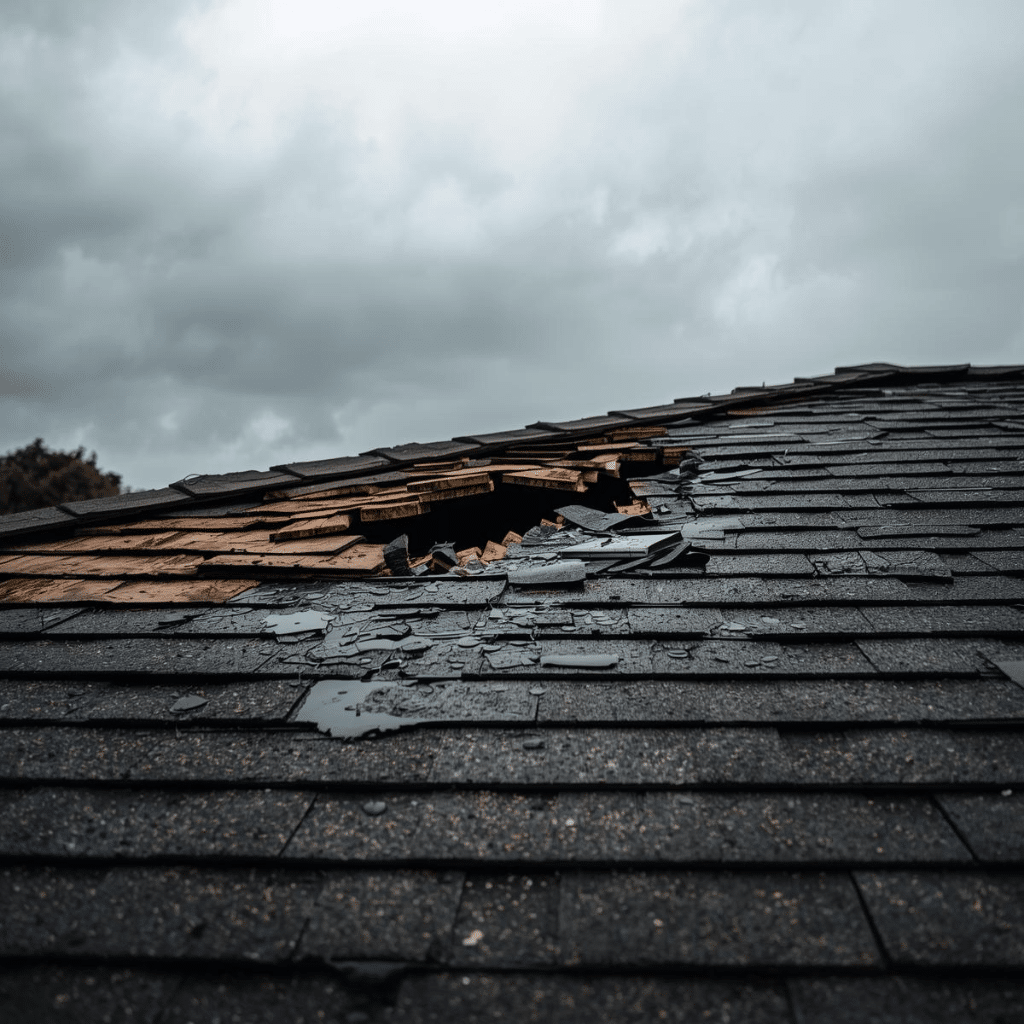
| Missing shingles | Bare spots, pieces in yard | Water can penetrate immediately |
| Ice dams | Thick ice at roof edges | Heat loss and leak risk |
| Sagging roofline | Dips or waves in surface | Structural stress (emergency) |
| Damaged gutters | Bent or detached sections | Drainage problems |
Tip: Take photos after storms. Documentation helps with insurance claims.
Hidden Signs Most Homeowners Miss
Check your attic for water stains on rafters, wet insulation, or condensation. Yellow or brown ceiling stains signal water intrusion. Higher heating bills can indicate air leaks from roof damage. Check gutters for excessive shingle granules.
| Hidden Sign | Where to Look | Why It’s Serious |
|---|---|---|
| Attic moisture | Rafters, insulation | Leads to mold within weeks |
| Ceiling stains | Near exterior walls | Indicates active leak |
| Granule loss | Gutters, downspouts | Shingles losing protection |
Tip: Check your attic monthly during winter. Early detection prevents major damage.
How Local Homes Are Affected
Many Springfield and Nixa homes built from the 1960s through 1990s have original roofs past their 20 to 25 year lifespan. These are highly vulnerable. Newer Ozark construction has better ventilation but builder-grade shingles still suffer.
Real example: The Martinez family in Ozark had an 18-year-old roof. After February’s ice storm, a free Roov inspection found ice dam damage and recommended targeted repairs ($2,800) instead of full replacement, saving them $12,000.
When to Call a Professional
| Situation | Urgency | Recommended Action |
|---|---|---|
| Active leak, sagging roof | Emergency | Call immediately for tarping |
| Ice dams, multiple missing shingles | High | Schedule storm damage repair within 48 hours |
| Minor damage, attic moisture | Moderate | Schedule inspection this week |
| Routine check (15+ year roof) | Preventive | Schedule annual inspection |
Tip: Insurance claims require documentation. Professional inspections provide the detailed reports adjusters need.
Protecting Your Roof Through Winter
Keep gutters clear to prevent ice dams. According to GAF’s ice dam prevention guide, ice dams form when heat escapes from your attic, melting snow that refreezes at the cold eaves.
The Department of Energy recommends R-49 to R-60 attic insulation for Missouri homes (Climate Zones 4-5). Proper insulation prevents the heat loss that causes ice dams. Ensure soffit and ridge vents allow proper airflow as recommended by DOE’s attic insulation guidelines. Address damage immediately.
Tip: Never walk on a snowy or icy roof yourself. Call professionals for snow removal.
FAQ: Winter Roof Damage
Q: What causes most winter roof damage in Springfield? A: Freeze-thaw cycles are the number one culprit. Water seeps into cracks, freezes and expands, then thaws allowing more water in. This cycle repeats 30 to 50 times per winter.
Q: Can I wait until spring to fix damage? A: No. A small January leak can cause thousands in damage by March. Schedule inspection immediately.
Q: Does insurance cover winter roof damage? A: Storm damage is typically covered. Gradual wear usually isn’t. Roov’s insurance claim assistance ensures proper documentation.
Q: How much do repairs cost? A: Minor repairs: $300-$800. Moderate damage: $1,200-$3,500. Extensive damage: $5,000+. Free inspections provide exact estimates.
Q: What are ice dams? A: Thick ice buildups at roof edges caused by attic heat loss. They force water backward under shingles, causing leaks.
Q: How often should I inspect my roof? A: Check from the ground after storms. Inspect your attic monthly. Schedule professional inspection if your roof is over 15 years old.
Key Takeaways
Freeze-thaw cycles cause exponential damage: Missouri’s 30-50 cycles per winter make small cracks become major problems fast.
Check for visible and hidden signs: Missing shingles are obvious, but attic moisture is just as serious.
Don’t wait until spring: Winter damage worsens weekly. Early detection saves thousands.
Older roofs need annual inspections: Roofs over 15 years are especially vulnerable.
Get Your Free Roof Inspection
Roov is Southwest Missouri’s trusted roofing partner. We bring “Roofing with a Purpose” to every job.
- Free roof condition reports with photo documentation
- Expert assessment of winter damage vs. normal wear
- Insurance claim assistance and adjuster coordination
- GAF Master Elite and CertainTeed ShingleMaster certified
Call: 417-370-1259
Email: office@roovmo.com
We serve Springfield, Nixa, Ozark, Branson, and all Southwest Missouri communities. Schedule your free inspection today.
Roov | Roofing with a Purpose | Serving Southwest Missouri