
Your roof looks fine from the driveway. No missing shingles. No water stains on the ceiling. So everything must be okay, right? Not necessarily. If your roof is 15 years old or older, there are things happening up there that you simply cannot see from the ground. This guide explains what actually occurs as a roof ages in Southwest Missouri’s climate, what warning signs to watch for, and how to make smart decisions about repair, maintenance, or replacement before a storm forces your hand.
TLDR: Asphalt shingles degrade in stages, and most of the serious damage is invisible from the street. Granule loss, failed seal strips, cracked pipe boots, and deteriorating flashing all develop quietly over 15 to 20 years. Missouri’s extreme temperature swings and frequent hail accelerate the process. A free inspection now can tell you exactly how much life your roof has left. Keep reading to understand what is actually going on up there.
Most homeowners never think about their roof until something goes wrong. No drips, no visible damage, no problem. That logic works fine for the first decade or so. After 15 years, it becomes an expensive assumption.
The tricky thing about an aging roof is that the damage that matters most develops quietly, below the surface and on the back slopes you never look at. By the time a leak shows up on your ceiling, the damage behind it has usually been building for months or years.
The good news is that a professional inspection gives you an honest picture of where your roof actually stands, what has worn out, what is still solid, and how to plan smart. Here is what that inspection would find.
What Happens to Shingles After 15 Years
Asphalt shingles do not fail all at once. They wear down in predictable stages, and understanding each one helps you recognize what your roof is going through.
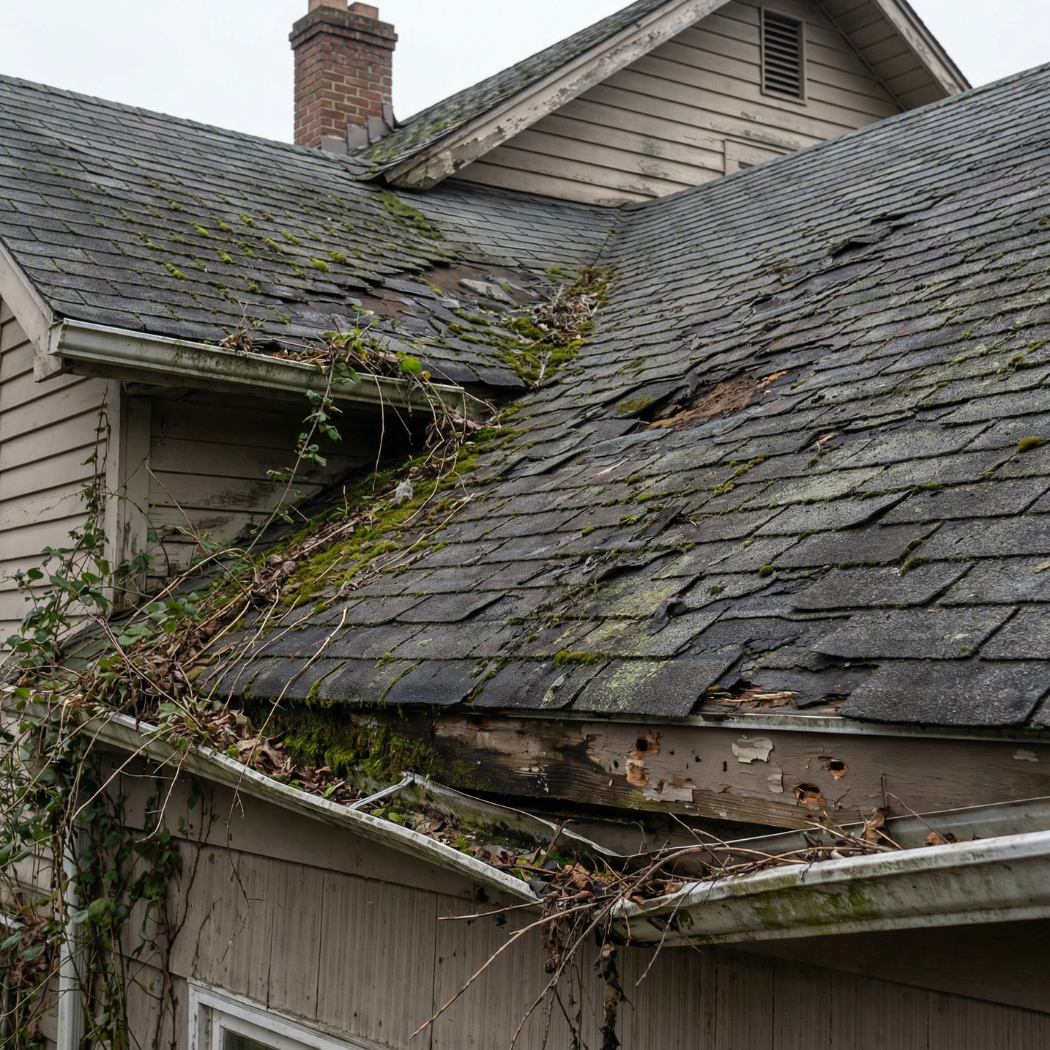
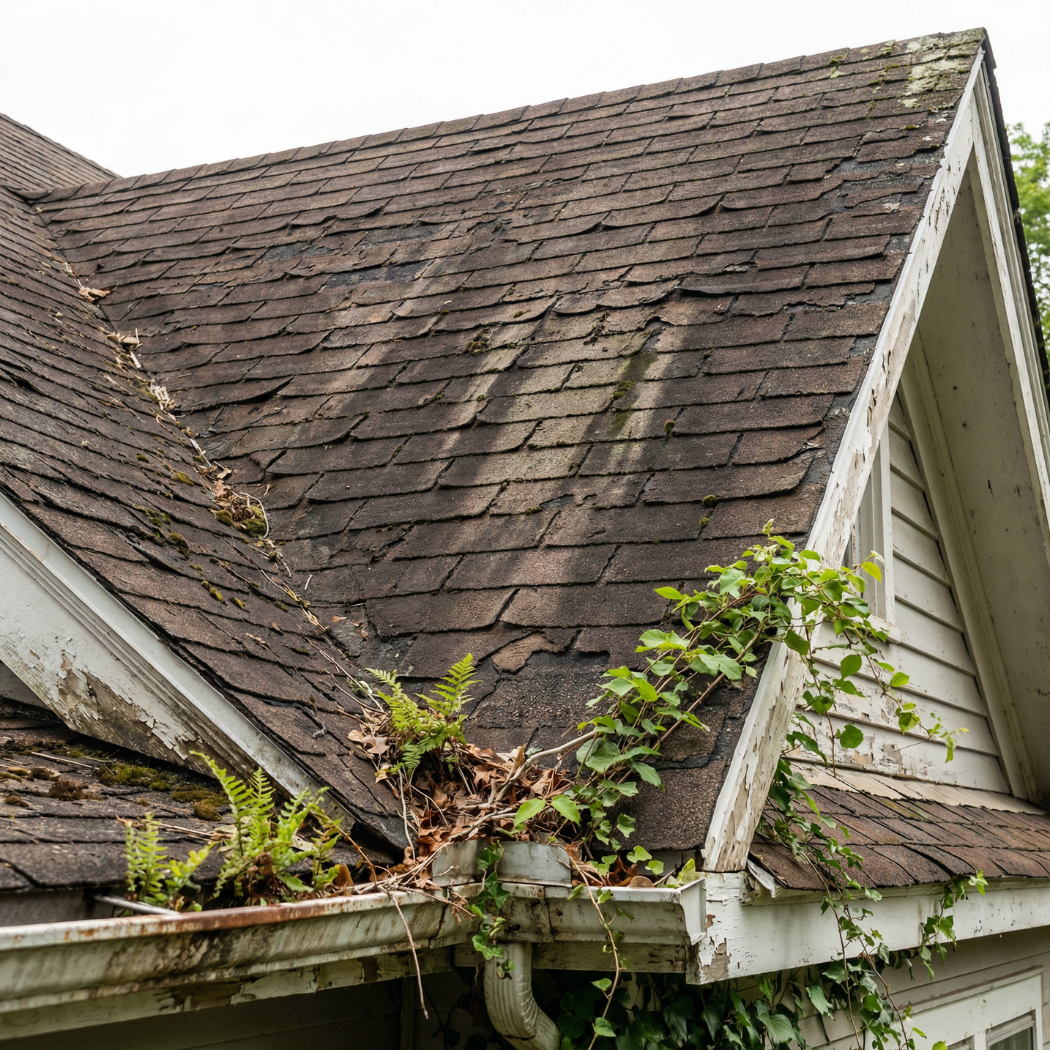
Granule loss is usually the first visible sign of aging. Those tiny ceramic particles coating the surface of your shingles are not just texture. They protect the asphalt layer underneath from UV radiation. Over time, rain and weather wash them off gradually. After 15 years, many shingles develop significant bare patches. Without granule coverage, UV breaks down the asphalt underneath much faster, accelerating the entire aging timeline.
Seal strip failure is harder to see but just as serious. Every shingle has an adhesive strip on its underside that bonds it flat to the shingle below. That strip dries out and hardens over years of heat and cold cycling. Once the bond breaks, wind can lift the shingle. It may not fly off immediately, but the next strong storm can take it entirely.
Curling and cupping develop as the asphalt itself dries and shrinks. Shingle edges curl upward, or the center of the shingle cups downward. Either way, the protective surface geometry is gone and water flows where it should not.
Cracking follows as the asphalt becomes brittle. Hairline fractures develop across the surface, and water follows those cracks under the shingle to the layer below.
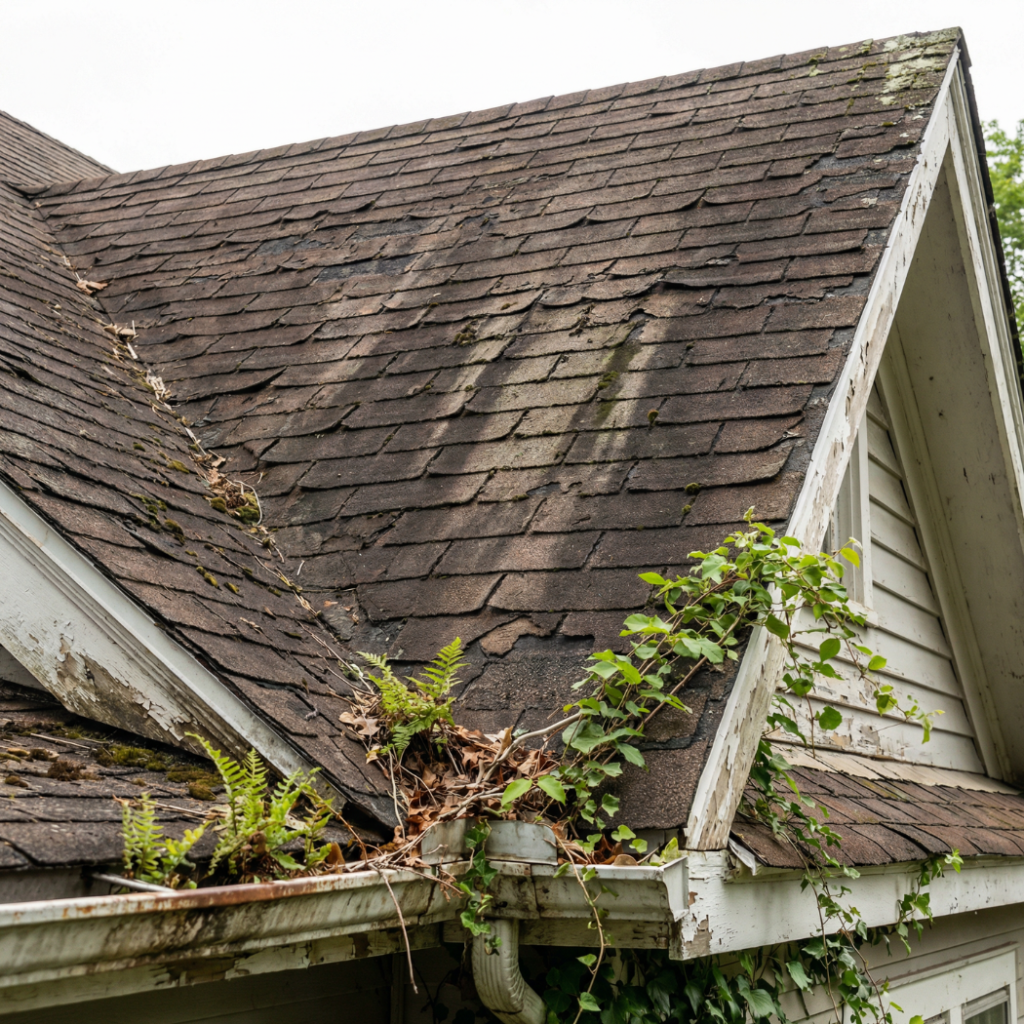
Algae streaking is common on older Missouri roofs. The dark streaks are mostly cosmetic, but algae holds moisture against the shingle surface and speeds up decay over time.
GAF notes that there is no single expiration date for asphalt shingles, but key aging indicators including cracking, curling, excessive granule loss, and bare patches are reliable signals that a professional inspection is warranted.
| Aging Sign | What Causes It | Risk if Ignored |
|---|---|---|
| Granule loss | UV and weathering erosion | Accelerated asphalt breakdown |
| Seal strip failure | Heat cycling over years | Shingles lift in wind |
| Curling or cupping | Asphalt shrinkage and drying | Water intrusion at edges |
| Hairline cracking | Brittle, dried-out asphalt | Water penetrates shingle layer |
| Algae streaking | Moisture retention on surface | Accelerated surface decay |
Pro tip: Check your downspouts and gutters for granule buildup after rain. A sandy, gritty accumulation that looks like coarse coffee grounds is a reliable sign that your shingles are past the midpoint of their service life.
What Is Happening Under the Shingles You Cannot See
The shingle surface is only the top layer of your roofing system. Several critical components underneath it age on a similar or faster timeline.
Pipe boot rubber is the most common hidden leak source on aging roofs. The flexible rubber seals around plumbing pipes that penetrate your roof crack and dry out after 10 to 15 years of temperature cycling. When they fail, water runs straight down the pipe and into your home, often pooling in the attic for weeks before showing up on a ceiling.
Flashing sealant around chimneys, skylights, and wall transitions hardens and pulls away from the surfaces it was bonded to. This creates small gaps that look invisible from the ground but allow water entry during heavy rain.
Nail pops develop from years of thermal expansion and contraction in the wood decking. The decking expands in heat and contracts in cold, slowly backing nails slightly out of the wood. Each nail pop creates a small breach under the shingle above it.
Underlayment degradation is the least visible and most consequential hidden issue. The waterproof felt or synthetic layer under your shingles acts as a last line of defense if shingles are damaged or missing. After 15 to 20 years, that layer has broken down significantly. When shingles eventually fail, the underlayment may no longer be able to hold the water back.
Ventilation wear closes the loop. Ridge vents, soffit vents, and attic fans degrade over time. Poor attic ventilation traps heat in summer, which cooks your shingles from underneath and dramatically accelerates granule loss and seal strip failure. It also traps moisture in winter, which promotes mold growth and decking rot.
Pro tip: If your attic feels noticeably hot in summer, that heat is working against your shingles from below. Proper attic ventilation is one of the most cost-effective ways to extend roof life, and it gets checked in every Roov inspection.
How Missouri Weather Speeds Up Roof Aging
Southwest Missouri is one of the harder climates for asphalt shingle roofs in the country. Several factors combine to shorten the expected service life.
The temperature swings here are extreme. January lows can drop below zero. July highs regularly push past 100 degrees. That 100-plus degree range means your shingles, decking, and fasteners are expanding and contracting significantly every single year. Over 15 or 20 years, the cumulative fatigue that creates is substantial.
Hail frequency adds another layer. Southwest Missouri averages three to five significant hail events annually. No single storm may cause visible damage, but the cumulative weakening of shingle structure over multiple events shortens the roof’s functional life even when no single claim is ever filed.
High summer humidity and frequent heavy rain promote algae and moss growth, keep shingles wet longer, and create more freeze-thaw stress at the eaves in winter. Older roofs with worn-out ice and water shield at the eaves are especially vulnerable to ice damming, where water backs up under the shingles during freeze-thaw cycles.
The bottom line is that a roof rated for 25 to 30 years in a dry, mild climate may only deliver 18 to 22 reliable years in Sparta, Aurora, or Battlefield.
| Missouri Weather Factor | Effect on Roof Aging |
|---|---|
| Temperature range (0 to 100+ degrees) | Accelerated seal strip failure and nail pops |
| 3 to 5 hail events annually | Cumulative shingle weakening even without visible damage |
| High humidity and heavy rain | Algae growth, moisture retention, faster surface decay |
| Winter ice at eaves | Water backup under shingles on worn underlayment |
Pro tip: A roof that received even one significant hail event in the last five years has shingles that are structurally weaker than their age suggests. Cumulative hail impact is one reason an 18-year-old Missouri roof often performs like a 22-year-old roof in a milder region.
The “Looks Fine from the Street” Trap
This is the most expensive mistake aging roof owners make. If there are no visible missing shingles and no active leak, they assume the roof is fine. But nearly all of the damage described above is invisible from the ground.
You cannot see cracked pipe boots from your driveway. You cannot spot failing flashing sealant at the chimney from street level. You cannot assess granule coverage on a back slope or know whether your underlayment has degraded. A roof can look completely reasonable from the curb and be two or three years from serious failure.
There is also a significant insurance risk hiding in that assumption. Insurance covers storm damage, not neglect. If your roof fails primarily from age-related wear during a storm event, your carrier may deny the claim on the grounds that the damage was due to deferred maintenance rather than the storm itself. Getting ahead of aging with documented inspections protects you if that situation ever comes up.
Real example: A homeowner in Branson West had a 19-year-old roof that looked acceptable from the street. A Roov inspection found that two pipe boots had cracked completely, the underlayment on the north slope was brittle and crumbling at the edges, and the ridge cap shingles had lost 60 to 70 percent of their granule coverage. There were no active leaks yet, but the attic showed moisture staining on the decking directly below each failed boot. A targeted repair addressed the most critical items and bought the homeowner another 18 months to plan for a full replacement.
Pro tip: Interior signs often show up before exterior ones on aging roofs. Check your attic annually, especially after a winter with significant ice or after any major rain event. Moisture staining on the decking or wet insulation is a clearer signal than anything visible from the yard.
What a 15-Year Roof Inspection Actually Reveals
When Roov inspects an aging roof, the goal is a complete, honest picture of the system’s current condition and remaining functional life. The NRCA’s roofing industry guidelines for residential maintenance recommend biannual professional inspections and specifically flag deteriorated flashings, excessive granules in gutters, cracked or warped shingles, and interior signs like discolored drywall as key markers to evaluate.
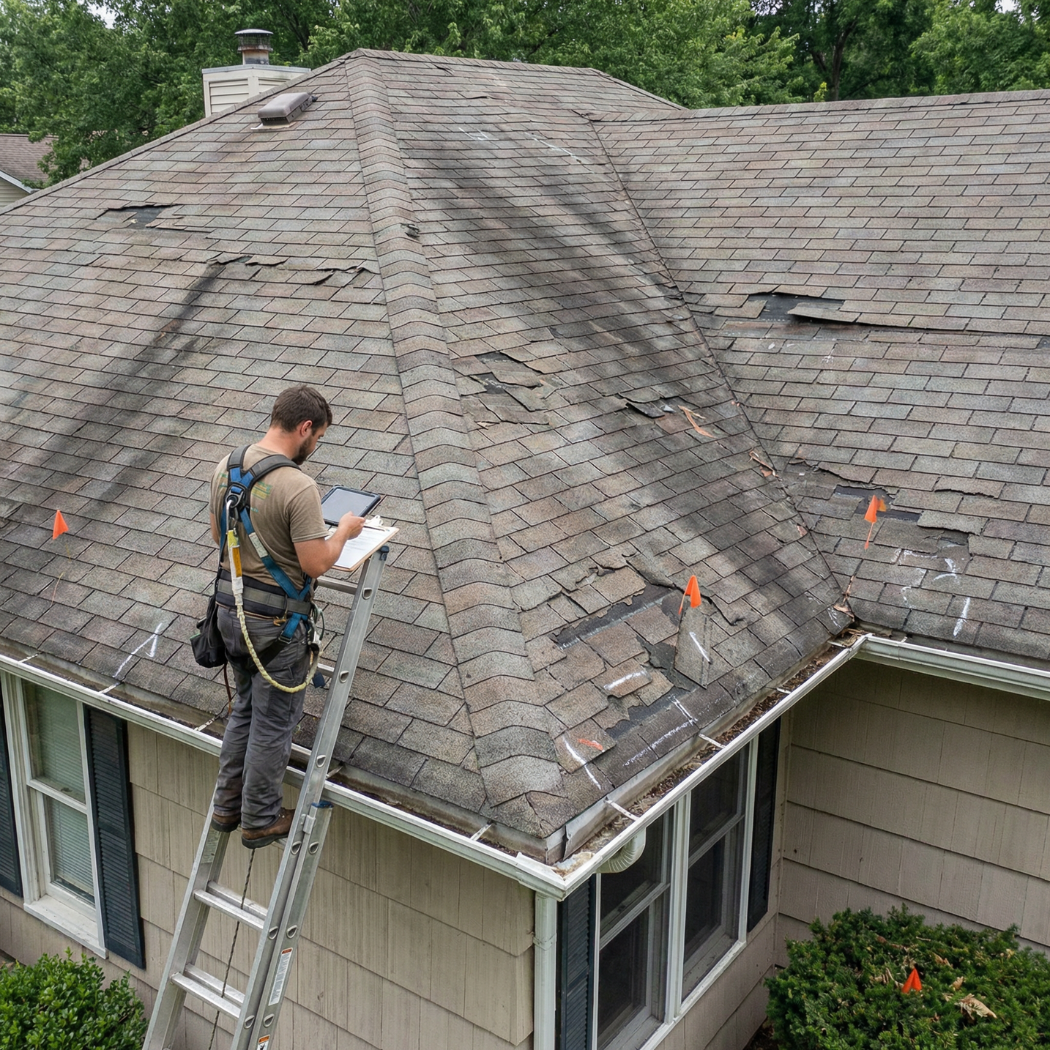
Here is what we check on every aging roof inspection. We assess remaining granule coverage across all slopes with particular attention to south-facing surfaces that take the most UV exposure. We check seal strip condition on a representative sample of shingles across each slope. We inspect every flashing transition at chimneys, walls, skylights, and valleys. We examine every pipe boot and vent cap for cracking and seal integrity. We access the attic to assess moisture levels, insulation condition, ventilation performance, and the condition of the wood decking.
All of this goes into a written Roof Condition Report with photos for every finding.
Sometimes the honest answer is: “You have three to five years of life left here. Here is what to monitor and what small repairs to make now.” Sometimes it is: “You should plan for replacement within the next 12 months. Here is why.” Either answer is useful. The answer you do not want is the one a leak eventually gives you, when you have no runway left to plan.
Real example: A couple in Kimberling City scheduled a Roov inspection on their 17-year-old roof after their neighbor replaced theirs. The inspection found good granule coverage on most slopes but a failing pipe boot at the master bath vent, two areas of lifted ridge cap shingles from a previous wind event, and a ventilation deficiency in the attic. None of these had produced a leak yet. Addressing all three for a modest repair cost extended their roof’s useful life by an estimated three to four years while they planned for a full replacement.
Pro tip: Ask your inspector specifically about your remaining underlayment condition. Most homeowners never think about the layer below the shingles. But when shingles start failing on an aging roof, the underlayment is the only thing standing between water and your decking. Knowing its condition changes the urgency calculation significantly.
Repair, Maintain, or Replace? A Simple Decision Framework
The right answer depends on the combination of your roof’s age and its current condition. Here is a practical framework for thinking through it.
| Roof Age + Condition | Recommended Path |
|---|---|
| Under 15 years, minor isolated issues | Repair as needed. Roof has significant life remaining. |
| 15 to 20 years, moderate wear, no active leaks | Professional inspection, targeted repairs, plan for replacement in 2 to 5 years. |
| 15 to 20 years, multiple failing components | Accelerated replacement planning. Patch most critical items now. |
| 20-plus years, visible aging across multiple areas | Replacement is likely the financially smart move. |
| Any age, storm damage present | Insurance claim evaluation first. Roov navigates this with you. |
GAF’s guide to roof maintenance for homeowners emphasizes that minor maintenance prevents major problems. Cleaning gutters, trimming overhanging branches, and addressing small repairs promptly are all cost-effective ways to extend a roof’s life and protect the investment.
If storm damage is involved alongside aging, the insurance picture gets more complex. Roov handles the full roof replacement and insurance navigation process with homeowners who are dealing with both an aging system and a recent storm event. If a retail replacement is the path forward, we offer financing options to fit your budget.
Pro tip: If your roof is between 15 and 20 years old and you are starting to plan for replacement, this is also the right time to consider upgrading to Class 4 impact-resistant shingles. They carry insurance premium discounts with many Missouri carriers and hold up significantly better to the hail events that are inevitable in this region.
Pro tip: Do not try to patch aging shingles with new ones of a different product line. Mismatched shingles create color and thickness inconsistencies that affect both appearance and function, and insurance adjusters use them as a reason to approve only partial coverage. A documented repair using matched materials, done properly, preserves both the roof system and your claim options.
Frequently Asked Questions
Q: How long does an asphalt shingle roof last in Missouri? Standard architectural asphalt shingles are rated for 25 to 30 years under ideal conditions. In Southwest Missouri, the combination of extreme temperature swings, frequent hail, and high humidity means most roofs deliver 18 to 22 years of reliable service. High-performance or impact-resistant shingles can extend that range, particularly if proper attic ventilation is maintained throughout the roof’s life.
Q: My roof is 20 years old but has no leaks. Does it need replacing? The absence of an active leak does not mean the system is sound. At 20 years, the underlying components including pipe boots, underlayment, flashing sealant, and seal strips are all past or near the end of their designed service life. A professional inspection will tell you the real condition, not just the visible surface. Many 20-year roofs are one significant storm away from a failure that could have been avoided.
Q: Can I just keep patching an old roof instead of replacing it? Patching can address specific failures and extend life in some situations, particularly on roofs in the 15 to 18 year range with otherwise solid components. But beyond 20 years, multiple failing systems mean the cost of recurring patches adds up quickly and the risk of an undetected failure between patches grows. At some point, continuing to patch costs more than a planned replacement.
Q: Will insurance cover my roof if it is 20 years old? Coverage depends on your policy type and the nature of the damage. Storm damage from a specific hail or wind event is typically covered regardless of age, though ACV policies subtract depreciation that increases with roof age. Damage attributed to wear and neglect is generally not covered. Having documented professional inspections on record strengthens your position if age becomes a point of dispute during a claim.
Q: What does a Roof Condition Report actually show me? It is a written, photo-documented summary of every area of your roof system. It identifies specific findings by location, explains what each finding means for the roof’s performance, and gives an honest assessment of remaining useful life and recommended next steps. It is not a sales document. It is the same report whether the result is “everything looks good” or “plan for replacement soon.”
Q: How much does a Roov inspection cost? Nothing. Roov’s inspections are completely free with no obligation. You receive the full written Roof Condition Report regardless of the findings or whether you choose to work with us afterward.
Q: Should I get an inspection before listing my home for sale? Yes. A pre-sale roof inspection gives you the opportunity to address any findings on your timeline rather than during a buyer’s inspection negotiation. It also documents the roof’s condition at the time of listing, which can support your asking price and reduce the likelihood of a last-minute repair credit request.
Q: What are the first signs I should look for on my own? From the ground, check for dark algae streaks, noticeable granule buildup in gutters, any visible curling or lifting at shingle edges, and dents on metal gutters or vent caps after storms. Inside, check your attic annually for moisture staining on the decking or wet insulation. Any of these warrants a professional inspection even if no active leak is present.
Key Takeaways
- Aging is invisible. Most serious wear on a 15 to 20 year old roof is not visible from the ground. Pipe boots, underlayment, seal strips, and flashing sealant all degrade quietly before symptoms appear inside.
- Missouri accelerates the timeline. Extreme temperature swings, frequent hail, and high humidity mean Southwest Missouri roofs age faster than manufacturer ratings suggest.
- The “looks fine” assumption is expensive. A roof that looks decent from the street can be two to three years from failure. Waiting for a leak removes all planning runway.
- Insurance does not cover neglect. If your roof fails primarily from age during a storm, your carrier can deny the claim. Documented inspections protect you.
- A written report gives you a plan. Whether the answer is three more years or replace within twelve months, knowing your actual position lets you make a smart financial decision instead of a reactive one.
- Patching has limits. Targeted repairs make sense on a 15 to 18 year old roof with isolated issues. On a 20-plus year old roof with widespread aging, patching often costs more than it saves.
- Inspections are free. There is no cost and no pressure. Roov will give you an honest report and let you decide what to do with it.
Schedule Your Free Inspection and Know Where You Stand
The worst time to find out your roof is failing is during a storm. The second worst time is when a buyer’s inspector finds it during your home sale. The best time is now, when you still have options.
Roov inspects aging roofs across Southwest Missouri every week. We give you a honest, photo-documented Roof Condition Report that tells you exactly what is happening up there, what has life left, what needs attention, and how to plan smart. No scare tactics. No inflated findings. Just the truth and a clear path forward.
Serving Sparta, Aurora, Battlefield, Branson West, Kimberling City, and all of Southwest Missouri.
Contact Roov for your free roof inspection today.
Roov | Roofing with a Purpose | Serving Southwest Missouri