
Not every roof has a steep pitch. If your home has a sunroom addition, an attached garage, a covered porch, or a modern flat-section dormer, that area needs a completely different roofing system than the rest of your house. Standard asphalt shingles do not work on flat or low-slope surfaces. They are designed to shed water on a slope, and without enough pitch, water sits and leaks through. This guide explains the three flat roofing systems most commonly installed on Southwest Missouri homes, how they compare, and which one makes sense for your situation.
TLDR: Flat roof sections on Missouri homes need a dedicated waterproofing membrane, not standard shingles. The three main options are TPO (best energy efficiency), EPDM (longest lifespan, lowest cost), and modified bitumen (best for foot traffic and budget). Each has specific strengths for Missouri’s climate. Read on for the full comparison and what to ask your contractor.
You probably did not buy your home thinking about flat roofs. But if you walk around the outside, you might notice a section that is nearly level. Maybe it covers the back porch. Maybe it sits over the garage or a room addition built after the original construction.
These flat or low-slope sections are everywhere in Springfield, Nixa, and across Southwest Missouri. The International Building Code classifies any roof with a pitch of 3:12 or less as low-slope. At 2:12 or below, the roof is treated as flat for waterproofing purposes. That means it needs a membrane system designed to keep water out even when it has nowhere to run quickly.
The three systems used most often for residential flat sections are TPO, EPDM, and modified bitumen. Here is how each one works and which one fits your home.
Where Do Flat Roofs Show Up on Missouri Homes?
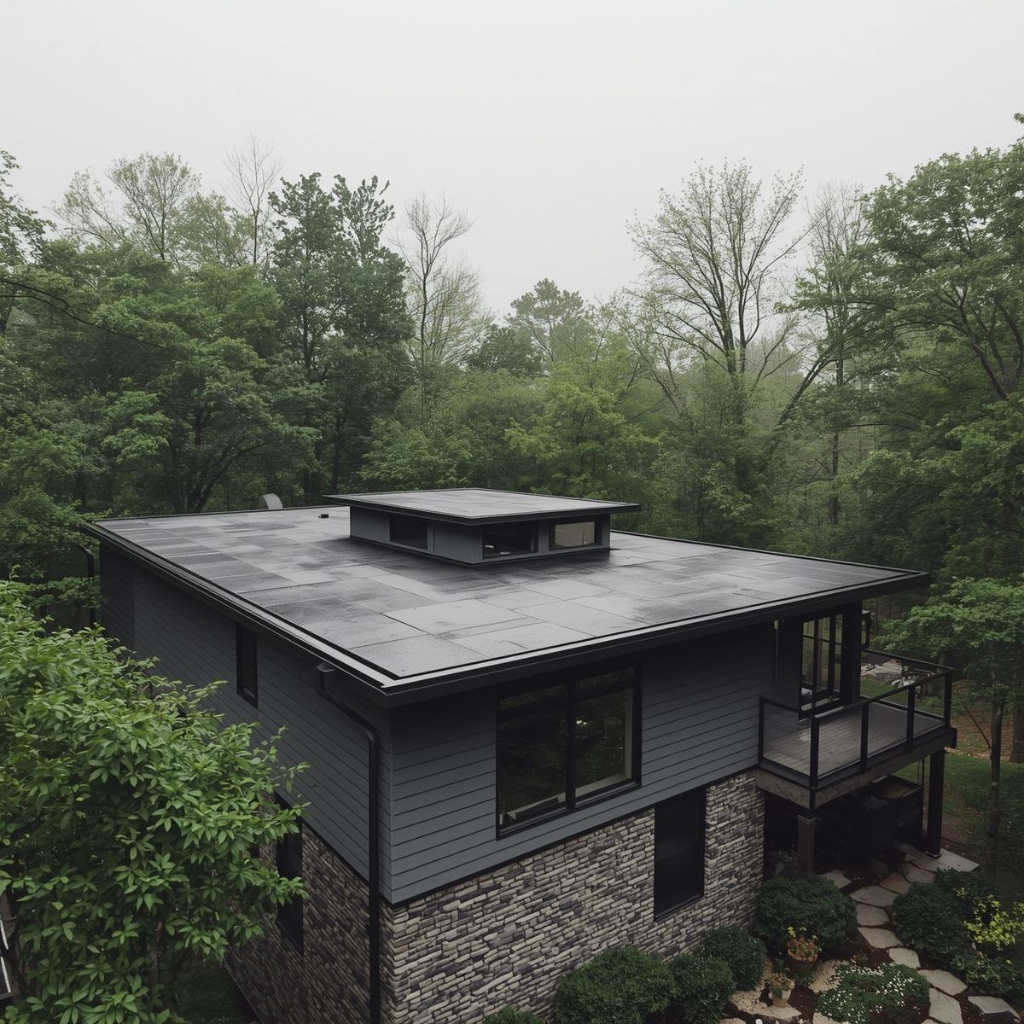
Before we compare materials, it helps to know where flat roofs actually appear. Many homeowners do not realize they have one until it starts leaking. Common locations include home additions like sunrooms and mudrooms, attached garages with living space above, covered porches and carport structures, dormers with minimal pitch, and modern-design ranch homes.
Real example: A homeowner in Ozark called Roov about a persistent leak in their back bedroom. The main roof was fine, but the bedroom sat under a low-slope addition built in the 1990s. The original builder had used standard three-tab shingles on a 1:12 pitch. Water had been pooling at every rain for years. The fix required tearing off the shingles and installing a proper membrane system.
Pro tip: If any section of your roof looks nearly flat, do not assume the original builder used the right materials. Many additions and porches were roofed with shingles that should never have been installed on a low slope. A free roof inspection can identify these problem areas before they cause interior damage.
The Three Flat Roofing Systems Compared
Here is how all three systems stack up side by side.
| Feature | TPO | EPDM | Modified Bitumen |
|---|---|---|---|
| Material type | Single-ply membrane | Synthetic rubber membrane | Multi-ply asphalt system |
| Standard color | White | Black (white available) | Gray/granulated |
| Lifespan | 15 to 30 years | 30 to 40 years | 15 to 25 years |
| Installed cost per sq ft | $7 to $14 | $5 to $9 | $4 to $8 |
| Seam method | Heat-welded | Adhesive or tape | Torch, adhesive, or self-adhering |
| Energy efficiency | Excellent (reflective) | Poor (black); good (white) | Moderate; improves with coating |
| Best for | Energy savings, new installs | Longevity, budget, cold climates | Foot traffic, layered protection |
TPO: The Energy-Efficient Option
TPO stands for Thermoplastic Polyolefin. It is a single-ply membrane that comes in large rolls and gets heat-welded at the seams. That heat-welded bond is stronger than the membrane itself, which makes it one of the most reliable seam methods available. TPO has been on the market since the early 1990s and is now the most popular flat roofing material in the country for both commercial and residential applications.
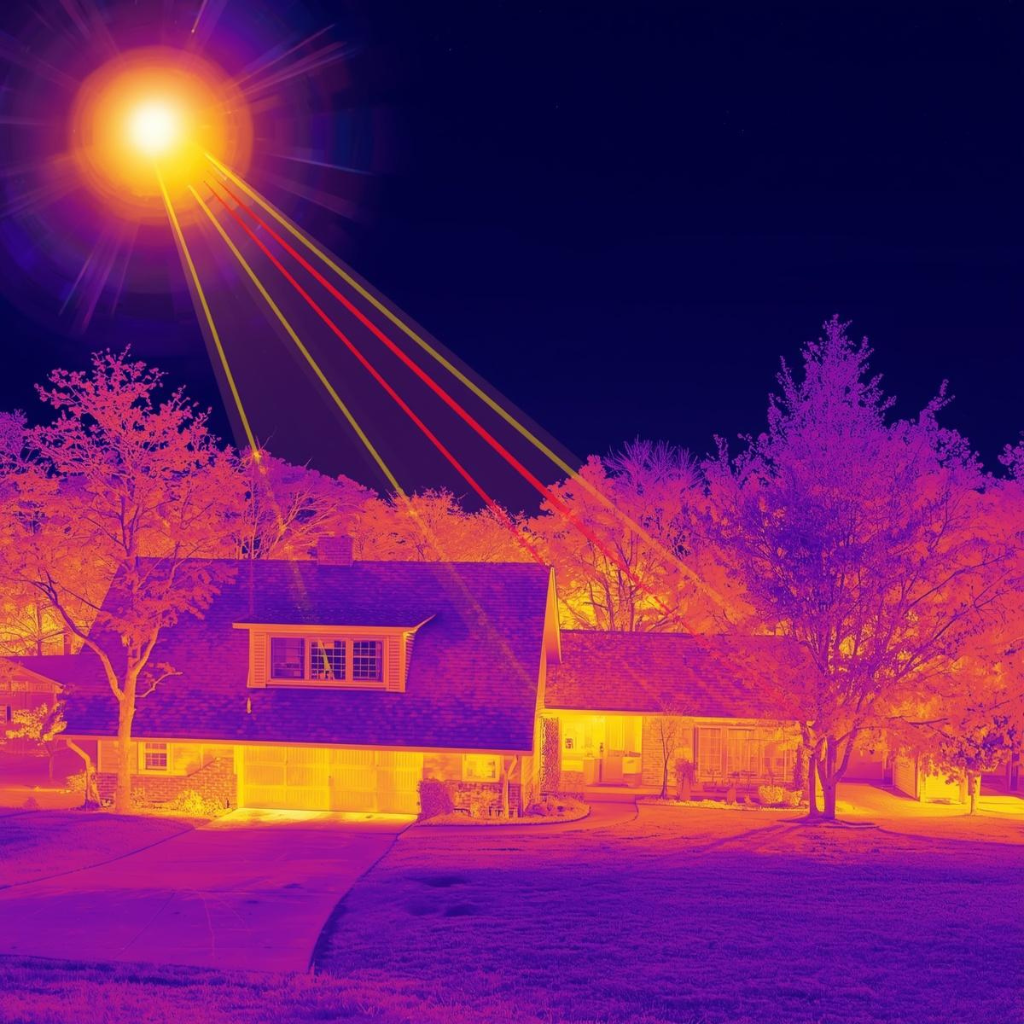
The biggest advantage for Missouri homeowners is energy efficiency. White TPO reflects up to 87 percent of UV rays, which keeps the roof surface dramatically cooler than dark materials. That translates directly to lower cooling costs during our hot summers.
| TPO Pros | TPO Cons |
|---|---|
| Highly reflective, reduces cooling costs | Installation-sensitive (bad welds cause failures) |
| Heat-welded seams are strongest available | Shorter track record than EPDM |
| Resistant to mold, algae, UV, and chemicals | Quality varies by manufacturer |
| 100% recyclable material | Single layer means puncture risk from foot traffic |
Pro tip: The number one cause of TPO roof failures is poor installation, specifically bad seam welds. The material itself is solid. The difference between a TPO roof that lasts 15 years and one that lasts 30 years comes down to the crew that installs it.
Pro tip: If you are getting quotes for a TPO flat roof, ask the contractor how many flat roofs they have installed in the past 12 months. Flat roofing requires different equipment and skills than steep-slope work. Not every roofer who installs shingles can properly weld TPO seams.
Real example: A couple in Republic added a sunroom to their home and chose TPO for the flat section above it. Their contractor heat-welded every seam, flashed every penetration, and confirmed proper drainage slope. Three years later, no leaks, and their summer cooling costs for that room are noticeably lower than the rest of the house.
EPDM: The Proven Workhorse
EPDM stands for Ethylene Propylene Diene Monomer, but most people just call it rubber roofing. It has been used on flat roofs for over 50 years, giving it the longest proven track record of any flat roofing material. EPDM is made from synthetic rubber and comes in black as the standard color, though white is available.
EPDM regularly lasts 30 to 40 years, and well-maintained roofs routinely exceed 50 years. It stays flexible down to negative 40 degrees, which means Missouri’s coldest winter nights will not crack or damage this material.
| EPDM Pros | EPDM Cons |
|---|---|
| Longest proven lifespan (30 to 40+ years) | Black absorbs heat (raises cooling costs) |
| Stays flexible in extreme cold (down to -40F) | Adhesive seams less strong than heat-welded |
| Easy, low-cost repairs with patch adhesive | Utilitarian appearance |
| Large sheet sizes mean fewer seams | Can shrink slightly over time at edges |
The main downside is energy performance. Standard black EPDM absorbs heat, which pushes attic temperatures higher and forces your AC to work harder. White EPDM solves this but adds about $0.75 to $1.25 per square foot to the material cost.
Pro tip: If you choose EPDM for a flat section over living space, strongly consider white EPDM. The small material upgrade pays for itself in reduced cooling costs within a few years in Missouri’s climate.
Pro tip: EPDM is the easiest flat roof membrane to repair. A patch kit, some adhesive, and a roller is all it takes. If you have an EPDM roof with a small leak, a professional repair is usually fast and affordable. Ask Roov about flat roof repair options before assuming you need a full replacement.
Modified Bitumen: The Legacy System
Modified bitumen (often called “mod bit”) is an asphalt-based multi-ply system that evolved from old-school built-up roofing. It has been used in the U.S. since the late 1970s. Standard asphalt is modified with polymers to add flexibility and durability, then manufactured into membrane sheets installed in two to three layers.
There are two main types. SBS (Styrene-Butadiene-Styrene) is modified with synthetic rubber, making it more flexible in cold weather and better suited to Missouri’s temperature swings. APP (Atactic Polypropylene) is modified with plastic and is typically installed with a propane torch. SBS is more common for residential applications in Southwest Missouri because it handles our freeze-thaw cycles better.
The biggest advantage of modified bitumen is its multi-layer construction. Water has to breach two or three separate barriers to reach the deck. It also handles foot traffic better than single-ply systems, making it a good choice for flat sections that need regular access for HVAC maintenance.
| Modified Bitumen Pros | Modified Bitumen Cons |
|---|---|
| Multi-layer waterproofing redundancy | Shorter lifespan (15 to 25 years) |
| Excellent foot traffic resistance | Torch installation creates fire risk |
| Proven 50+ year track record | Absorbs heat like standard dark shingles |
| SBS handles Missouri freeze-thaw well | Heavier than single-ply systems |
| Lowest initial cost per square foot | Longer, more complex installation |
Pro tip: If your flat roof section has an HVAC unit on it, modified bitumen is worth serious consideration. The granulated cap sheet resists scuffing and punctures from maintenance foot traffic better than TPO or EPDM.
Pro tip: APP torch-down installation uses open flame near your home’s structure. Make sure your contractor carries proper insurance and has documented experience with torch application. SBS cold-adhesive installation eliminates the fire risk entirely and is the safer option for residential work.
Real example: A property owner in Branson needed to replace the flat roof section over a rental unit’s back addition. The roof had an HVAC condenser sitting on it and required regular service access. They chose SBS modified bitumen for the puncture resistance and layered waterproofing. The cold-adhesive installation avoided any torch work near the structure.
Ponding Water: The Biggest Flat Roof Problem in Missouri
Every flat roof discussion has to address ponding water. It is the number one issue that causes flat roofs to fail early, regardless of which membrane you choose.
Ponding water is water that stays on the roof for 48 hours or more after rain stops. Missouri’s frequent heavy thunderstorms dump large volumes of water in short periods. If your flat roof does not drain properly, that water sits, and sitting water causes structural stress from added weight, membrane degradation and seam failure, interior leaks and water damage, and algae and mold growth.
Common causes include poor original slope design, clogged drains or scuppers from leaves and debris, structural settling that creates low spots over time, and blocked drains from HVAC equipment placement.
Pro tip: Every flat or low-slope section on a Southwest Missouri home should be inspected at least twice a year, in spring and fall, specifically for ponding water signs and drain condition.
Pro tip: The International Building Code minimum roof slope requires flat roofs to have at least 1/4 inch per foot to direct water toward drains. If your flat roof has areas where water sits after every rain, the slope was either poorly designed originally or the structure has settled. Both problems are fixable with tapered insulation or additional drain points.
Why Contractor Quality Matters More Than Material Choice
This is the most important section of this guide. The material you choose matters, but the crew that installs it matters more.
For TPO, seam quality is everything. The membrane must be heat-welded at the correct temperature and speed, over a clean dry surface, with proper overlap. A bad weld looks fine on day one but fails under thermal stress months later.
For EPDM, the main risks are seam adhesion quality and edge termination detail where the membrane meets walls, curbs, and penetrations.
For modified bitumen, torch-down requires experienced crews who understand temperature control. Cold-adhesive SBS applications are more forgiving but still demand careful seam overlap.
As a GAF Master Elite contractor, Roov has the training, tools, and experience to install all three systems correctly. Flat roofing is a specialty that requires different equipment and a different skill set than steep-slope work. Always verify a contractor’s flat roof experience before hiring.
Pro tip: Ask any flat roof contractor for photos of their last five flat roof installations. A qualified contractor will have them readily available. If they hesitate, that tells you something.
Real example: A homeowner in Battlefield hired a general roofer to install TPO on their garage addition. Within 18 months, three seams had opened. A Roov inspector found the welds were done at incorrect temperatures and the seams had never fully bonded. The entire membrane needed replacement. The homeowner paid twice for the same roof.
What Works Best in Missouri’s Climate
Missouri sits in Climate Zone 4A, meaning hot humid summers and cold winters. This mixed climate affects flat roof system selection in specific ways.
For summer heat, TPO’s reflective white surface is the clear winner for keeping flat sections cool and reducing AC load. Research confirms that cool roofs reduce energy costs significantly in buildings with air conditioning.
For temperature cycling, Missouri’s wide seasonal swing from near 0 degrees in winter to over 100 degrees in summer favors flexible materials. Both EPDM and SBS modified bitumen flex without cracking better than more rigid options.
For storm performance, all three systems handle wind and hail well when properly installed. TPO’s heat-welded seams are strongest in high-wind events. Modified bitumen’s multi-ply construction provides redundancy if the top layer takes damage.
Industry flat roofing installation guidelines recommend working with a professional roofing contractor for all flat roof material selection and confirm that workmanship quality is just as important as material choice.
Pro tip: There is no single “best” flat roofing material for every situation. The right choice depends on your budget, whether the roof sees foot traffic, how much energy efficiency matters to you, and the size of the flat section. Roov walks you through all three options during your consultation.
Frequently Asked Questions
Q: Can I put regular shingles on a flat or low-slope roof?
No. Standard asphalt shingles are designed for slopes of 4:12 or steeper. On a flat or low-slope surface, water does not run off fast enough and will find its way under the shingle tabs. If your flat section currently has shingles, it was installed incorrectly and should be evaluated by a professional.
Q: How do I know if my home has a flat roof section?
Walk around the outside of your home and look for areas where the roof appears nearly level. Common locations include over porches, garages, room additions, and dormers. If you are not sure, schedule a flat roof replacement evaluation and we will identify every roof section and its pitch during the inspection.
Q: Which flat roof system lasts the longest?
EPDM has the longest proven track record. It regularly lasts 30 to 40 years, and some well-maintained EPDM roofs have exceeded 50 years. TPO can also reach 30 years with quality installation, but it has a shorter track record in the field.
Q: How much does it cost to replace a flat roof on a home addition?
It depends on the system and the size of the section. For a typical 500-square-foot addition, expect roughly $2,000 to $4,000 for modified bitumen, $2,500 to $4,500 for EPDM, or $3,500 to $7,000 for TPO. These are approximate ranges and your actual cost depends on access, deck condition, and drainage requirements.
Q: Is TPO or EPDM better for Missouri?
Both work well here. TPO is better if energy efficiency is your priority, especially for flat sections over living space. EPDM is better if you want maximum lifespan at the lowest cost and are willing to specify white EPDM for energy performance. Roov installs both and can recommend the right one for your specific situation.
Q: What causes flat roof leaks?
The most common causes are failed seams, ponding water from poor drainage, damage around penetrations like pipes and vents, and membrane deterioration from age or UV exposure. Flat roofs need regular inspection because problems are harder to spot from the ground than on steep-slope roofs.
Q: How often should a flat roof be inspected?
At least twice a year, in spring and fall. You should also inspect after any major storm. Flat roofs collect debris and water more easily than pitched roofs, and small problems like a clogged drain can quickly cause significant damage.
Q: Does Roov install flat roofing systems?
Yes. Roov installs TPO, EPDM, and modified bitumen systems for residential and light commercial flat roof sections across Southwest Missouri. As a GAF Master Elite contractor with training in single-ply membrane roofing systems, we have the equipment to install all three systems to manufacturer specifications.
Key Takeaways
Standard shingles do not work on flat roofs. Any roof section with a pitch of 2:12 or less needs a dedicated waterproofing membrane system.
TPO is the energy efficiency leader. Its white reflective surface keeps flat roof sections cooler in Missouri summers and reduces cooling costs.
EPDM offers the longest proven lifespan. At 30 to 40 years (50+ with maintenance), rubber roofing has the deepest track record of any flat roof material.
Modified bitumen handles foot traffic best. If your flat section has HVAC equipment or needs regular access, its multi-layer construction resists punctures and scuffing.
Ponding water is the biggest threat to all flat roofs. Make sure your flat section has proper slope and clear drainage, and inspect it twice a year.
Installation quality matters more than material choice. The same TPO membrane can last 15 years or 30 years depending entirely on who installs it.
Ready to Find Out What Your Flat Roof Needs?
You now understand the three flat roofing systems and which one fits different situations. The next step is finding out what condition your flat roof section is in and whether it needs repair, replacement, or just maintenance.
Roov is Southwest Missouri’s trusted roofing partner. We bring “Roofing with a Purpose” to every job. That means honest answers, quality materials, and a team that treats your home like our own. We are GAF Master Elite certified, CertainTeed ShingleMaster certified, and Owens Corning Preferred Contractor.
Here is what we offer:
- Free, no-pressure Roof Condition Reports
- Expert installation of TPO, EPDM, and modified bitumen systems
- Assistance with insurance claims for storm-damaged flat roofs
- Local crews who live and work in your community
Ready to get started? Contact us today:
Call: 417-370-1259
Email: [email protected]
We serve Springfield, Nixa, Ozark, Republic, Branson, Battlefield, and all surrounding Southwest Missouri communities. Schedule your free inspection today. Let’s make sure every section of your roof is protected.
Roov | Roofing with a Purpose | Serving Southwest Missouri