
Soffit and Fascia: What They Are, Why They Rot, and What It Costs to Fix Them in Missouri
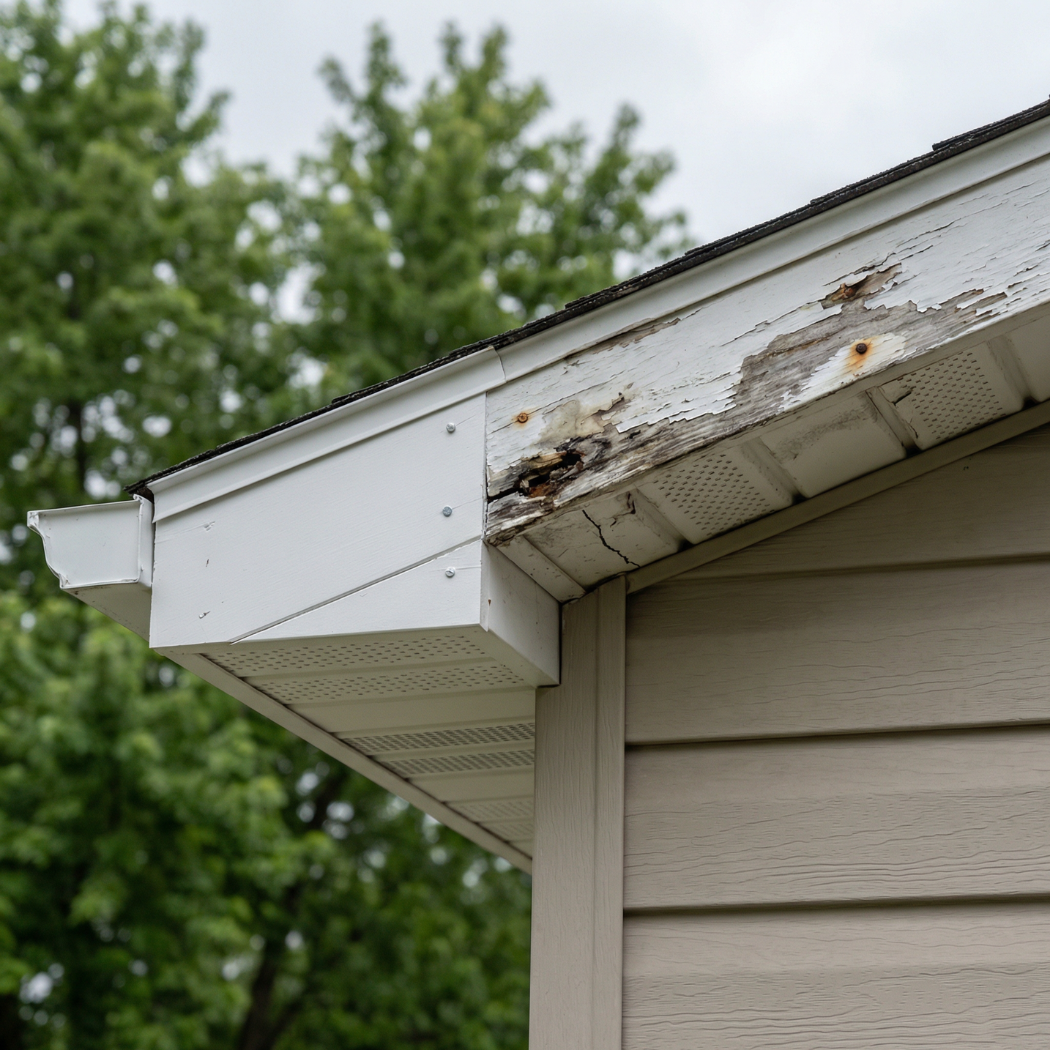
If you have noticed peeling paint at the roof edge, gutters starting to sag, or suspicious soft spots on the boards just beneath your roofline, you are probably looking at soffit and fascia damage. Understanding what is soffit and fascia on your home puts you in front of a problem, that ripples outward fast when left unaddressed. Knowing what is soffit and fascia, and why it fails, is the starting point for protecting the rest of the roof system above it. This guide explains soffit and fascia repair in Missouri, why Missouri’s climate destroys them faster than most homeowners expect, how to spot early damage from the ground, and when it makes sense to repair or replace them before the problem gets expensive.
TLDR: Soffit and fascia repair in Missouri is one of the most commonly delayed maintenance tasks on the list. Soffit is the finished underside of your roof overhang. Fascia is the board behind your gutters. Both rot from water, clogged gutters, and Missouri’s freeze-thaw cycles. Rotting fascia in Bolivar MO and across Southwest Missouri is one of the most commonly ignored problems that leads to damaged gutters, roof edge decay, and poor attic ventilation. A targeted repair now costs hundreds. Ignoring it can cost several thousand once the damage spreads to roof decking.
You probably walk past your soffit and fascia every day without thinking about them. They sit quietly at the roofline doing their jobs until water, insects, or age begin breaking them down. By the time most homeowners notice something is wrong, the damage has usually been building for a season or two. Knowing what these components do and what failure looks like puts you ahead of a repair that often grows into something much larger.
What Are Soffit and Fascia in Normal-People Terms?
Start with a simple picture. Look at the edge of your roof from the side of your house. The horizontal board that runs along the very edge of the roof, the piece your gutters are attached to, is the fascia. Now look underneath the roof overhang, the section that extends past the exterior wall of your house. That finished underside panel is the soffit.
They look simple, but both are doing real work.
The fascia provides a mounting surface for your gutters and closes off the exposed rafter tails at the roof edge. It also serves as a visual trim piece that gives the roofline a finished look. Without it, the structural ends of your rafters would be exposed to weather and appear unfinished from the street.
The soffit covers the underside of the roof overhang. On most Missouri homes, soffit panels are vented, meaning they contain small perforations or slotted openings that allow outside air to enter the attic space below the roof deck. That ventilation is not cosmetic. It is a critical part of your home’s moisture and temperature management system.
| Component | Where It Is | What It Does | What Damage Looks Like |
|---|---|---|---|
| Fascia | Horizontal board at the roof edge, behind the gutters | Caps the rafter tails, mounts the gutters, seals the roof edge | Peeling or bubbling paint, soft spongy wood, gutters pulling away, visible rot or discoloration |
| Soffit | Underside of the roof overhang, between fascia and exterior wall | Covers rafters, allows ventilation into attic, keeps pests out | Sagging panels, holes, mold streaks, cracks, blocked vents, insect or animal entry |
| Drip edge | Metal strip at the very edge of the roof deck | Directs water off the roof and away from the fascia | Bent, missing, or corroded metal; water staining directly on fascia below |
| Rafter tails | Structural wood framing behind the fascia | Supports the roof overhang | Rot visible behind damaged fascia; soft when probed |
Pro tip: You can test fascia from the ground by looking closely at its painted surface. Bubbling or peeling paint in one localized area often means the wood underneath has absorbed moisture and is softening. That is early-stage rot, and it is far cheaper to address than late-stage.
Pro tip: Soffit vents should be checked at least once a year. Blocked vents from paint, insulation, or debris reduce the airflow that keeps your attic dry in winter and cool in summer. A quick look from the ground with binoculars reveals whether the vent openings are clear.
Why Soffit and Fascia Rot So Fast in Missouri
Missouri’s climate is particularly hard on wood fascia and soffit. The combination of factors that drive rot in this region comes from multiple directions at once, and once moisture finds its way in, it rarely has a good path out.
Freeze-thaw cycles are the primary structural threat across Polk County and the rest of Southwest Missouri. When temperatures alternate between freezing and mild repeatedly through winter, wood fibers expand and contract with each cycle. Any small crack in the paint film or a nail hole opens slightly, admits moisture, and then traps it as temperatures drop. Over several seasons, that cycle works moisture deeper into the wood grain until the board begins to decay from the inside.
Clogged gutters are the single most common cause of accelerated fascia rot. When gutters fill with leaves, seed pods, and debris, water backs up and overflows at the gutter edge rather than flowing to the downspout. That overflow soaks directly into the top edge of the fascia board, the most vulnerable spot. It also seeps behind the gutter bracket and wicks along the back face of the board where no paint ever reaches. A gutter that overflows regularly during every rain event is rotting its fascia from the inside, and the damage is invisible until the wood is already compromised.
Soffit rot from trapped interior moisture works differently. In Missouri winters, warm humid air from inside the home migrates into the attic and condenses on cold surfaces. If soffit vents are blocked or the ventilation path is restricted, that moisture has nowhere to go. It saturates the underside of the roof deck and the soffit panels themselves. According to ENERGY STAR’s attic ventilation guidance, blocking soffit vents is one of the most common homeowner mistakes during insulation projects, and it creates the exact conditions that lead to moisture damage, mold, and shortened shingle life.
Material matters significantly. Homes built before the late 1990s typically have wood fascia and soffit boards, either painted plywood or solid pine. These materials absorb moisture readily and require paint to stay intact. Once the paint film breaks down, rot follows within one to three seasons depending on exposure. Newer homes increasingly use vinyl or aluminum-clad soffit and fascia, or fiber cement products, which resist moisture far better. When wood boards are replaced today, wrapping the new board in aluminum coil stock is a common way to protect it long-term and eliminate the paint maintenance cycle.
Pro tip: Look at your gutters after a heavy rain from a safe, ground-level position. If water is spilling over the front or back edge of the gutter rather than flowing out the downspout, that water is landing on or behind your fascia. That single habit, catching gutter overflow early, prevents most fascia rot before it starts.
7 Signs Your Soffit or Fascia Are in Trouble From the Ground
You do not need to climb a ladder to spot most early-stage soffit and fascia damage. These signs are visible with a slow, deliberate walk around your home.
1. Peeling or Bubbling Paint at the Roof Edge
Paint does not peel on fascia from age alone. Peeling on the face of a fascia board almost always means moisture has entered the wood from behind or from the top edge under the gutter. The paint loses its bond and lifts as the wet wood swells. Bubbling is earlier-stage than peeling and should be treated as a warning to inspect the board closely before the next wet season.
Pro tip: If you see peeling paint on one fascia section, check the gutter directly above it. In most cases, that section of gutter has a slow overflow or a low spot that drains poorly.
2. Gutters Pulling Away or Sagging
Gutters are screwed or spiked into the fascia board. When the fascia softens from rot, the fasteners lose their grip and the gutter begins to drop at that section. A gutter that sags visibly or that you can see has separated slightly from the fascia is a reliable indicator that the fascia behind it has rotted through at least partially. Continuing to leave a pulling gutter in place accelerates the damage.
3. Soft Spots or Visible Discoloration on Soffit Panels
Walk beneath the overhang and look up. Sagging or visibly discolored soffit panels indicate moisture penetration. On wood soffit, dark staining in a concentrated area often means water has wicked from the fascia or entered through a gap at the wall junction. On vinyl soffit, sagging panels or panels that have popped out of their channels signal that the wood nailer behind them has rotted.
4. Wasp or Bee Nests at the Roof Edge
Wasps and yellow jackets prefer protected cavities for nesting. Gaps in soffit panels, cracks in fascia joints, or open spaces at the corner where soffit meets fascia are prime entry points. If you notice new nest activity at the roofline each spring, that is a reliable indicator of a gap that needs to be closed before the opening expands.
Pro tip: Insect nests at the eaves are not just a nuisance. They confirm there is an opening large enough for a colony to use. That same gap allows water infiltration and potential entry for larger animals.
5. Animals Getting Into the Attic
Squirrels, starlings, and occasionally raccoons access attic spaces through compromised soffit. A small area of rotted soffit creates an opening animals can enlarge. If you hear scratching or movement in the attic, especially in fall when animals seek winter shelter, check the soffit at the roofline carefully from the ground for gaps, discoloration, or sections that look pushed inward.
6. Mold or Mildew Streaks on the Exterior
Dark vertical streaking below the soffit or on the fascia surface points to standing moisture in the soffit cavity or behind the fascia. This is different from roof staining, which runs from the shingle surface down. Soffit-generated mold streaks typically originate at the soffit joint or gutter line and run down the siding below.
Pro tip: Algae or mold streaks running from the soffit line down the siding should be traced back to their source before simply pressure washing the siding. Cleaning the stain without fixing the source means it returns within one wet season.
7. Visible Gaps, Cracks, or Loose Panels
Any section of soffit that has visibly separated from the fascia, cracked along a panel edge, or come out of its channel represents an opening to the elements and to wildlife. Gaps at the junction where soffit meets the wall are also common entry points for moisture and insects. These visible defects do not repair themselves and almost always enlarge over time.
Repair vs. Replace: What Makes Sense for Missouri Homes
Not every soffit and fascia problem requires a full replacement. The decision depends on how widespread the damage is, what material you are working with, and what is underneath the damaged section.
Localized rot on one section of fascia, confined to a span of two to four feet with sound wood on either side, can often be addressed with a targeted board replacement. Rot that runs continuously along an entire side of the house, or that has penetrated into the rafter tails behind the fascia, requires more comprehensive work. The same logic applies to soffit: one or two panels that have popped or softened can be swapped out, but widespread sagging or mold-stained panels across a full elevation typically indicate a system problem worth addressing completely.
The table below is a practical guide for the most common situations homeowners in Southwest Missouri encounter.
| Situation | Repair Only | Replace Section | Replace Full Side | What to Do Next |
|---|---|---|---|---|
| Peeling paint, wood still firm | Yes | No | No | Clean, prime, and repaint; check gutter above |
| Soft spot in one 4-foot span | No | Yes | No | Replace that section and inspect adjacent boards |
| Rot runs 10-plus feet along one side | No | No | Yes | Full side replacement; inspect rafter tails behind |
| Soffit panel cracked or sagging, one section | No | Yes | No | Replace panel; check for open gaps and clear vents |
| Multiple soffit sections sagging or stained | No | No | Yes | Full side replacement; check ventilation path |
| Gutters pulling away from fascia | No | Yes | Likely | Remove gutters, replace fascia, reinstall with new fasteners |
| Animal entry confirmed | No | Yes minimum | Evaluate | Close opening immediately; assess surrounding damage |
Wrapping repaired fascia in aluminum is worth discussing with your contractor when replacing sections. After rot is cut out and new wood is installed, capping the face and top edge of the new board with aluminum coil stock eliminates the painted-wood maintenance cycle entirely. The aluminum wrap sheds water, never needs painting, and extends the life of the board significantly. For Missouri homes that have had repeat fascia rot issues, wrapping is almost always worth the modest additional cost.
GAF’s guide to soffit and fascia rot notes that untreated rot spreads to the structural rafters if water continues to enter, which escalates a trim repair into a structural repair. The sooner the damaged material is removed and replaced with rot-resistant material or covered in metal, the smaller the final scope of work.
Pro tip: When replacing a fascia section, always inspect the rafter tail directly behind it. If the rafter tail has softened from the same moisture source, that needs to be addressed before the new fascia board goes on. Putting new trim over rotted framing just delays the inevitable and costs more the second time.
How Soffit and Fascia Problems Lead to Bigger Roof Issues
Left alone, soffit and fascia damage does not stay contained. It connects directly to your gutters, your roof edge, your roof decking, and your attic ventilation system. The connections are worth understanding because they explain why what looks like a cosmetic trim problem becomes a significant hidden roof repair if it goes unaddressed long enough.
Rotted fascia to gutter failure to roof edge damage is the most common chain of events. When fascia rots, gutters detach or drop. A dropped gutter no longer channels water to the downspout effectively, so water overflows directly at the roof edge or runs behind the gutter and down the exterior wall. That water wicks under the drip edge, saturates the first course of the roof deck, and begins rotting the decking material along the entire eave line. What started as a soft fascia board is now a damaged roof deck requiring full storm damage and roof repair along the affected eave.
Blocked soffit vents to attic moisture to shingle damage is the second common cascade. When soffit vents are blocked by paint, debris, or misapplied insulation, fresh air cannot enter the attic from below. Without intake air at the eaves, ridge and gable vents have nothing to pull through, and the ventilation system stalls. Moisture builds up on the underside of the roof deck through winter. Insulation gets wet, which reduces its effectiveness. In summer, attic temperatures spike higher than they should, which cooks the shingles from below and accelerates granule loss. According to ENERGY STAR, blocking soffit vents with insulation is one of the most damaging installation mistakes homeowners make, and the effects show up years later in premature shingle failure and moisture-related attic damage.
The math on ignoring a small problem: A homeowner in Bolivar notices a soft spot on one fascia board and peeling paint above the gutter on the back of their home. The repair, catching it here, is roughly $400 to $600 for that one section including pulling the gutter, replacing the board, wrapping it in aluminum, and reinstalling the gutter with new hangers. They decide to deal with it next year. Over the following 18 months, the gutter sags and separates. Water overflows consistently along that entire rear elevation. By the time the repair happens, the first four feet of roof decking needs to be replaced along with the fascia, the drip edge, and the gutter. The scope of work is now $2,500 to $4,000 or more, depending on shingle disturbance required at the eave.
Real example: A homeowner in Bolivar called Roov after noticing their back gutters sagging on one side. The inspection found the fascia behind them had rotted through along a 12-foot run, driven by years of clogged gutters overflowing into the same section. The rafter tails on two bays had also begun to soften. Caught here, the total repair was contained. Had the call come another season later, the decking damage would have required shingle removal along the entire rear slope.
When to Deal with Soffit and Fascia: Before, During, or After a Roof Project
If you are already planning a roof replacement, timing your soffit and fascia work correctly saves money and prevents the replacement job from being done twice.
| Timing | Pros | Cons | Recommended For |
|---|---|---|---|
| Before a new roof | Roofer starts on sound decking and edge structure; prevents new flashing from being installed over damaged fascia | Requires two separate mobilizations if the same contractor is not doing both | Anyone with known fascia rot or sagging gutters before re-roofing |
| Same time as roof replacement | One crew, one mobilization, continuous work; roofer can adjust drip edge and flashing to match new fascia height | Requires contractor coordination; must be planned before the roof job starts | Most homeowners; strongly recommended if any fascia damage is identified at pre-roof inspection |
| After a roof replacement | Simpler if there was no known damage at time of roofing | May require removing and reinstalling new drip edge and flashing if fascia needs to be changed; can void warranty on new flashing | Only if damage was truly undetected and developed after roofing was complete |
The most important takeaway from this table is the middle row.
The following table shows the most common soffit and fascia materials used on Missouri homes and how each holds up over time.
| Material | Typical Lifespan | Moisture Resistance | Maintenance Required | Best Use |
|---|---|---|---|---|
| Painted wood (pine or plywood) | 15 to 25 years with maintenance | Low | Annual inspection; repaint every 5 to 7 years | Original construction on older homes |
| Aluminum-wrapped wood | 30-plus years | High | Minimal; check wrap edges annually | Replacement of rotted wood sections |
| Vinyl soffit panel | 25 to 40 years | High | Low; occasional cleaning | Soffit replacement; new construction |
| Fiber cement | 25 to 35 years | Moderate to high | Paint every 10 to 15 years | Fascia replacement where wood look is preferred |
| Solid aluminum | 30-plus years | High | Minimal | Fascia wrapping; commercial-style trim |
Pro tip: When budgeting a soffit and fascia repair in Missouri, ask the contractor whether the replacement material is wrapped, vinyl, or painted wood. Painted wood requires the least upfront cost but the most long-term attention. Wrapped or vinyl products cost modestly more and need significantly less maintenance over the life of the home.
Pro tip: Fiber cement fascia boards take paint well and resist moisture better than wood, but they still need to be painted and their cut ends must be sealed. They are a good middle option when a painted wood look is preferred but rot resistance matters.
Pro tip: If your home has original wood soffit and fascia from the 1980s or 1990s, plan to inspect those surfaces every spring. In Missouri’s climate, boards that have been through 30-plus freeze-thaw seasons are running out of time, especially if gutter maintenance has been inconsistent. Addressing fascia and soffit at the same time as a roof replacement is almost always the most cost-effective path. The crew is already mobilized, the gutters are already removed, and the drip edge can be set to the correct height against new fascia boards in a single sequence. If you have a roof project coming up and there is any question about your soffit and fascia condition, have them inspected before the roofing crew arrives.
Pro tip: Always have soffit and fascia inspected before signing a roofing contract. If the inspection finds damage that needs addressing, that work should be included in the roofing scope or completed first. A new roof installed over damaged fascia will require rework sooner than expected.
Pro tip: If you are getting a new roof and the roofer does not mention soffit and fascia at all, ask specifically. A contractor who checks the full roof system before giving a quote is a better bet than one who quotes shingles only and leaves the edge condition out of the conversation.
Real Missouri Examples
Real example: Rotting fascia in Bolivar MO shows up most often exactly this way: a homeowner notices their gutters sagging at the back of the house and pulling away from the fascia in two sections. Both sections had been overflowing consistently during spring rains for the past two years due to clogged gutters. Roov’s inspection found the fascia behind the sagging sections had fully rotted through and that one rafter tail was beginning to soften. The gutters, fascia, and drip edge on the entire rear elevation were replaced in one visit, with the new fascia boards wrapped in aluminum. Total cost was significantly less than the decking repair it would have become in another season.
Real example: A homeowner in Springfield called about squirrels getting into the attic. The entry point was traced to a softball-sized section of soffit panel that had rotted out near the corner of the garage addition. Roov found that the panel had failed because the wood nailer behind it had completely decayed, driven by a low spot in the garage gutter above it. The gutter was cleaned and adjusted, the nailer replaced, the soffit panel swapped, and the gap closed. The squirrel damage inside the attic, including some compressed insulation, required a separate cleanup, but the entry point was sealed permanently.
Real example: A homeowner in Lebanon had complained to multiple contractors about a persistent mildew smell in their second-floor bedroom closet. Three rounds of remediation never found the source inside the home. Roov’s inspection found that both soffit runs on the east and west elevations were completely blocked with insulation that had migrated toward the eaves over years of settling. The attic had been unable to ventilate properly for years. Moisture had built up in the roof deck above the closet and was wicking into the framing. The fix was clearing the soffit vent channels and adding rafter baffles to keep the ventilation path open. The mildew smell did not return.
Real example: A homeowner in Marshfield preparing to sell their home had Roov perform a pre-listing inspection. The roof looked fine from the ground. The inspection found the north-facing fascia had widespread soft spots under peeling paint along nearly the full length of the home, caused by inadequate gutter slope over the years. Addressing it before listing prevented the issue from showing up in the buyer’s inspection and becoming a negotiation point. The seller handled the repair on their timeline rather than a buyer’s deadline.
Frequently Asked Questions
Q: What happens if I ignore rotting fascia? Rotting fascia leads directly to gutter failure, because the fasteners holding the gutter lose their grip as the wood softens. Once the gutter drops, water overflows at the roof edge rather than routing to the downspout. That overflow saturates the roof decking along the eave line, causes the drip edge to lose its seal, and begins rotting the structural rafter tails behind the fascia board. What starts as a $400 to $600 fascia replacement becomes a $2,500 to $4,000 or more repair once the roof decking and structural framing are involved.
Q: Can I just cover bad fascia with metal or vinyl wrapping instead of replacing it? Only if the wood underneath is still structurally sound. Wrapping a fascia board in aluminum coil stock is a great way to protect a sound board and eliminate future paint maintenance. But if the wood underneath is already soft or rotted, the wrap just conceals the problem rather than solving it. The rot continues underneath, and the gutter fasteners continue to lose their grip. Always replace the rotted wood first, then wrap the new board if desired.
Q: Do soffit vents really matter in Missouri? Yes, significantly. Soffit vents are the intake end of your attic’s ventilation system. According to ENERGY STAR’s guidance on attic ventilation, allowing cold outdoor air to ventilate the attic through soffit vents in winter keeps the attic cold, which reduces the potential for ice damming and prevents condensation from building up on the roof deck. In summer, active air movement through the soffit keeps the attic temperature lower, protecting shingles and extending their life. Blocked soffit vents compromise both functions.
Q: Can I replace just one section of soffit? Yes, if the damage is localized to a panel or two and the wood framing behind them is sound. Individual vinyl or aluminum soffit panels can be removed and replaced without disturbing the adjacent sections. If the underlying nailer or framing has rotted, that needs to be replaced first. If the damage extends across multiple bays, replacing the full elevation is usually more cost-effective than repeated patchwork over several seasons.
Q: Is soffit and fascia repair covered by homeowners insurance? Typically not if the damage comes from age, deferred maintenance, or gradual rot. Most homeowners policies exclude maintenance-related deterioration. However, if the damage was caused by a sudden event such as storm-driven debris, hail impact on soffit panels, or falling tree limbs, there may be coverage depending on your policy terms. Roov inspects the cause and documents the findings so you can make an informed decision about whether to file.
Q: How do I know if my fascia is actually rotten vs. just ugly from old paint? The most reliable field test is to press firmly on the painted surface with your thumb. Sound wood resists firmly. Rotted wood has a sponginess to it, gives slightly, or can be indented. If you cannot reach it safely from the ground, look for paint that is actively bubbling or lifting in sheets rather than just fading or chalking. Bubbling paint at the fascia almost always indicates moisture in the wood beneath it. Any section that shows this pattern should be tested properly by a professional before your next wet season.
Q: How much does soffit and fascia repair cost in Missouri? A targeted section repair, covering four to eight feet of fascia replacement with gutter removal and reinstallation, typically runs $300 to $700 depending on material, access, and whether aluminum wrapping is included. A full-side replacement on a typical ranch home runs $800 to $2,000 per elevation for fascia, and $600 to $1,500 per elevation for soffit, again depending on material and access. These ranges reflect work done properly, not the cost of covering over existing rot. For a home where both soffit and fascia need full replacement on multiple sides, costs scale accordingly.
Q: Does CertainTeed make soffit and fascia products that hold up better in Missouri? Yes. CertainTeed’s vinyl soffit products are engineered specifically for moisture resistance and ventilation, including vented panel options that maintain consistent airflow across the overhang. Vinyl and aluminum products do not rot, do not need painting, and generally hold up better over time in Missouri’s humidity and freeze-thaw climate than traditional wood. When wood soffit or fascia is replaced, upgrading to a vinyl or aluminum-wrap system is worth serious consideration.
Key Takeaways
- Function matters. Fascia mounts your gutters and seals the roof edge. Soffit ventilates your attic. Both are structural components, not just trim.
- Missouri’s climate accelerates rot. Freeze-thaw cycles, gutter overflow, and interior moisture migration combine to attack wood fascia and soffit from multiple directions at once.
- Clogged gutters are the primary cause. Most fascia rot traces directly to a gutter that overflows consistently at the same section.
- Damage chains upward. Rotted fascia leads to dropped gutters, which leads to roof edge saturation, which leads to decking rot. The repair scope grows with every season of delay.
- Blocked soffit vents cause hidden attic damage. Restricted ventilation builds moisture in the roof deck and shortens shingle life, problems that are not visible until they have been developing for years.
- Timing repairs with a roof project saves money. Addressing soffit and fascia at the same time as a roof replacement is almost always cheaper than two separate mobilizations.
- Aluminum wrapping prevents repeat rot. When wood boards are replaced, wrapping in aluminum coil stock eliminates the painted-wood maintenance cycle and extends the life of the repair significantly.
- A free inspection before the problem spreads is the right move. Catching a $500 fascia repair before it becomes a $3,000 decking job is the entire point of inspecting the roof edge early.
Notice Rot at the Roof Edge? Get It Checked Before It Spreads.
If you have seen any of the signs in this guide, peeling paint at the roofline, sagging gutters, suspicious soft spots, mold streaking, or gaps at the eaves, the right move is a professional inspection before the next wet season arrives. Roov serves Bolivar and all of Polk County, along with Springfield, Nixa, Ozark, Lebanon, and communities across all eight counties of Southwest Missouri. Every free inspection includes the roof edge, soffit, fascia, and gutters, not just the shingles.
Call 417-370-1259 or schedule your free inspection online.
Roov | Roofing with a Purpose | Serving Southwest Missouri