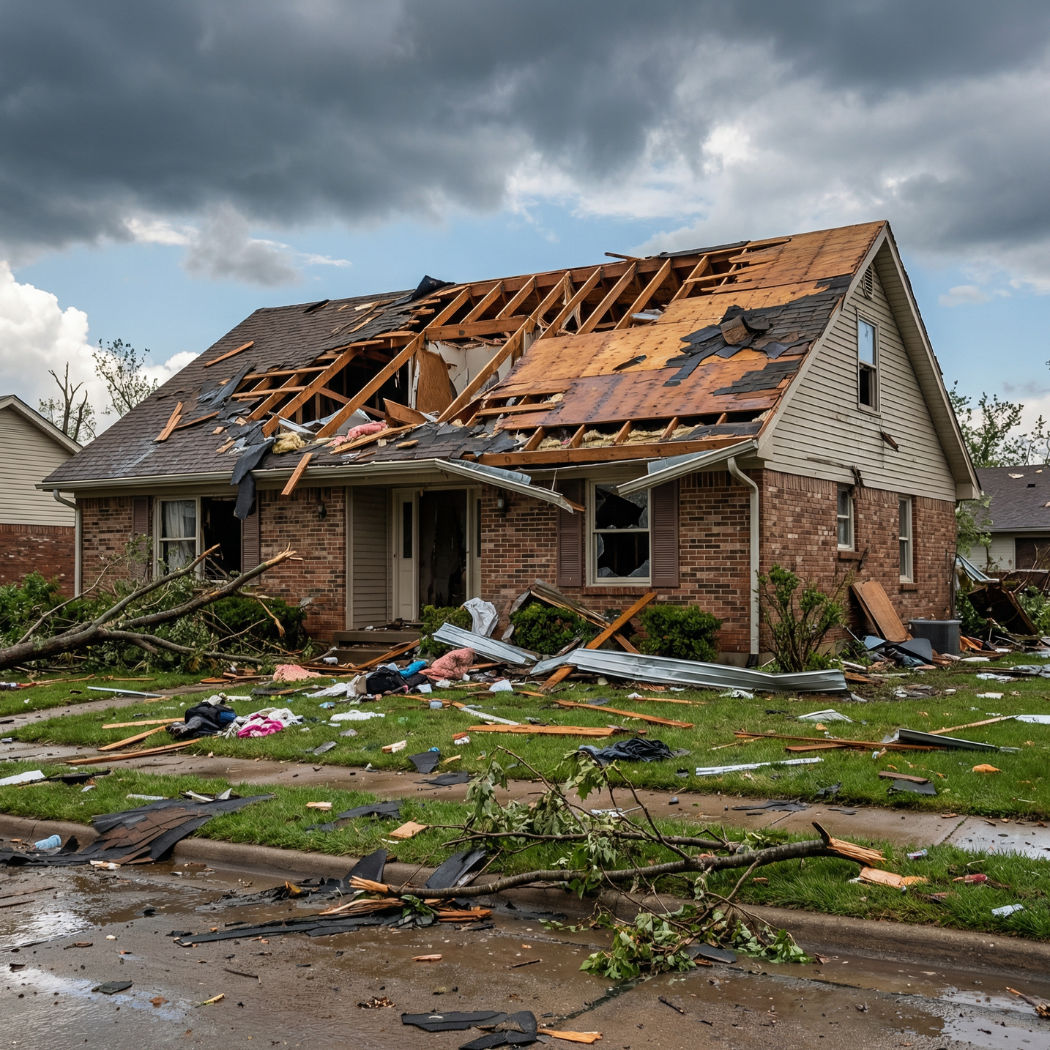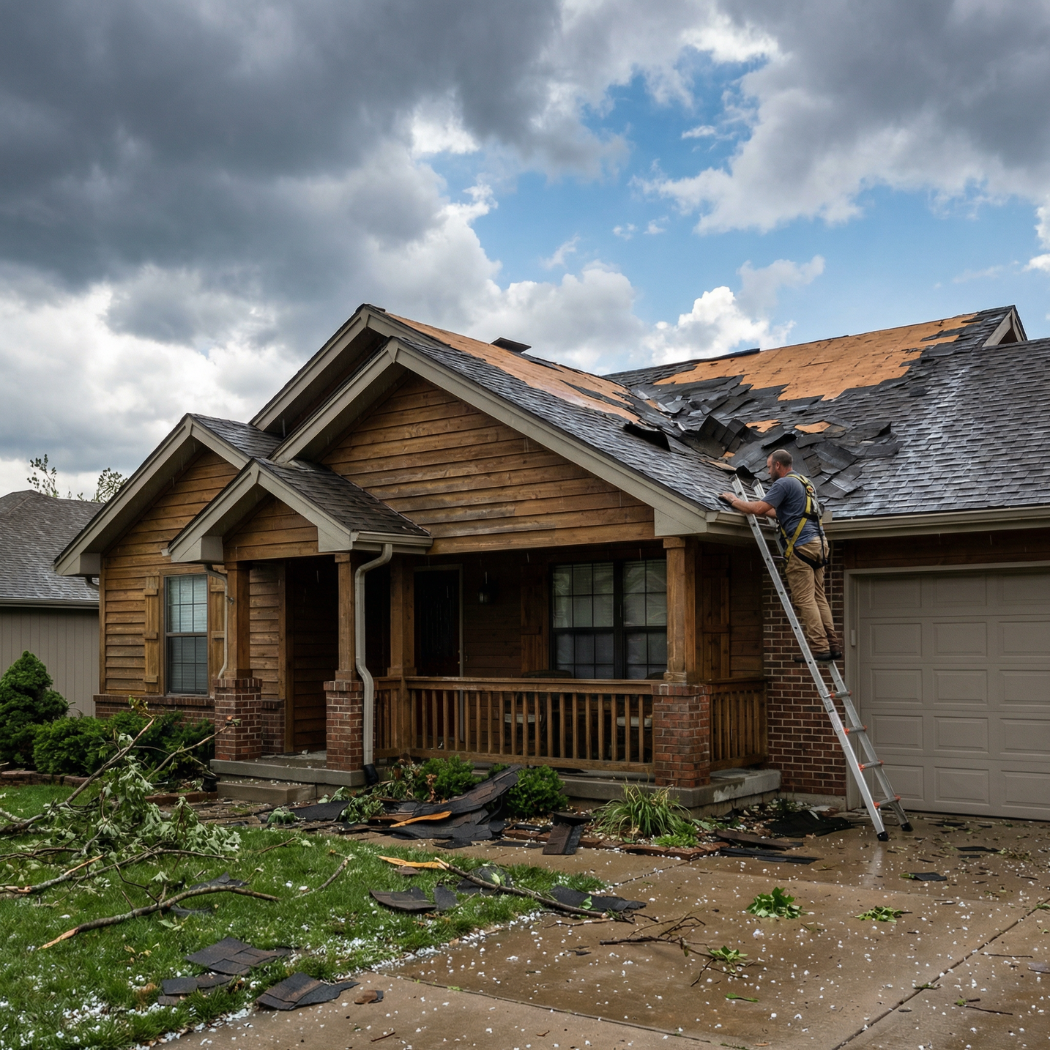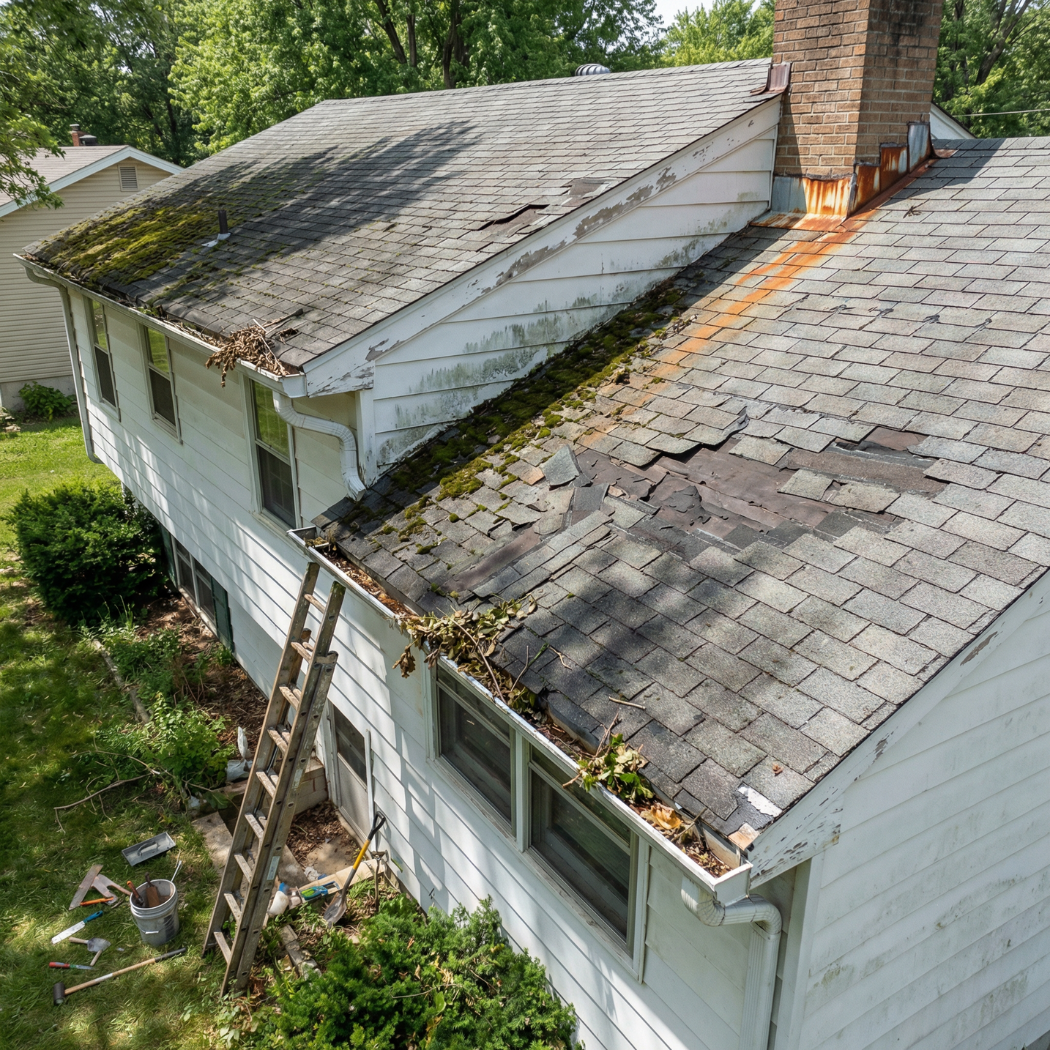

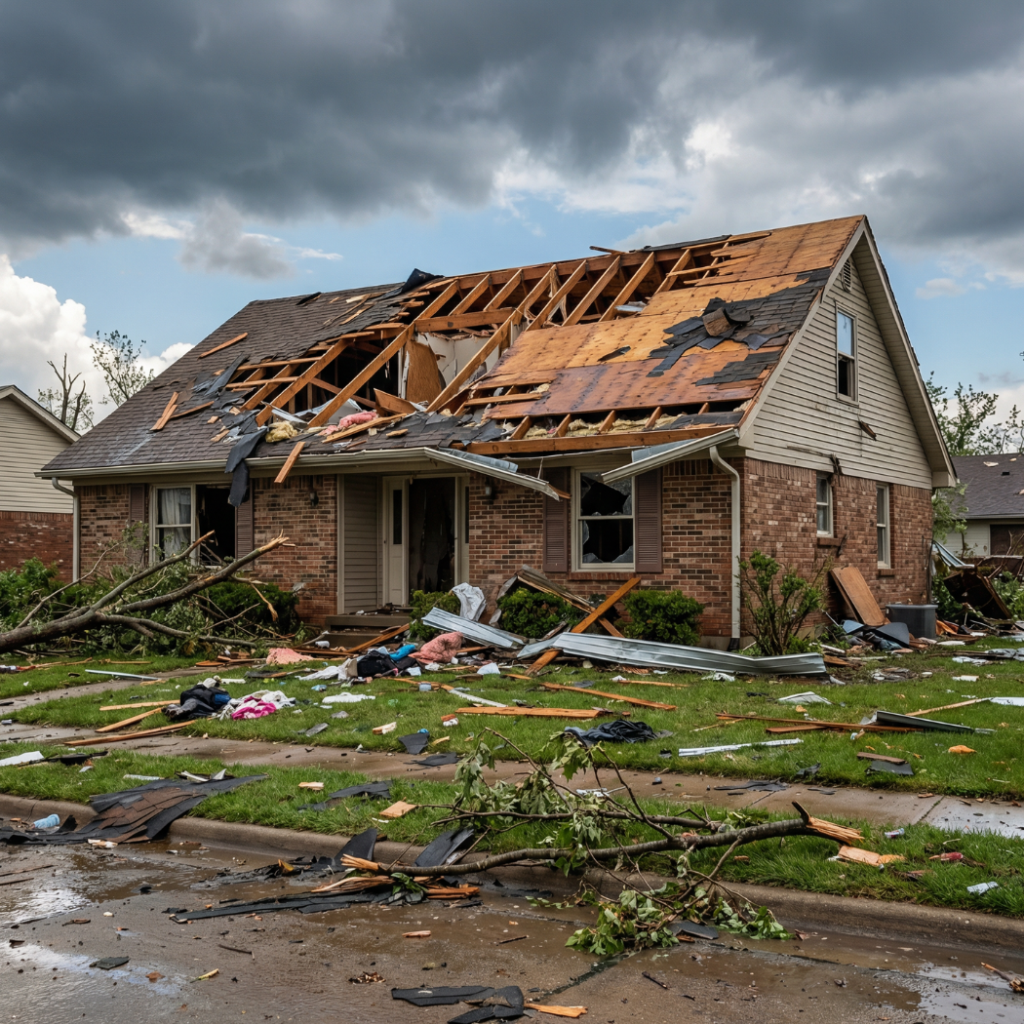
The tornado or severe windstorm rolled through Republic and the damage was real. You called your insurance company, a claims adjuster came out, and a few days later an estimate arrived in your email. You looked at the number on the check attached to it and your first thought was probably: that cannot be right. That number is not what a new roof costs. This guide explains exactly why the first check looks the way it does, what the rest of the payment process looks like, and what your options are for recovering money you may not realize the policy is holding back for you.
TLDR: After a tornado or severe wind event, insurance typically sends an initial check for the Actual Cash Value of your roof, which is the replacement cost minus depreciation for the age and wear of your shingles. That is not the final payment on a replacement cost policy. The depreciation is recoverable after the work is completed and properly documented. What you get back, and whether you get anything at all, depends on your policy type, your roof’s age, and how well your contractor documents the scope of damage and restoration.
The payment process for a tornado roof claim is one of the least intuitive systems most homeowners ever encounter. The insurance industry has specific terminology and a specific payment sequence that makes complete sense once you understand it, and makes almost no sense before you do. The goal of this article is to take you through that sequence in plain language, with the real numbers and real scenarios that show up in Southwest Missouri claims.
Tornado or Severe Wind Just Hit Republic: Why Your First Insurance Check Looks Small
After the storm event, the adjuster’s job is to calculate what the damage costs to restore your home to its pre-loss condition. They produce a line-item estimate using industry-standard pricing software. That estimate has two important columns: Replacement Cost Value and Actual Cash Value. The check you receive first is generally for the ACV amount, minus your deductible. And for an older roof, that number can look shockingly low compared to what a contractor has told you a new roof actually costs.
Here is a simplified example using round numbers. Your roof is 15 years old. A roofer estimates full replacement at $18,000. Your deductible is $2,000. The adjuster determines the roof has about a 25-year useful life and has used 15 of those years, meaning 60 percent of its useful life has elapsed. The depreciation withheld is roughly $10,800 (60 percent of $18,000). The first check arrives for about $5,200: the $18,000 replacement cost, minus $10,800 in depreciation, minus your $2,000 deductible. That check does not cover a new roof. It covers less than a third of one.
The natural reaction is to feel shortchanged. Whether you have been shortchanged depends entirely on two factors: what type of policy you have, and whether your contractor can document the full scope of damage to support releasing the withheld funds.
Pro tip: Document the storm event itself with timestamps. Photograph the storm damage from the ground immediately after the event, take screenshots of any weather alerts or news reports confirming tornado or severe wind activity in your area, and save any NWS storm reports. This timestamped record of the event date becomes important if any question arises later about when the damage occurred versus pre-existing conditions.
Pro tip: Before calling a roofing contractor or your insurance company after a storm, locate your declarations page, which is the first few pages of your homeowners policy. Find the section on Coverage A for the dwelling and look for the words “Replacement Cost” or “Actual Cash Value.” That language determines everything about what you can ultimately recover.
How Roof Claims Are Paid: ACV, Replacement Cost, and Depreciation
Understanding three terms makes the entire claim process readable. They are not complicated once the definitions are clear.
Replacement Cost Value is what it costs at today’s prices to restore the damaged property with materials of like kind and quality. It does not account for the age of the roof that was damaged. It is the full cost of the work done today.
Actual Cash Value is Replacement Cost Value minus depreciation. Depreciation reflects the fact that the roof you lost was not new. It had been in service for some number of years, experienced normal wear, and had reduced remaining useful life. The insurance company is not paying for a new roof to replace a partially-used one. They are paying for the current value of the thing you lost, which is a used roof.
Depreciation is the withheld amount. It is calculated by applying an age-based formula to the replacement cost. The specific methodology varies by carrier, but the general principle is that a roof’s useful life is estimated at 20 to 30 years, and the percentage of that useful life already used is applied as a reduction to the replacement cost.
According to the Missouri Department of Insurance, an ACV policy may pay as little as 20 percent of the cost to replace a roof if the roof is near the end of its useful life. That is not a hypothetical. It is the reality for a 22-year-old asphalt shingle roof hit by a tornado under a policy that only provides ACV settlement.
The NAIC’s guidance on replacement cost versus actual cash value illustrates this with a straightforward example: two families with the same storm damage pay very different amounts out of pocket depending on whether their policy settles at ACV or full replacement cost. The difference can be thousands of dollars on a single roof claim.
| Term | Simple Definition | How It Shows Up on Your Estimate |
|---|---|---|
| Replacement Cost Value (RCV) | What the work costs at today’s prices, using like kind and quality materials | The higher number in the estimate, sometimes labeled “RCV total” |
| Depreciation | The reduction applied based on age and wear of the damaged property | A separate withheld line item; shown as a deduction from RCV to arrive at ACV |
| Actual Cash Value (ACV) | Replacement cost minus depreciation | The lower number; this is what the first check is based on |
| Deductible | Your share of the loss under the policy terms | Subtracted from ACV to determine the first check amount |
| Recoverable Depreciation | Depreciation that can be paid back after work is completed | Released after you provide completion documentation under an RCV policy |
| Non-Recoverable Depreciation | Depreciation that is withheld and never paid | Final reduction on ACV-only policies; some RCV policies apply this to certain components |
Pro tip: When you receive your insurance estimate, look for a line that shows the depreciation amount separately from the ACV total. That line is the key number to understand. If your policy is replacement cost, that withheld amount is money you can recover. If your policy is ACV only, that money is gone regardless of what you do.
Why Tornado Roof Claims in Missouri Often Have Big Depreciation Numbers
Depreciation on a tornado roof claim feels large for a simple reason: most roofs in Republic and across Southwest Missouri are between 10 and 25 years old, and depreciation calculations are directly tied to age. A roof that is 20 years old on a 25-year useful-life schedule has used 80 percent of its expected service life. The carrier applies 80 percent depreciation to the replacement cost. The first check covers only 20 percent of the replacement cost, minus the deductible. For a $16,000 roof, that first check might be $1,200 after a $2,000 deductible.
This is not inherently unfair. The policy is doing exactly what it says, and the Missouri Department of Insurance explicitly advises homeowners to check their declarations page to understand which coverage type applies before a loss event. What feels unfair is when a homeowner discovers after a storm that their policy only covers ACV, when they assumed they had full replacement cost coverage. The time to understand that distinction is when you buy or renew your policy, not when a tornado takes your roof.
Beyond roof age, several other factors affect how much depreciation appears on a Missouri tornado claim.
Carrier guidelines for useful life estimates vary. Some carriers use a 20-year useful life for standard 3-tab shingles and a 25-year life for architectural shingles. Others use 25 and 30 years respectively. A two-year difference in the useful life assumption can produce several hundred dollars of difference in the depreciation calculated on the same roof.
Your specific policy’s settlement provisions matter. Some policies settle roofs on ACV regardless of the rest of the policy being replacement cost. Some policies switch to ACV for roofs older than a certain age, often 15 or 20 years, even if the policy was initially written on a replacement cost basis. These provisions are in the policy documents, and the Missouri Department of Insurance maintains resources to help homeowners understand how the top carriers in the state handle roof settlement.
Prior repair condition can also affect the calculation. An adjuster who notes prior patching, pre-existing granule loss, or evidence of prior un-repaired storm damage may apply a condition-based depreciation adjustment on top of the age-based calculation.
Recoverable Versus Non-Recoverable Depreciation
This is the distinction that matters most practically for most Republic homeowners going through a tornado claim.
Recoverable depreciation is the withheld portion of a replacement cost policy that gets released after the work is completed and documented. On a standard RCV policy, the insurer holds back depreciation because they do not want to pay for replacement before they know replacement actually happened. Once you submit a final invoice showing the work is done, the carrier releases the held-back depreciation, minus your deductible which you already absorbed. This is sometimes called the recoverable depreciation release or the holdback payment.
Non-recoverable depreciation is a policy provision that permanently withholds part of the depreciation regardless of whether work is completed. It is most commonly seen in ACV-only policies, but some replacement cost policies apply non-recoverable depreciation to specific components like the roof separately from the rest of the dwelling. When the policy documents say something like “roof settled on ACV basis” or “roof depreciation is non-waivable,” that is non-recoverable depreciation.
Here is a concrete number example to make the difference clear. Suppose your tornado roof claim has these figures:
Replacement Cost Value: $16,000. Total depreciation withheld: $9,600. ACV: $6,400. Deductible: $2,000. First check: $4,400.
Scenario A, RCV policy with fully recoverable depreciation: You have the work completed and submit the final invoice. The carrier releases the $9,600 in withheld depreciation. Your total insurance payment becomes $13,600 ($4,400 plus $9,600). Your out-of-pocket responsibility is $2,400 (your $2,000 deductible plus any legitimate cost above the approved scope).
Scenario B, ACV-only policy: The $9,600 depreciation is never released. Your total insurance payment is $4,400. Your out-of-pocket responsibility is $11,600 to replace the roof.
The $7,200 difference between these scenarios comes entirely from which policy type was in place before the storm, and whether the homeowner understood that before the tornado hit.
The following table shows how the same tornado claim plays out differently depending on policy type and roof age.
| Scenario | Replacement Cost | Depreciation Withheld | ACV (First Check) | Less $2,000 Deductible | Recoverable Depreciation | Total Insurance Payment | Homeowner Out-of-Pocket |
|---|---|---|---|---|---|---|---|
| RCV policy, 10-year-old roof | $16,000 | $6,400 (40%) | $9,600 | $7,600 | $6,400 released after completion | $14,000 | $2,000 (deductible only) |
| RCV policy, 20-year-old roof | $16,000 | $12,800 (80%) | $3,200 | $1,200 | $12,800 released after completion | $14,000 | $2,000 (deductible only) |
| ACV-only policy, 10-year-old roof | $16,000 | $6,400 (40%) | $9,600 | $7,600 | None | $7,600 | $8,400 |
| ACV-only policy, 20-year-old roof | $16,000 | $12,800 (80%) | $3,200 | $1,200 | None | $1,200 | $14,800 |
For most homeowners in Republic and across Southwest Missouri with RCV policies, the depreciation is recoverable. The process is straightforward: complete the work with a documented, licensed contractor, submit the completion invoice and any required photographs to your carrier, and request the depreciation release. The timeline varies by carrier but is typically processed within 30 to 60 days.
Pro tip: After receiving your insurance estimate, ask your carrier’s claim representative specifically whether any code upgrade provisions or Ordinance or Law coverage applies to your claim. This question is often not raised proactively by adjusters, and the coverage it unlocks for ventilation, decking, and code-required components can add hundreds to thousands of dollars to your approved scope.
Pro tip: Keep a written record of every conversation with your insurance company during the claim process. Write down the date, the name of the representative, and the key points they communicated. If they later change their position on whether your depreciation is recoverable or what documentation is required, your notes create a contemporaneous record that supports your position.
Pro tip: Do not wait until the work is complete to ask your insurance company whether your depreciation is recoverable. Call your claim representative the day after the adjuster visit and ask specifically: “Is the depreciation on my roof claim recoverable, and what documentation do I need to submit to release it?” Write down the answer with the date and the representative’s name.
Where Homeowners Get Caught Off Guard on Tornado Claims
Several patterns show up repeatedly in tornado and severe wind claims across Southwest Missouri. Understanding them in advance is significantly more useful than discovering them mid-claim.
The most common is assuming the first check is the final payment. A homeowner receives the ACV check, thinks that is the total the insurance company will pay, and then starts trying to figure out how to make the math work at a reduced scope of restoration. They do not pursue the recoverable depreciation, they do not request their completion payment, and they end up leaving thousands of dollars on the table that the policy would have paid.
The second pattern is not catching missed items in the adjuster’s scope. The adjuster produces their estimate from a combination of photos, measurements, and visual inspection. They may miss specific items that are standard practice in a full roof restoration: drip edge replacement, code-required ventilation upgrades if local ordinances apply, ice and water barrier in valleys, or additional layers in the scope if the tear-off reveals multiple existing layers. Each of these missed items is a supplement opportunity, which is a legitimate request to expand the scope of the insurance estimate to cover restoration items that were missed or overlooked.
The third pattern is misunderstanding the deductible’s role in the payment sequence. Some homeowners believe the deductible comes off the total replacement cost. Others believe it comes off the first check only. The deductible is subtracted once from the total claim: the ACV payment absorbs the deductible, and when recoverable depreciation is released, no additional deductible is applied. This means the out-of-pocket cost under an RCV policy is exactly the deductible, assuming the scope of work matches the insurance scope.
Pro tip: If you have a mortgage on your home, your lender may be listed as a co-payee on insurance checks. A check made out to both you and your mortgage company requires both signatures to cash. Contact your lender’s insurance loss draft department early in the process to understand their specific requirements for endorsing and releasing claim funds. This step catches many homeowners by surprise mid-project.
Pro tip: The Missouri Department of Insurance publishes a comparison tool showing how the top carriers in the state handle roof settlement. If you are unsure whether your carrier settles roofs at ACV or replacement cost by default, their website at insurance.mo.gov is a direct resource. You can also call the Department’s consumer line at (800) 726-7390 for assistance with questions about your claim.
Pro tip: When your estimate arrives, compare it line by line to the actual scope of work your contractor identifies. Items that appear in the contractor’s assessment but not in the insurance scope are supplement candidates. A contractor who reviews both documents and communicates specific, documented differences to the carrier is providing a legitimate service. A contractor who inflates the scope beyond what is actually needed is not.
Pro tip: Once your supplemental scope items are agreed to and the full replacement cost scope is approved, ask your contractor for a written breakdown showing exactly how the total approved scope matches the materials and labor on your specific project. This document becomes part of your warranty file and also confirms the specific scope the depreciation release is tied to.
Pro tip: Your insurance policy likely has an Ordinance or Law provision, sometimes called a Code Upgrade coverage. If local building codes require upgrades to the roof deck, ventilation, or other components during the restoration that were not required when the original roof was installed, this provision may pay for those upgrades above the standard replacement cost calculation. Ask your contractor whether any code-required upgrades apply to your specific repair scope.
How a Good Roofer Helps With Documentation and Supplements
Roov’s role in a tornado damage claim is not to fight with the insurance company or manufacture damage that does not exist. It is to document what is actually there, compare that documentation to the insurance scope, and communicate specific, evidence-based differences through the supplement process when items were missed.
The inspection starts with the roof surface: every slope, every penetration, every flashing point, every edge. Photographs document the condition with time stamps and identified locations so the adjuster or carrier can reference specific areas. In a tornado or severe wind event, the damage pattern is often not uniform. One slope may show complete shingle loss while another shows lifting at tabs and partial granule exposure. An inspection that covers only the obviously damaged areas misses the full scope and produces an incomplete claim.
The comparison between Roov’s inspection findings and the carrier’s scope is where supplement opportunities surface. Common supplement items on tornado claims in Southwest Missouri include drip edge replacement, which many initial scopes omit; code-required ventilation improvements where existing soffit or ridge venting did not meet current standards; starter strip replacement as a separate line item rather than bundled; removal of additional layers if tear-off reveals the roof was previously installed over an existing layer; and ridge cap replacement as a complete scope item rather than a partial allowance.
The table below shows the most common supplement items Roov encounters on tornado and severe wind claims in Southwest Missouri and what documentation supports each one.
| Supplement Item | Why It Gets Missed Initially | How It Is Documented | Typical Approval Basis |
|---|---|---|---|
| Drip edge replacement | Often omitted from initial scope as a separate line item | Photographs of damaged or missing drip edge; line item comparison to carrier scope | Standard roofing practice; required for proper edge waterproofing |
| Complete ridge cap | Initial scope may show partial allowance rather than full replacement | Photographs of displaced, cracked, or missing ridge caps; measurement of linear footage | Full restoration of damaged components |
| Starter strip as separate item | May be bundled into shingle pricing rather than listed separately | Product specification and installation records | Industry standard installation component |
| Additional layer tear-off | Adjuster may not count layers from ground inspection | Photographs of existing layers during tear-off; inspector notation of second layer | Code compliance in many jurisdictions; required for proper installation |
| Code-required ventilation upgrades | Ordinance or Law provision may not be automatically applied | Building code citation; photographs of existing ventilation showing deficiency | Ordinance or Law coverage endorsement in policy |
| Accessory replacement (boots, caps, flashing) | Adjuster scope may focus on shingles and miss penetration accessories | Photographs of each damaged accessory; line item list with measurements | Full restoration of storm-affected components |
Each of these items requires documentation: photographs showing the existing condition, measurements, and a specific line-item request that references the carrier’s estimate and explains the discrepancy. This is what a legitimate supplement looks like. It is not a negotiating tactic. It is a documented request supported by evidence, submitted through the carrier’s standard claim process.
Pro tip: When requesting a supplement, the specific language matters. Rather than saying “we think the estimate is low,” present the supplement as a line-by-line comparison: “Item X in our inspection scope was not included in the carrier scope. Here is the photograph documenting its condition and the measurement supporting the quantity.” Specific, evidence-based language processes faster and produces more predictable outcomes.
What Roov will not do is inflate quantities, claim damage that photographs do not support, or participate in arrangements that compromise the deductible. These practices expose homeowners to policy violations and create legal risk. The supplement process works because it is transparent and evidence-based, and that is how we approach it.
The full sequence of how insurance claims work from documentation through final payment is covered in detail in Roov’s insurance claim step-by-step guide.
For context on the types of damage tornado and severe wind events produce across Southwest Missouri, Roov’s storm damage repair guide for Missouri homeowners walks through the damage assessment process in detail.
Real Missouri Tornado and Wind Stories
Before calling a contractor or responding to your insurance company, working through this checklist gives you a clear picture of where you stand.
| Action | What to Look For | What It Tells You |
|---|---|---|
| Find your declarations page | Look for “Coverage A” settlement type: Replacement Cost or Actual Cash Value | Determines whether your depreciation is recoverable at all |
| Read the roof-specific provisions | Look for language like “roof settled at ACV” or “ACV for roofs over X years” | May override the general policy type for roof claims specifically |
| Find your deductible amount | Note whether it is a flat dollar amount or a percentage of insured value | Percentage deductibles on high-value homes can be significantly larger than flat amounts |
| Review the Ordinance or Law provision | Check the coverage limit and what it applies to | Determines whether code-required upgrades are a covered supplement item |
| Read the depreciation line on the estimate | Identify the total withheld amount and whether it is labeled “recoverable” | Confirms whether there is a second payment coming after completion |
| Compare the estimate to a contractor’s scope | Note any items in the contractor’s assessment that are absent from the insurance scope | Identifies potential supplement items worth documenting |
Real example: A homeowner in Republic received a first check for a tornado claim that was less than $4,500 on a roof the contractor estimated at $17,000. The homeowner assumed the insurance company had denied most of the claim. Roov’s review of the estimate found the following: the initial scope had not included drip edge replacement, had used a partial rather than full ridge cap allowance, had omitted starter strip as a line item, and had not accounted for the removal of an existing layer under the storm-damaged shingles. The supplement documentation Roov prepared with photographs and line-item comparisons resulted in an additional approved scope of over $2,400. Combined with the recoverable depreciation of $8,600 released after completion, the homeowner’s total out-of-pocket cost was their $2,000 deductible on a policy that covered the rest.
Real example: A homeowner in Nixa had a 21-year-old roof hit by severe straight-line winds associated with a storm system that also produced tornadoes elsewhere in the region. The ACV check was just over $2,000 after the deductible. Roov reviewed the policy and confirmed it was an ACV-only settlement provision for roofs older than 20 years, which meant the approximately $11,000 in depreciation was non-recoverable. Rather than recommend against filing, Roov explained the complete picture: the replacement cost was real, the $2,000 check was all the insurer would pay, and the homeowner needed to fund the remaining cost another way. Knowing this upfront, rather than discovering it after starting work, allowed the homeowner to plan financing and select materials appropriate for their actual budget.
Real example: A homeowner in Marshfield had a wind claim that included code upgrade requirements. Their local building department required current ventilation standards be met during any full roof replacement, including the installation of baffles and an increased net free area for soffit ventilation. The original insurance scope made no provision for these code-required items. Roov’s supplement documentation included photographs of the existing inadequate ventilation, the specific code reference, and the line items for the required installation. The carrier approved the Ordinance or Law coverage provision, adding the ventilation work to the covered scope. The homeowner’s code-required upgrades were funded through the policy rather than coming out of pocket.
Real example: A homeowner in Bolivar had a tornado claim where the adjuster’s estimate included only a partial slope replacement on one section of the roof, even though the storm had produced wind damage across three slopes. The adjuster had accessed only the most visibly damaged area. Roov’s full inspection documented damage across all three affected slopes with photographs showing shingle cracking, tab lifting, and granule loss consistent with high-wind impact on each section. The supplement expanded the covered scope to include all three slopes, increasing the approved scope by more than $5,000 and producing a complete, properly restored roof rather than a partial patch that would have created mismatched material and coverage gaps.
Real example: A homeowner in Springfield had a severe storm claim where the initial check seemed reasonable, but the homeowner noticed the insurance estimate did not include the removal of an existing layer of shingles that the contractor identified during their inspection. The property had two layers, one installed over the original. Tearing off both layers to reach the deck was required under current local code but had not been accounted for in the scope. Roov documented the existing layers, referenced the code requirement, and submitted the supplement through the standard process. The carrier approved the additional tear-off scope as a code compliance item.
Frequently Asked Questions
Q: Why did my tornado roof claim only pay part of the replacement cost? Because the first payment on most replacement cost policies is based on Actual Cash Value, which is replacement cost minus depreciation for your roof’s age and wear. This is the standard payment sequence, not a denial. On a replacement cost policy, the withheld depreciation is released after you complete the work and submit documentation. Your total insurance payment, once the depreciation is recovered, should match the approved replacement cost minus your deductible. Understanding this upfront prevents the common mistake of assuming the first check is everything the policy will pay.
Q: What is roof depreciation and how is it calculated? Depreciation is the reduction applied to the replacement cost of your roof based on its age and condition. Carriers generally estimate a roof’s useful life at 20 to 30 years depending on the material type, then calculate what percentage of that useful life has already been used. That percentage is applied to the replacement cost as the depreciation amount. A 15-year-old roof on a 25-year useful life schedule has used 60 percent of its useful life, so approximately 60 percent of the replacement cost is withheld as depreciation in the first payment.
Q: Is my depreciation recoverable or not? It depends on your policy. If you have a replacement cost policy, the depreciation is generally recoverable after you complete the work and submit the required documentation. If you have an ACV-only policy, or if your policy includes a provision that settles roofs on ACV regardless of the rest of the policy type, the depreciation is non-recoverable. The Missouri Department of Insurance provides a comparison tool for the top Missouri carriers that shows how each carrier handles roof settlement. Your declarations page and your claim representative are the definitive sources for your specific situation.
Q: How do I get my recoverable depreciation after the roof is done? Contact your claim representative or adjuster once the work is complete and request the depreciation release. You will typically need to submit a final invoice from your contractor, photographs showing the completed installation, and sometimes a completion statement or certificate. The carrier processes the request and issues an additional check for the withheld depreciation. The timeline varies by carrier but is generally 30 to 60 days.
Q: Can my roofer talk to my insurance company? Yes. You can authorize your roofing contractor to communicate with the insurance company on your behalf regarding the scope and documentation of the repair. This is standard practice on larger claims and is how the supplement process typically works. What your contractor cannot do is sign documents on your behalf, make coverage decisions, or participate in any arrangement that misrepresents the scope or cost of the work. The homeowner retains responsibility for the claim.
Q: Will filing a supplement raise my rates? Filing a supplement on an existing claim does not open a new claim. It is an amendment to the original claim scope based on documentation of items that were missed or undercounted. Supplement processing is a normal part of larger storm claims. Rate impacts from filing claims are governed by your carrier’s policies and the claims history on your property; a supplement is not a separate claim event for rating purposes.
Q: What happens if my insurance estimate is lower than every contractor’s bid? Start by confirming whether the difference relates to items that are not in the insurance scope or simply to price differences above the scope. If a contractor’s bid includes work not in the insurance scope, the difference may be a supplement opportunity, assuming the additional items are legitimately required for proper restoration. If the difference is strictly about labor pricing above the insurance rate, you may have room to negotiate with your carrier about local market rates, or the price difference becomes your responsibility. A documented comparison between the scope and the bids, item by item, is the starting point for understanding where the gap actually is.
Q: Does the insurance company decide what roofing materials I get? The policy language is “like kind and quality,” which means the carrier is obligated to restore what was there with comparable materials. If you had standard 3-tab shingles, the replacement scope typically covers standard 3-tab or an equivalent architectural shingle at the current market rate for comparable material. If you choose to upgrade to a premium shingle or impact-resistant product, you generally pay the difference between the insurance-approved scope rate and the cost of the upgraded material. Discuss your options with your contractor before materials are ordered.
Key Takeaways
- ACV is the starting point, not the ending point. On a replacement cost policy, the first check based on Actual Cash Value is followed by a depreciation release after work is completed. The total insurance payment equals the approved replacement cost minus your deductible.
- Depreciation is tied to roof age. The older the roof when the storm hits, the larger the depreciation withheld in the first payment. This is policy math, not an arbitrary adjuster decision.
- Know your policy type before a storm. The difference between RCV and ACV settlement can be thousands of dollars on a single claim. Check your declarations page now, not after a tornado has already hit.
- Recoverable depreciation requires action. It does not release automatically. You must complete the work, document it with invoices and photographs, and formally request the release from your carrier.
- Supplement opportunities are real and legitimate. Adjuster scopes miss items. Drip edge, code upgrades, tear-off of additional layers, and complete accessory replacement are common supplement subjects. A contractor who documents and requests these through the proper process is doing their job correctly.
- Honest documentation is the foundation. A supplement that is not supported by photographs and specific line-item comparisons will not be approved. A supplement that inflates quantities or claims damage that does not exist creates legal risk. The goal is accuracy, not inflation.
- Your deductible is your out-of-pocket contribution. Under an RCV policy, your total out-of-pocket responsibility on an approved claim should be your deductible plus any upgrades you choose beyond the approved scope.
Confused by Your Tornado Roof Estimate? Get a Second Set of Eyes.
Roov serves Republic and all of Greene County, along with Springfield, Nixa, Ozark, Bolivar, Marshfield, and communities across all eight counties of Southwest Missouri. If you are holding an insurance estimate that does not match what contractors are telling you, or if you cannot figure out what your recoverable depreciation amount is or how to request it, a free inspection and scope review from Roov gives you a clear picture of what the estimate covers, what it missed, and what the supplement process can legitimately recover. We walk through the numbers line by line, explain the depreciation calculation in plain language, and show you exactly what a properly restored roof requires. For context on evaluating your roof repair versus full replacement options under your claim, we cover that in detail as well.
Call 417-370-1259 or schedule your free inspection online.
Roov | Roofing with a Purpose | Serving Southwest Missouri