
How Roof Warranties Really Work in Missouri: Replacing Your Roof After Storm Damage
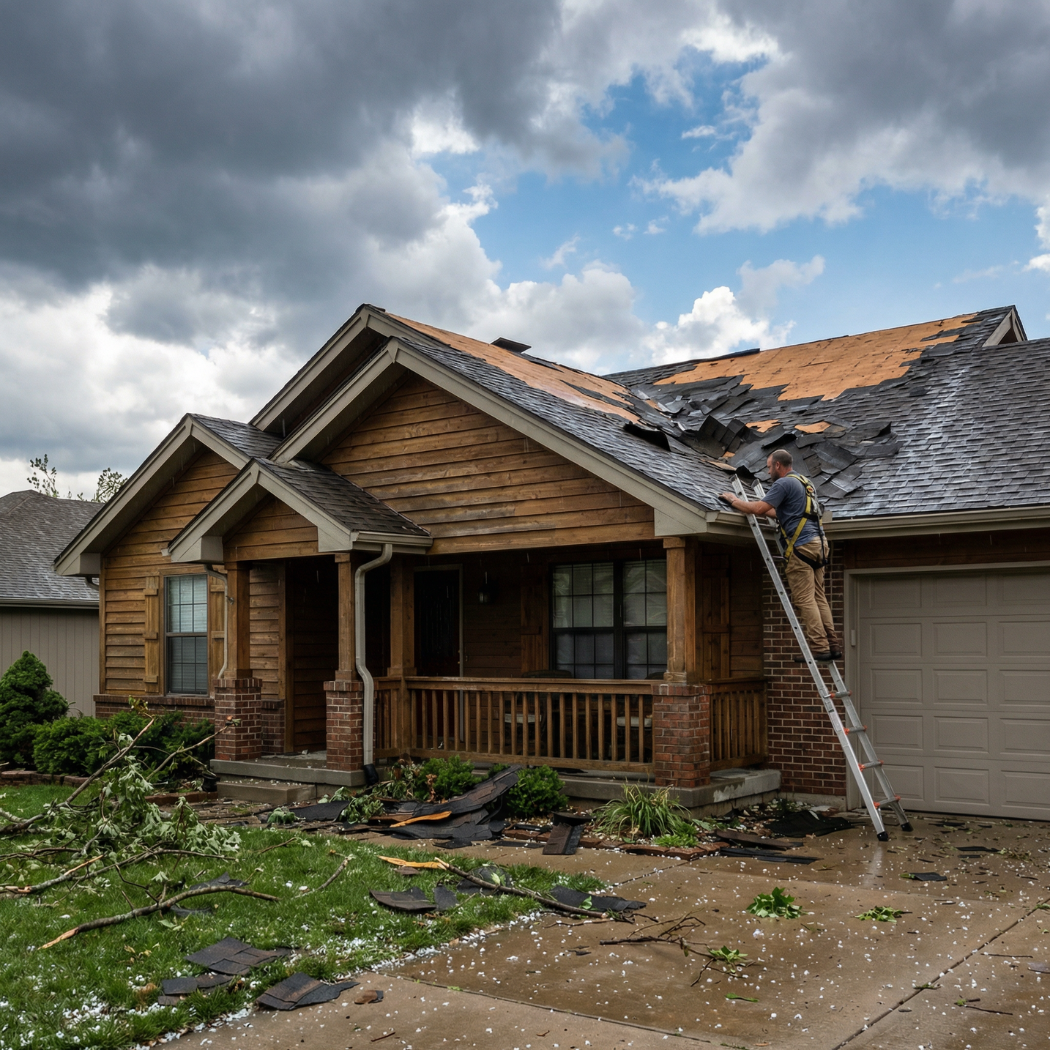
You are somewhere in the middle of an insurance claim. The adjuster has been out, you have a scope of loss document in hand, and now you are starting to hear from roofing contractors. Some of them mention a “lifetime warranty.” Others say they are “manufacturer certified.” One of them is noticeably cheaper than the others and still says the word “warranty” several times. If you are like most homeowners in Ozark going through this process, the warranty conversation is getting confusing fast. This guide explains exactly what the different warranty types mean, what you actually receive on a storm-damaged roof replacement, and the questions you should ask before you sign anything.
TLDR: Two different warranties come with a new roof: a manufacturer warranty covering material defects and a workmanship warranty covering how the roof was installed. For an insurance-funded replacement, your warranty quality depends entirely on which products are used and which contractor installs them. A GAF Master Elite contractor like Roov can offer enhanced system warranties backed by both materials and labor that most roofers simply cannot. Registration, documentation, and contractor certification are what make the difference between a warranty that sounds good and one that actually works.
You may be replacing this roof because a storm forced your hand, but the roof you are about to receive is the one you will live with for the next 20 to 30 years. The insurance claim pays to restore your home to its pre-storm condition. It does not automatically buy you the best available warranty. That outcome depends on what you choose to ask for and which contractor you let into your home.
You Are Getting a New Roof After a Storm: Warranty Might Matter More Than Color
Most homeowners who go through a storm-related roof replacement spend the most time deciding on shingle color. That is understandable. Color is the visual result they will see every day. But the warranty structure they set up during this same conversation is arguably more consequential. A shingle color does not affect your finances five years from now. A poorly registered or contractor-limited warranty does.
The replacement roof installed after a hail or wind claim in Ozark is, for many homeowners, the last roof they will buy at that home. Architectural shingles installed correctly by a certified contractor on a well-ventilated, properly prepared deck can realistically last 25 to 30 years. If the warranty is set up correctly, it travels with that roof for its entire life and, in many cases, transfers to the next owner when the home is sold.
If the warranty is set up incorrectly, or not registered at all, or provided by a contractor whose workmanship guarantee is backed by nothing more than a business card, a future material or installation issue becomes entirely your problem. A claim against a legitimate manufacturer warranty on a well-documented installation is a different experience than trying to track down a storm-chaser roofer who worked your neighborhood after a hail event and has since moved on.
Pro tip: Before the installation crew leaves on completion day, ask your contractor to walk you through what was installed, pointing specifically to the product combinations that qualify for the warranty tier you were promised. A contractor who does this confidently is demonstrating the installation matches the warranty claim. A contractor who cannot identify the qualifying products specifically is a reason to follow up with the manufacturer directly to verify the registration.
Pro tip: The day your roof installation is completed, take photographs of the finished roof from the ground on all four sides, plus photos from the attic showing the deck condition and any accessible connection points. Date-stamp these photos and keep them with your warranty documentation. They establish the installation baseline and can be critical evidence if a future claim is disputed.
Pro tip: Ask every contractor you consider for their specific contractor warranty terms in writing, including the exact length and what voids it, before any conversation about price or color. A contractor who cannot produce written warranty terms on request is telling you something important about what you would receive.
Two Main Types of Roof Warranties: Manufacturer and Workmanship
Every new roof comes with two separate and distinct warranty layers. Most homeowners assume these are the same thing, or that one covers everything. They are different, they come from different sources, and they protect different failure scenarios.
A manufacturer warranty is issued by the company that made the roofing materials, typically a major manufacturer like GAF, CertainTeed, or Owens Corning. It covers defects that originate in the manufacturing process: shingles that were produced with a flaw, materials that delaminate or fail in a way attributable to how they were made rather than how they were installed or what weather hit them. According to the NRCA’s guidance on roofing warranties, manufacturer warranties cover defects in the manufacture of the roof covering material, with coverage periods ranging from 20 years to lifetime. These warranties are issued to the homeowner and are tied to the products themselves, not the contractor.
A workmanship warranty is issued by the roofing contractor. It covers installation errors: a flashing piece set incorrectly, nails placed outside the proper zone, underlayment not adequately lapped. If a leak develops because of how the roof was put on rather than a defect in the materials, the workmanship warranty is the document that covers it. Most contractors offer one to two years of workmanship coverage as a standard term. Better contractors offer longer periods. The best contractors, those with enhanced manufacturer certifications, can access workmanship coverage that is actually backed by the manufacturer itself rather than just the contractor’s own promise.
| Warranty Type | Who Backs It | What It Covers | Typical Length |
|---|---|---|---|
| Manufacturer warranty (basic) | Shingle or materials manufacturer | Defects originating in the manufacturing process; material failure not caused by installation error or storm event | 20 to 50 years depending on product line |
| Manufacturer system warranty | Manufacturer (requires specific qualifying products installed together) | Material defects across the full roof system including shingles, accessories, and sometimes underlayment | Lifetime limited on qualifying installations |
| Standard contractor workmanship warranty | Roofing contractor | Installation errors, flashing problems, leaks attributable to how the roof was installed | 1 to 5 years typically |
| Enhanced workmanship warranty | Manufacturer (through certified contractor program) | Installation errors backed by the manufacturer rather than just the contractor; longer period and more reliable backup | 10 to 25 years on qualifying installations |
The table shows why contractor certification matters. A standard workmanship warranty is only as reliable as the contractor behind it. If that contractor closes, merges, or is otherwise unreachable two years after installation, the workmanship warranty is effectively gone regardless of what it said on paper. An enhanced workmanship warranty backed by a major manufacturer gives you a claim pathway that does not depend on the contractor still being in business.
The table below shows how warranty access differs based on contractor certification status, which is why the contractor you choose matters as much as the materials specified.
| Contractor Type | Maximum Available Warranty Tier | Workmanship Backing | Non-Prorated Period Available | Enhanced Wind Coverage |
|---|---|---|---|---|
| Uncertified or basic installer | Basic manufacturer shingle warranty only | Contractor only; typically 1 to 2 years | Standard 10 years | Standard wind rating only |
| GAF Certified contractor | System warranty eligible | Contractor only; System Plus tier available | Up to 10 years non-prorated | Up to 15 years WindProven with qualifying products |
| GAF Master Elite contractor | Golden Pledge eligible | Manufacturer-backed for 25 years | Up to 50 years non-prorated | WindProven with qualifying system |
Pro tip: When evaluating roofing proposals after a storm claim, ask each contractor specifically: who backs your workmanship warranty, you or the manufacturer? That single question separates contractor-backed promises from manufacturer-backed documentation.
What “Lifetime” and “50-Year” Roof Warranties Really Mean
“Lifetime” is the most misunderstood word in residential roofing. When a contractor or manufacturer uses it, most homeowners hear “this roof will be replaced at no cost for as long as I own this home.” That is not what lifetime means in the warranty documents.
According to GAF’s residential warranty documentation, “Lifetime” refers to the length of coverage provided by the applicable warranty and specifically means as long as the original individual owner of a single-family detached residence owns the property where the qualifying products are installed. It is not a promise of replacement cost coverage for that entire period. It is a description of who is eligible and for how long.
The more important concept is the Smart Choice Protection Period, which is the non-prorated window at the beginning of the warranty where the manufacturer’s contribution is full rather than reduced. GAF’s standard system warranty carries a non-prorated period of 10 years for most products. During that first decade, if a qualifying defect is found, the manufacturer’s contribution is not reduced based on how much time has passed. After that period, the coverage becomes prorated: the amount the manufacturer contributes to a repair or replacement is calculated by how much of the warranty period has already elapsed.
This proration matters practically. A shingle material defect found in year 25 on a 50-year prorated warranty may result in the manufacturer contributing only a fraction of the replacement cost, since 50 percent of the warranty period has already been used. This is not a flaw in the system; it is how these contracts are written, and understanding it upfront prevents surprises later.
System warranties add another layer. Rather than covering only the shingles, a qualifying system warranty requires that specific companion products from the same manufacturer, including underlayment, leak barrier, ridge cap, and starter strip, be installed together. When that full set of qualifying products is installed by a certified contractor, the warranty coverage extends across the entire product system rather than just the field shingles. This is the difference between a shingle warranty and a roof warranty.
Pro tip: Ask your contractor whether the proposed installation qualifies for a system warranty or just a basic shingle warranty. The product list required for system qualification is specific, and not every installation scope of loss from an insurance claim automatically includes all the qualifying accessories. Sometimes the difference between basic and system coverage is a small add-on in materials cost that the homeowner can choose to pay.
How Roof Warranties Work When Insurance Is Paying for the Roof
Insurance pays to restore you to your pre-loss condition. That is the standard language in most homeowners policies, and it means the insurer is not obligated to upgrade your roof beyond what was there before the storm. If you had a 15-year-old three-tab shingle roof before the claim, the insurance scope of loss will cover the cost of a comparable shingle replacement. It will not automatically include the premium accessories required for a full system warranty.
This creates an opportunity that many homeowners miss entirely. Because the insurance scope covers the baseline, the homeowner can choose to upgrade specific elements at their own expense, often for a relatively modest additional amount, to access a meaningfully better warranty package. Adding the qualifying accessories to reach system warranty eligibility typically costs a few hundred dollars in materials above the insurance scope. That investment can convert a basic 30-year prorated shingle warranty into a lifetime non-prorated system warranty backed by a major manufacturer.
The second thing to understand is that warranty quality depends on the installer, not on the insurance company. The insurer pays for materials and labor. What materials are used and whose labor standard is applied depends on which contractor you choose. Choosing the cheapest contractor in the adjuster-approved bid process does not just affect quality of installation. It affects whether you have access to enhanced manufacturer warranty programs at all, since those programs require specific contractor certifications that most roofers do not hold.
A complete overview of the insurance claim process, from documentation through contractor selection, is available in Roov’s insurance claim step-by-step guide. When you are ready to move forward with the installation itself, the full details of what our roof replacement process includes are on the Roov website.
Pro tip: When your adjuster provides the scope of loss, ask your roofing contractor to review it specifically for which qualifying accessories are included and which are not. If the scope includes only field shingles and underlayment, the contractor can tell you exactly what additional materials would be needed to reach system warranty qualification and what that adds to your out-of-pocket cost above the insurance payment.
What GAF Master Elite and Other Certifications Mean for Your Warranty
Not every contractor who installs GAF shingles can offer every level of GAF warranty. The enhanced warranty tiers require specific contractor certification status, and the highest tier, Golden Pledge, requires GAF Master Elite status. GAF Master Elite contractors represent fewer than two percent of all roofing contractors in the country. The certification requires demonstrated history of quality installation, adequate insurance coverage, passing technical examinations, and an ongoing commitment to training and standards.
Roov holds GAF Master Elite certification, which means we can offer enhanced warranty products that the majority of contractors in the Ozark and Southwest Missouri market cannot. The practical benefit is that the workmanship coverage backing your installation is not just our word. It is a documented program backed by GAF with registration, a claim process, and a support system that exists independently of whether any individual roofing company remains in business.
The Golden Pledge warranty, available exclusively through Master Elite contractors, extends the non-prorated coverage period to 50 years on qualifying products and adds workmanship coverage backed by GAF for 25 years. For a homeowner in Ozark replacing a roof after a major hail event who plans to stay in the home for decades, this is a meaningfully different level of protection than a basic manufacturer warranty combined with a contractor’s one-year workmanship promise.
Registration is a critical step that is often skipped. Enhanced warranty programs require contractor registration within a specific window after installation, typically 45 days. If the contractor does not complete registration, the enhanced warranty does not exist regardless of what was promised during the sales conversation. Always ask for written confirmation that your warranty was registered, and follow up if you do not receive a copy of the registered warranty document within 60 days of your roof being completed.
Pro tip: GAF Master Elite certification is not permanent. It requires ongoing compliance with installation quality standards and documentation requirements. When Roov installs your roof and registers your warranty, that registration confirms we met current GAF standards at the time of installation, which is part of what makes the enhanced warranty enforceable as a claim.
Pro tip: If a contractor mentions enhanced manufacturer warranty coverage, ask them to specifically identify the warranty tier by name (System Plus, Silver Pledge, or Golden Pledge for GAF), confirm the non-prorated coverage period, and confirm in writing that they will register the warranty after installation. Vague “we offer a manufacturer warranty” language without specifics is not the same as a documented, registered enhanced warranty.
Big Warranty Mistakes Missouri Homeowners Make After Storm Damage
The storm-related replacement process creates specific conditions that lead to predictable warranty errors. Homeowners are dealing with insurance adjusters, multiple contractor bids, and time pressure from an active damage situation. The warranty conversation gets compressed into a few minutes and several important things get missed.
Not getting warranty documentation at completion is the most common mistake. Many homeowners receive a completed roof but never receive written confirmation of what warranty was provided and whether it was registered. The contractor is paid and leaves. Months later, when the homeowner wants to verify their coverage, there is no documentation to reference. For standard manufacturer warranties, the original purchase documents may be enough to file a claim. For enhanced warranties requiring registration, no registration confirmation means no enhanced coverage regardless of what was said at the time of sale.
Assuming the insurance company determines the warranty is a second common error. The insurer pays the scope. The warranty comes from the materials and the contractor. These are separate decisions, and the insurer has no role in which warranty tier you receive. Some contractors imply that the insurance company limits what warranty is available. This is not accurate. The warranty tier is determined by the products used and the contractor’s certification status.
Choosing the cheapest contractor and forfeiting enhanced warranty access is the third pattern. In a competitive bid process during a storm event, price differences between contractors are visible and warranty differences are not. A $1,500 difference between bids is concrete; the difference between a 10-year non-prorated period and a 50-year non-prorated period is abstract until it becomes relevant. The math changes substantially when you are actually filing a warranty claim several years later.
Not understanding transfer rules before a planned sale is the fourth mistake. Most manufacturer warranties transfer once, to a second owner, within a specific window, often within 20 years of installation. Some warranties transfer fully; others transfer with reduced coverage terms. If you are planning to sell your home within the warranty’s active period, the transferability of the warranty has real value to buyers and can affect the sale. Confirm the specific transfer terms for your warranty before closing on a sale.
Pro tip: Missouri’s climate creates specific warranty considerations that homeowners in more moderate climates do not face. Repeated hail events, wide temperature swings, and humidity cycles all affect shingle performance. An enhanced non-prorated warranty period is more valuable in a high-stress climate like Southwest Missouri than it would be in a milder region, because the conditions that can trigger premature material issues are more likely to occur here.
Pro tip: Before signing any roofing contract after a storm claim, ask for written answers to these four questions: what warranty tier is included by name, what is the non-prorated coverage period, will you register the warranty and provide written confirmation, and what are the transfer terms when I sell the home?
Pro tip: The Roov warranties page has information on the specific warranty tiers Roov can offer through our GAF Master Elite certification. Reviewing that information before your contractor conversations gives you the vocabulary to ask the right questions and evaluate the answers accurately.
Pro tip: Keep your warranty documentation, the registration confirmation, and all installation records in a dedicated folder. Digital copies stored in email or cloud storage are better than paper only. This file becomes relevant at sale, at future claim, and if you ever need to dispute a denial.
How Roof Warranties Work on Common Claims and What They Do Not Cover
Understanding what triggers a legitimate warranty claim, and what gets denied, matters as much as understanding what the warranty says it covers. A clear picture of both is how you set realistic expectations.
| Warranty Claim Scenario | Covered by Manufacturer Warranty | Covered by Workmanship Warranty | Notes |
|---|---|---|---|
| Shingle delaminating due to manufacturing defect | Yes, during non-prorated period | No | Prorated after non-prorated period; must document when defect first appeared |
| Active leak from improperly installed step flashing | No | Yes, if within workmanship warranty period | Enhanced workmanship warranty extends this coverage period significantly |
| Shingle blow-off from wind event exceeding wind warranty threshold | No | No | Covered by homeowners insurance, not roofing warranty |
| Hail damage causing cracking or granule loss | No | No | Covered by homeowners insurance, not roofing warranty |
| Algae discoloration on algae-resistant shingles | Yes, if StainGuard warranted product | No | Requires use of warranted product and may have specific claim process |
| Leak from pipe boot failure two years after installation | No | Yes, if within workmanship period | Enhanced manufacturer-backed workmanship extends this timeline |
| Shingle failure on a roof with improper ventilation | Potentially denied | Potentially denied | Poor ventilation can void manufacturer warranty coverage; ventilation is an installation standard requirement |
The table shows a critical point: future hail and wind damage are not covered by your roof warranty. Warranties cover manufacturing defects and, through workmanship warranties, installation errors. The weather events themselves are homeowners insurance claims, not warranty claims. Understanding this distinction prevents a common post-storm confusion where homeowners call the manufacturer expecting warranty coverage for hail damage and are correctly told that the warranty does not apply.
Real Missouri Stories About Roof Warranties
Before signing with any contractor on a storm-related replacement, these are the specific questions worth asking and what each answer tells you.
| Question | What to Listen For | Red Flag Answer |
|---|---|---|
| What warranty tier can you offer by name? | Specific tier name: System Plus, Silver Pledge, or Golden Pledge for GAF | “We offer a lifetime warranty” with no tier name |
| What is the non-prorated coverage period? | A specific number of years | “It’s a lifetime warranty” without specifying the non-prorated window |
| Who backs your workmanship coverage, you or the manufacturer? | “The manufacturer backs it through our [specific program]” | “We stand behind our work” without a named manufacturer program |
| Will you register the warranty and confirm it in writing? | “Yes, within 45 days, and you will receive confirmation” | Vague acknowledgment without a specific commitment |
| What are the transfer terms if I sell? | Specific window and process for transferring to next owner | “I think it transfers” without specifics |
| What certification do you hold with this manufacturer? | GAF Master Elite, CertainTeed ShingleMaster, or similar named status | No named certification; general “we are approved” language |
Real example: An Ozark homeowner replaced their roof after a significant hail event in spring. They chose Roov specifically because of the GAF Master Elite certification and registered for Golden Pledge warranty coverage. Three years later, an isolated section of ridge cap shingles showed premature granule loss inconsistent with normal aging. The homeowner filed a warranty claim. Because the installation was registered, documented, and met all qualifying requirements, GAF resolved the claim with replacement ridge cap material and installation coverage. Total out-of-pocket cost was zero. The same scenario on an unregistered or non-enhanced warranty would have left the homeowner paying for the repair.
Real example: A homeowner in Nixa received three bids after a hail claim. The lowest bid was from a contractor who had been working the neighborhood following the storm and offered a one-year workmanship warranty with basic shingle coverage. The homeowner chose that contractor based on price. Fourteen months after installation, a flashing issue at a dormer sidewall produced a slow drip that eventually damaged the master bedroom ceiling. The contractor’s one-year workmanship window had closed. The manufacturer denied the material defect claim because the issue was installation-related rather than a product defect. The repair cost came entirely out of pocket.
Real example: A homeowner in Springfield replaced their roof after a wind event and selected an enhanced system warranty through Roov. Four years later, they decided to sell the home. The buyers’ realtor asked about the roof age and warranty. Roov provided documentation of the GAF registered warranty, the non-prorated period remaining, and the specific transfer terms. The buyers received a copy of the transferred warranty at closing. The real estate agent for the buyers later noted that the documented warranty was one of the factors that made the transaction smoother than typical, since buyers of homes with recent roofs often have questions that good documentation can answer definitively.
Real example: A homeowner in Republic had their roof replaced by a highly advertised regional contractor following a major hail event. The contractor offered what they described as a “50-year manufacturer warranty.” The homeowner signed without requesting specifics. When they later asked for the registration confirmation, they discovered the installation had used a basic accessory package that did not qualify for system warranty coverage. The actual warranty in place was a standard 30-year prorated shingle warranty rather than the system warranty they believed they had purchased. The distinction did not become relevant during that homeowner’s ownership, but when they sold the home, the buyers’ agent correctly identified that the warranty documentation did not match what the seller believed was in place.
Real example: A homeowner in Branson chose Roov for their post-storm replacement specifically after asking the question: who backs your workmanship warranty, you or the manufacturer? The homeowner had received four previous bids, none of which had been able to answer that question with specifics. Roov’s explanation of the Master Elite certification and the Golden Pledge workmanship backing was the differentiating factor in their decision. The installation was registered within the required window and the homeowner received written warranty confirmation within 45 days.
Frequently Asked Questions
Q: What kind of warranty should I expect on a new roof from storm damage? At minimum, you should receive a manufacturer warranty on the shingles and a contractor workmanship warranty for installation. The quality of both depends on the products used and the contractor’s certification status. If the installation uses qualifying products and is completed by a GAF Master Elite contractor like Roov, you can access enhanced system warranties with longer non-prorated periods and manufacturer-backed workmanship coverage. Always get the specific warranty tier, non-prorated period length, and registration confirmation in writing.
Q: Does a roof warranty cover future hail and wind storms? No. Manufacturer warranties cover manufacturing defects. Workmanship warranties cover installation errors. Future weather events, including hail and wind damage, are covered by your homeowners insurance policy, not by your roof warranty. This is one of the most common misunderstandings Roov encounters in post-storm conversations. If hail hits your new roof, that is an insurance claim, not a warranty claim.
Q: How long does a typical roof warranty last in Missouri? The length depends on the products and tier. Basic shingle warranties run from 25 to 30 years prorated. Qualifying architectural shingles from GAF and other major manufacturers carry lifetime limited coverage as the base term. The non-prorated period, which is the window where coverage is not reduced by elapsed time, ranges from 10 to 50 years depending on the warranty tier. Enhanced warranty tiers available through certified contractors carry longer non-prorated periods.
Q: Can I upgrade my warranty even if insurance is paying for the roof? Yes. Insurance pays the scope of loss to restore your pre-loss condition. If you want qualifying accessories that bring the installation to system warranty eligibility but are not included in the insurance scope, you can pay the difference for those materials out of pocket. The upgrade cost is typically modest, and the warranty coverage difference is significant. Ask your contractor to walk through exactly what is in the insurance scope, what is needed for system warranty qualification, and what the difference costs.
Q: What happens if my roofer goes out of business? With a standard contractor workmanship warranty, a contractor who closes or relocates leaves your workmanship coverage effectively unsupported. You would need to pursue whatever remedies exist for a failed contract, which may be limited. With an enhanced workmanship warranty backed by a major manufacturer like GAF, the manufacturer maintains the claim process independently of the contractor’s continued operation. This is a concrete reason why manufacturer-backed workmanship coverage has real value beyond what the term length says on paper.
Q: Can I transfer my roof warranty to a new owner? In most cases, yes, with conditions. Most manufacturer warranties transfer once, to a second owner, within a specified window, often the first 20 years of the warranty. Some tiers transfer with full coverage; others transfer with reduced terms. The transfer usually requires written notification to the manufacturer within a short window around the sale date. Confirm the transfer terms for your specific warranty tier before closing on a sale. Roov documents all warranty specifics in the homeowner’s installation records for exactly this purpose.
Q: What is the difference between a manufacturer and workmanship warranty in plain terms? Think of it this way: if the shingles themselves were made with a flaw, the manufacturer warranty covers that. If the roofer installed them incorrectly and water gets in because of how the job was done, the workmanship warranty covers that. The same leak can come from either source, and identifying which one triggered a future claim determines which warranty applies and which company you deal with. That is why having both layers in place, and both backed by credible, documented parties, matters.
Q: What does “non-prorated” mean for my warranty? Non-prorated means the manufacturer’s contribution to a valid claim is not reduced based on how much time has passed since installation. If a qualifying defect appears in year eight of a ten-year non-prorated period, the manufacturer covers it at full replacement cost. After the non-prorated period ends, coverage typically becomes prorated: the manufacturer’s contribution is reduced proportionally based on elapsed time as a percentage of the total warranty period. A longer non-prorated period means longer fully-backed coverage regardless of when an issue appears.
Key Takeaways
- Two warranties, two sources. Every roof replacement involves a manufacturer warranty covering material defects and a workmanship warranty covering installation errors. Both matter and both must be verified in writing.
- “Lifetime” has a specific legal meaning. It describes the ownership duration of coverage eligibility, not a promise of full replacement cost for the life of your ownership. The non-prorated coverage period is the more practically important number.
- Insurance pays the scope; you choose the warranty. The insurer restores your pre-loss condition. The warranty tier you receive depends on which products are installed and which contractor’s certification you choose. These are separate decisions.
- Contractor certification determines which warranties are available. Enhanced manufacturer-backed workmanship warranties, including GAF Golden Pledge, require contractor certification that most roofers do not hold. Roov’s GAF Master Elite status provides access to these tiers.
- Registration is not optional. Enhanced warranty programs require documented registration within a specific window after installation. If your contractor does not complete registration, the enhanced warranty does not exist regardless of what was promised.
- Future storms are not warranty events. Hail and wind damage after installation are homeowners insurance claims. Your warranty covers defects and installation errors, not subsequent weather.
- Transferability has real value at sale. A documented, registered, transferable warranty is a concrete asset when selling your home. Confirm transfer terms before closing on any transaction.
Replacing Your Roof After a Storm? Make the Warranty Count.
Roov serves Ozark and all of Christian County, along with Springfield, Nixa, Branson, Republic, and communities across all eight counties of Southwest Missouri. As a GAF Master Elite contractor, we offer every tier of enhanced warranty available in the market and handle registration, documentation, and homeowner confirmation as part of every installation we complete. Call 417-370-1259 or schedule a free consultation online to talk through your warranty options before you sign with anyone.
Roov | Roofing with a Purpose | Serving Southwest Missouri