
Buying a House in Missouri? Here Is What a Real Roof Inspection Should Include in 2026
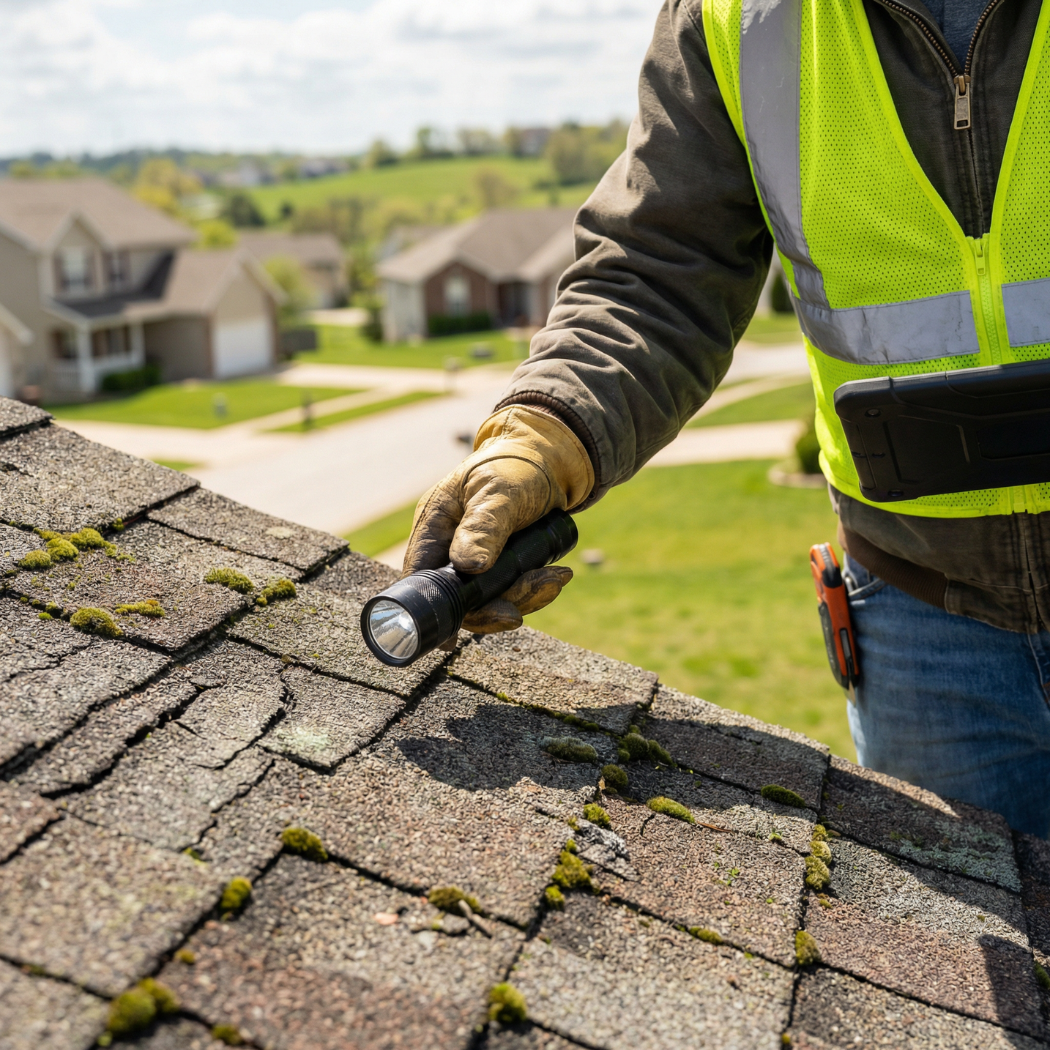
You have an accepted offer, a home inspection report in hand, and a line on page eleven that says something like “roof is near end of serviceable life, recommend evaluation by a licensed roofing contractor.” Or maybe it says the opposite: “roof appears in satisfactory condition.” Either way, you are now holding a general-purpose document written by someone whose job was to look at thirty different systems in three hours, not to diagnose what is actually happening above the house you are about to buy. This guide explains what your home inspector can and cannot tell you about a roof, what a proper roofing inspection includes, and how to use that information before you close.
TLDR: Home inspectors perform a non-invasive visual check that identifies obvious defects but is not designed to assess remaining roof life, prior hail history, or marginal flashing conditions. A separate professional roof inspection during the contract period gives you a written Roof Condition Report you can use in negotiations, and costs a fraction of what an unexpected roof replacement costs after closing. Roov provides free buyer-focused inspections in Springfield and across Southwest Missouri with fast turnaround during your contract window.
The roof is one of the most expensive systems in any home. A full replacement for a typical Springfield-area house runs $12,000 to $20,000 or more, depending on size, pitch, and material, as detailed in our complete roof replacement cost guide for Missouri. That number changes the stakes of any information gap in your inspection report significantly. A furnace can be replaced for $3,000. A bad roof can become a $20,000 surprise within two years of move-in, not counting interior damage if it starts leaking before you replace it.
Understanding what you actually know, and what you do not know, about the roof before you close is the entire point of this article.
Why the Roof Is One of the Most Important Parts of Any Home Purchase
Buyers focus on kitchens, bathrooms, and square footage. Banks focus on appraisals. But the roof sits above all of it, and its condition affects the home in ways that almost nothing else does. A compromised roof can make the home uninsurable with some carriers. A roof that fails within the first few years of ownership can produce interior damage that costs far more to remediate than the roof itself. And in Southwest Missouri, where spring hailstorms are a regular occurrence, an older roof in an area with documented storm history carries risk that a buyer in a quieter climate might not face.
The roof is also one of the systems most buyers have the least ability to evaluate on their own. You can open every cabinet in a kitchen. You can test every outlet. You can feel a sagging floor joist and recognize a problem. But you cannot get up on a roof during a showing, identify granule loss patterns at hail impact points, or press your thumb into shingles to check for mat bruising. The information asymmetry between seller and buyer on roof condition is significant, which is exactly why professional evaluation during the contract period matters.
Pro tip: If the home you are under contract on has had previous buyers who backed out of the transaction, ask your agent if there is any disclosure about why. Roof findings from a prior buyer’s inspection period are one of the most common reasons deals fall through, and a seller who has been through one prior failed transaction has usually already had the roof evaluated.
Pro tip: Before your home inspection appointment, ask the seller’s disclosure specifically about the age of the current roof, any prior insurance claims on the roof, and any known prior repairs. Sellers are legally required to disclose known material defects in Missouri. That disclosure, combined with a professional inspection, gives you the most complete picture available.
What a Standard Home Inspection Does and Does Not Do for the Roof
A general home inspection is a non-invasive visual examination performed by a generalist inspector who covers the entire house in a few hours. The standards governing home inspectors define the scope explicitly, and understanding that scope is what allows you to interpret your report correctly.
According to InterNACHI’s Standards of Practice for home inspections, home inspectors are required to inspect roof coverings, drainage systems, flashing, skylights, chimneys, and roof penetrations, but they are explicitly not required to predict service life expectancy, warrant or certify the roof, confirm proper fastening or installation of any roof covering material, or walk on roof areas where doing so might in their opinion cause damage. They are also not required to move insulation, enter attic spaces that are not readily accessible, or determine the adequacy of ventilation.
This is not a criticism of home inspectors. This is the designed scope of their work, which is a broad overview of a whole house, not a specialist evaluation of any one system. A home inspector who spends forty minutes on the roof while a buyer waits for three hours is not serving the buyer well. The generalist scope is intentional.
What this means in practice is the following:
| Home Inspector Roof Check | What It Covers | What It Does Not Cover |
|---|---|---|
| Visual from the ground or roof edge | Obvious missing shingles, severe granule loss visible at distance, sagging sections | Mat bruising from hail, marginal flashing conditions, minor granule loss at impact points |
| Attic if readily accessible | Visible staining, obvious structural issues | Moisture in insulation from condensation, duct conditions, patched areas of decking |
| General age estimate | Approximate remaining life if shingles are clearly at end of life | Prior storm damage history, pre-existing hail damage that shingles have “recovered” from visually |
| Report language | “Appears functional,” “near end of life,” “recommend further evaluation” | Specific repair scope, cost range, insurance claim eligibility |
Visual from the ground or roof edge
Obvious missing shingles, severe granule loss visible at distance, sagging sections
Mat bruising from hail, marginal flashing conditions, minor granule loss at impact points
Attic if readily accessible
Visible staining, obvious structural issues
Moisture in insulation from condensation, duct conditions, patched areas of decking
General age estimate
Approximate remaining life if shingles are clearly at end of life
Prior storm damage history, pre-existing hail damage that shingles have “recovered” from visually
Report language
“Appears functional,” “near end of life,” “recommend further evaluation”
Specific repair scope, cost range, insurance claim eligibility
The phrase “recommend further evaluation by a licensed roofing contractor” appears in a meaningful number of home inspection reports for homes in Springfield and the surrounding area. When you see it, it is not a formality. It is the inspector saying, accurately, that the roof needs someone with the tools, training, and time to evaluate it properly. That someone is not the home inspector.
Pro tip: Home inspection report language is often deliberately non-committal because inspectors are generalists making broad observations. Phrases like “appears serviceable” or “typical wear for age” are not clearances. They are descriptions of what was visible on a single day from a limited vantage point. Treat any hedged language as an invitation for a specialist to look more carefully.
Pro tip: Read your inspection report section on the roof carefully before dismissing it as normal. If the inspector photographed depressions, granule accumulation in gutters, or patched areas, those observations deserve follow-up with a specialist, even if the report conclusion says “appears functional.”
Why a Separate Roof Inspection Is Worth It When You Are the Buyer
The math is direct. A home inspection in Springfield typically costs $350 to $500. A professional roof inspection from Roov is free. A roof replacement costs $12,000 to $20,000 or more. Drywall, insulation, and mold remediation from a roof that starts leaking within two years of closing can add another $3,000 to $10,000 on top of the replacement. The cost of getting a specialist opinion during the contract period is zero relative to the risk it mitigates.
But the argument for a separate inspection is not purely about money. It is about the specific conditions that a trained roofer finds that a generalist inspector typically does not.
Prior hail damage is the most common example in the Springfield market. Southwest Missouri receives significant hail events regularly. A 2020 storm, a 2022 storm, a spring storm two years before the home went on the market: any of these can leave functional damage on a roof that looks completely normal to an untrained eye from the ground. The granule loss at impact points may have partially recovered visually as weathering distributed remaining granules. The mat bruising is not visible at all without close inspection from the roof surface. A home inspector walking the eaves or looking from a ladder cannot identify prior hail damage with confidence. A trained roofer with test square methodology can.
Marginal flashing is the second common example. Flashing around chimneys, at sidewall transitions, and around skylights degrades gradually. A home inspector may note that flashing is present and appears generally intact. A roofer looking closely at counter flashing mortar joints, step flashing integration with siding, and the condition of pipe boot collars may find separation, cracking, or misinstallation that the general inspection missed. These conditions do not produce active leaks yet but will within a season or two.
Poor ventilation is harder to catch from the roof surface but often visible through attic access. A home with inadequate soffit venting, blocked channels, or missing baffles creates heat and moisture conditions that accelerate shingle aging and promote deck damage. A buyer who closes without knowing about a ventilation deficiency inherits a roof that ages faster than its rated life suggests.
Real example: A Springfield buyer had a home inspection report that said the roof was “at or near end of serviceable life, recommend further evaluation.” The general inspector estimated the roof was 18 to 20 years old. Roov’s inspection confirmed 19-year-old shingles with widespread granule depletion and mat bruising across the south and west slopes consistent with a documented 2022 hail event. That inspection gave the buyer a specific, documented finding tied to a verified storm date, a written Roof Condition Report with photographs, and a realistic replacement cost range for the Springfield market. The buyer used that report to negotiate a $12,000 closing credit. Without the specialist inspection, the buyer would have either accepted the seller’s verbal “it’s been fine” assurance or walked away from a home they otherwise wanted.
Real example: A buyer in Nixa had a home inspection that found no roof issues. Roov’s inspection, scheduled because the buyer had seen hail reports from the prior spring, found functional mat damage across three slopes with soft metal evidence confirming the storm. The seller was made aware, filed a legitimate claim, had the roof replaced before closing with a new warranty, and the buyer closed on a home with a brand-new roof instead of one with documented unresolved hail damage.
What a Professional Roof Inspection From Roov Includes for Home Buyers
When Roov performs a pre-purchase roof inspection, the scope covers what a buyer actually needs to know: is this roof in good condition, how much life does it have left, are there storm damage issues that have not been addressed, and what would a replacement or repair cost in the current Springfield market.
The inspection starts with the roof age and material type. Age matters not just as a calendar number but as a percentage of rated service life in combination with local conditions. A 15-year-old architectural shingle roof in Springfield has had 15 years of Missouri hail, UV, and freeze-thaw exposure. That is a different situation than a 15-year-old roof in a milder climate.
From the roof surface, Roov evaluates shingle condition including granule coverage, mat bruising or fracture at potential hail impact points, ridge and hip cap condition, flashing at all chimney and wall transitions, pipe boot collars at every penetration, drip edge condition, and the integration of all roof accessories. Where test squares are appropriate, we document functional impact counts and provide that documentation in the written report.
The soft metals, including gutters, downspouts, and exposed flashing faces, are assessed for impact evidence that corroborates hail size and storm history. A soft metal assessment during a buyer inspection often surfaces the evidence of a storm event that the seller may not have disclosed, either because they were unaware or because disclosure was not made.
Where attic access is available during the inspection, Roov checks insulation condition, deck moisture or staining, ventilation channel integrity, and duct conditions above any wet rooms. A buyer inspection that only covers the roof surface without the attic misses half the picture.
The result is a written Roof Condition Report with photographs of every significant finding, a clear conclusion about the roof’s current condition and estimated remaining useful life, and guidance about whether the findings support an insurance claim, a repair request, a price reduction, or simply moving forward with confidence. That report is designed to be shared with your realtor and used directly in negotiations.
The following table shows the typical sequence for using a roof inspection strategically during a Missouri home purchase.
| Day in Contract Period | Action | Why It Matters |
|---|---|---|
| Day 1 to 3 | Schedule Roov buyer inspection for earliest available date | Leaves maximum time for report review and negotiation before inspection contingency deadline |
| Day 3 to 5 | Roov inspection completed; Roof Condition Report delivered | Written documentation in hand before submitting any repair requests |
| Day 5 to 7 | Review report with your realtor; decide on negotiation approach | Your agent needs time to draft an amendment or repair addendum properly |
| Day 7 to 10 | Submit repair or credit request to seller via amendment | Stays within the typical 10 to 14 day inspection contingency window in Missouri contracts |
| Day 10 to 14 | Seller responds; negotiate final outcome | Your documented report anchors the negotiation with specific findings |
| Day of closing | Final walkthrough confirms any agreed repairs are complete | Verify before you sign, not after |
Pro tip: Schedule your separate roof inspection as early in the inspection period as possible, not on the last day. You need time to receive the report, discuss it with your agent, draft any repair addendum requests, and allow the seller time to respond while you are still within your contingency window.
Roof Age, Condition, and Local Storm History in Missouri
In the Springfield metro and surrounding communities, the combination of age and storm exposure tells a more complete story than age alone. A 12-year-old roof on a home in Springfield, Nixa, or Ozark has potentially been through four to six significant hail events since installation. Each event that was not professionally inspected and addressed is a gap in the roof’s documented history.
According to Consumer Reports’ roofing buying guide, even without obvious visible damage, replacing an out-of-warranty asphalt shingle roof that is more than 20 years old is generally advisable. In Missouri’s climate, that guidance is conservative. A roof with documented functional hail damage at 14 years may be at practical end of life before it would be under normal aging in a calmer climate.
The local storm record matters for another reason specific to buyers: if a storm event can be documented and the damage tied to that event, there may be an insurance claim available to the seller before closing that would fund a full replacement at the seller’s expense rather than a credit at yours. That outcome is better for both parties. The seller does not have to negotiate a price reduction from their proceeds; the buyer gets a new warrantied roof. But this path is only available if the hail damage is documented professionally and within the policy’s reporting window. A buyer-initiated Roov inspection during the contract period often opens this door.
The National Weather Service in Springfield maintains storm records that document hail size and location by event date. When Roov finds soft metal evidence suggesting a specific storm, cross-referencing the NWS record confirms the event date, which ties the damage to a specific insurable event. This is the documentation foundation that allows a legitimate claim to move forward.
Pro tip: If the seller is using a “certified” or “pre-inspected” label as a selling point, ask to see the actual inspection report. A marketing sheet that says “roof inspected and approved” without an attached written report from a named inspector is not the same as a written Roof Condition Report with photographs. Documentation is what matters in negotiations, not verbal representations.
Pro tip: When your realtor pulls the home’s insurance claim history through a CLUE report during due diligence, look specifically at whether any prior roof claims were filed and when. A home that has never had a roof claim but is in a high-hail-frequency area may have undocumented storm damage waiting to be found. A home with a prior claim shows the roof was replaced or repaired after a documented event.
How to Use Roof Findings in Negotiations Without Killing the Deal
A professional roof report during a contract period is not designed to give you a reason to walk away from a house you want. It is designed to give you accurate information so you can make a well-informed decision. That decision may be to ask for repairs, to ask for a credit, to ask the seller to file an insurance claim before closing, or, in cases where the roof is genuinely at the end of its life and the seller will not work with you, to walk away.
The table below shows how to match a specific roof finding to the most appropriate negotiation response.
| Roof Finding | Possible Buyer Options | Pros | Cons |
|---|---|---|---|
| Minor cosmetic hail, 8 years remaining life | Accept as-is; document for reference | No negotiation friction; roof has meaningful life | Buyer inherits documented storm history without claim resolved |
| Functional hail damage, claim likely supportable | Ask seller to file claim before closing; replace roof with new warranty | Buyer gets new roof at minimal cost to seller; cleanest outcome | Requires seller cooperation; adds time to closing timeline |
| End-of-life condition, no claimable damage | Request closing credit equal to estimated replacement cost | Most common path; keeps deal moving | Credit may be less than full replacement; buyer funds difference |
| Active leak or interior damage from roof | Require repair before closing or full price reduction | Protects buyer from taking on active damage | Seller may push back; can slow or kill negotiation |
| Roof is in excellent condition for age | Move forward confidently with documented baseline | Peace of mind; no negotiation friction | Inspection cost is the only downside; still worth having documentation |
The documented Roof Condition Report from Roov is the foundation for any of these paths. “A roofer looked at it and said it needs work” is a weak negotiating position. “A GAF Master Elite certified roofing company provided this written Roof Condition Report showing functional hail damage across the south and west slopes with soft metal corroboration, and the estimated replacement cost in the Springfield market is $14,000 to $17,000” is a specific, documented, professional position your realtor can present with confidence.
Pro tip: Missouri buyers sometimes underestimate their negotiating position when a professional inspection reveals undisclosed damage. A seller who did not disclose known roof issues has more exposure than a buyer who simply found something unexpected. If Roov finds hail damage that a seller had reason to know about, your realtor should be involved in how that finding is framed in the amendment.
Pro tip: If you are asking for a closing credit rather than a repair, use the lower end of the replacement cost estimate in your initial request. Sellers are more likely to agree when the number feels reasonable. Your realtor knows the local negotiating dynamics; give them the report and let them lead on how to present it.
Pro tip: If you are buying a flipped property or a recently renovated home, pay particular attention to the roof inspection. Cosmetic renovations sometimes include painting over old stains on the fascia or adding fresh gutters while leaving a compromised roof in place. A well-staged interior does not tell you anything about what is happening on top of the house.
Pro tip: Ask your real estate agent specifically whether the seller’s disclosure mentions the age of the current roof. A disclosure that lists “roof replaced 2018” or “roof approximately 15 years old” gives Roov a starting point before the inspection even begins. Disclosures that simply say “unknown” on roof age are common on older properties and are a reason, not an excuse, to inspect more thoroughly.
Pro tip: If the seller responds that they just had the roof inspected by their own roofer and it is fine, ask for that report. A legitimate inspection report that shows the opposite of what Roov found is worth understanding. A verbal “the roofer said it’s fine” without documentation does not carry the same weight as a written Roof Condition Report with photographs.
Real Missouri Buyer Stories
The following table shows how different lender and insurance situations are affected by roof condition findings during a home purchase.
| Loan Type / Situation | Roof Condition Threshold | What Happens If Not Met | How to Address It |
|---|---|---|---|
| FHA loan | Roof must keep moisture out; must not be expected to fail within 3 years | Appraiser flags as a condition; loan does not close until addressed | Seller repairs or replaces before closing; or seller provides concession for escrow holdback |
| VA loan | Roof must be in good condition with remaining useful life | VA appraiser flags it; loan does not close without repair | Same as FHA; seller must address or buyer walks |
| Conventional loan | Appraiser considers condition; “poor” condition can affect appraisal value | Lower appraised value; buyer may need larger down payment to bridge gap | Negotiate price reduction; or ask seller to repair |
| Homeowners insurance (buyer’s) | Older or visibly damaged roofs may require inspection before binding coverage | Insurer declines or offers only ACV coverage, not replacement cost | New roof before closing (via claim or seller-funded) is the cleanest solution |
| Cash purchase | No lender requirement | No automatic protection; buyer assumes all risk | Buyer-initiated inspection is entirely voluntary and therefore more critical |
FHA loan
Roof must keep moisture out; must not be expected to fail within 3 years
Appraiser flags as a condition; loan does not close until addressed
Seller repairs or replaces before closing; or seller provides concession for escrow holdback
VA loan
Roof must be in good condition with remaining useful life
VA appraiser flags it; loan does not close without repair
Same as FHA; seller must address or buyer walks
Conventional loan
Appraiser considers condition; “poor” condition can affect appraisal value
Lower appraised value; buyer may need larger down payment to bridge gap
Negotiate price reduction; or ask seller to repair
Homeowners insurance (buyer’s)
Older or visibly damaged roofs may require inspection before binding coverage
Insurer declines or offers only ACV coverage, not replacement cost
New roof before closing (via claim or seller-funded) is the cleanest solution
Cash purchase
No lender requirement
No automatic protection; buyer assumes all risk
Buyer-initiated inspection is entirely voluntary and therefore more critical
Real example: A Springfield buyer under contract on a 1998 home received a general inspection report noting the roof was “approximately 25 years old, near end of serviceable life, recommend evaluation by qualified roofing contractor.” The buyer almost skipped the separate inspection, assuming the general report said everything that needed to be said. Roov’s inspection found the roof was in worse condition than the general description suggested: widespread mat fractures, separated counter flashing at the chimney, and soft metal evidence of a substantial hail event from three years prior. The Roof Condition Report gave a specific replacement cost range of $15,000 to $18,000 for the home’s size and pitch. The buyer’s agent presented the report with a credit request. The seller agreed to a $13,500 closing credit. The buyer closed on a house they wanted and had the information and the funds to address the roof on their timeline.
Real example: An Ozark buyer noticed hail reports in the area from the prior spring when searching for homes. The general inspection on a 13-year-old home they were under contract on found no roof issues. The buyer scheduled a Roov inspection anyway. Roov found functional mat damage across two slopes and confirmed the event with NWS records. The buyer’s agent informed the seller, who had not been aware of the storm’s impact on the property. The seller filed a legitimate insurance claim. By closing, the roof had been replaced under the claim. The buyer closed on a 13-year-old house with a brand-new warrantied roof installed two weeks before settlement.
Real example: A Marshfield buyer was purchasing a home as investment property and was concerned the roof would need replacement within the first year. The home was 12 years old with architectural shingles. Roov’s inspection found the roof in above-average condition for its age: minimal granule loss, sound flashing at all transitions, pipe boots in good condition, and no evidence of functional hail damage beyond cosmetic. The Roof Condition Report estimated 8 to 12 years of remaining useful life under normal conditions with standard maintenance. The buyer moved forward without requesting any roof-related concession and had documented baseline condition to reference for any future claim.
Real example: A Republic buyer under contract on a home with a visually attractive roof, newly painted trim, and fresh mulch discovered during the Roov inspection that the apparent new paint on the fascia was concealing rot behind the gutter on two elevations, driven by missing drip edge. Roov also found a failed pipe boot on the master bathroom plumbing vent. Neither issue appeared in the general inspection. The buyer used the written report to request a $4,500 repair credit covering the fascia, new drip edge installation, and the pipe boot replacement. The seller agreed. The buyer closed knowing exactly what they were inheriting and having been compensated for it.
Real example: A Nixa buyer was told by the selling agent that the roof had “just been inspected by a roofer and certified clean.” Roov’s inspection found evidence of the inspection claim was accurate for general condition, but the attic access revealed the bathroom exhaust fan duct terminated in the attic without exiting. This was a moisture problem, not a roof problem, but it was the kind of finding the general roof inspection had not addressed. Roov’s full report covered both the roof condition, which was acceptable, and the ventilation issue discovered in the attic. The buyer had the complete picture of both systems and negotiated a modest credit for the duct correction.
Frequently Asked Questions
Q: Do I really need a separate roof inspection if I already paid for a home inspection? In most cases, yes, especially in Southwest Missouri where storm history is significant. The home inspector’s scope is explicitly defined as a non-invasive visual examination that does not predict service life, certify the roof, or identify prior hail damage history. A professional roofer with the appropriate training and tools can provide findings the general inspection simply cannot produce. The cost of the separate inspection is zero with Roov, and the potential value in negotiation or peace of mind is significant.
Q: What questions should I ask about the roof before I make an offer? Ask the seller’s disclosure about the age of the current roof, any prior insurance claims specifically for roof damage, and any known repairs or replacements. Also ask whether the home has been inspected by a roofer in the past two years. The answers to these questions, combined with what Roov finds in a pre-offer or post-offer inspection, give you a complete picture before you are contractually committed.
Q: Can I still buy a house if the roof is old? Yes. An older roof is not a reason to walk away from a house you want. It is a reason to understand exactly what you are inheriting and to negotiate accordingly. A 20-year-old roof with no functional damage and good maintenance history may have more remaining life than a 15-year-old roof with undocumented hail history. The inspection tells you which situation you are actually in, which lets you price it correctly.
Q: Who should pay for roof repairs before closing? This is a negotiating question, not a rule. Sellers typically prefer credits over repairs because credits are faster and they are not managing contractors during the transaction. Buyers often prefer repairs because they want the work done under the seller’s responsibility. The right answer depends on the specific finding, the timeline, and the negotiating dynamics. A Roof Condition Report from Roov gives you and your agent a specific factual basis for either path.
Q: Will my lender care about the roof condition? FHA and VA loans have specific appraisal requirements regarding roof condition. An FHA appraiser must assess whether the roof keeps moisture out and may flag a roof expected to fail within three years as a condition that must be addressed before the loan closes. Conventional loan appraisers assess roof condition as part of overall property condition, and a “poor” rating can affect the appraised value. A buyer using FHA or VA financing on a home with a questionable roof has additional urgency to get a professional roof assessment early in the contract period.
Q: What does a roof inspection include when buying a home? Roov’s buyer-focused inspection covers roof age and material, shingle condition using test square methodology where appropriate, all flashing points including chimney, sidewall, pipe boots, and drip edge, soft metal evidence for storm history, attic condition where accessible, and a written Roof Condition Report with photographs documenting every significant finding. It is designed to give you exactly what you need to make an informed buying decision and to use the findings in negotiations if warranted.
Q: What if the seller refuses to do any roof work? You have options. If the roof finding is minor, accepting as-is with full knowledge and documentation is reasonable. If the finding is significant and the seller will not negotiate, you need to decide whether the purchase price already accounts for the roof’s condition and what your risk tolerance is. The inspection does not obligate you to either buy or negotiate. It gives you the facts and puts the decision clearly in your hands. Our repair vs. replacement decision guide for Missouri homeowners covers how to think through that decision once you have the inspection findings in hand.
Q: Can I negotiate roof repairs before closing? Yes, and the contract period contingency windows are specifically designed for this. Your inspection contingency period in a Missouri purchase contract is when you review inspection findings and submit any repair or credit requests through an amendment to the contract. A written Roof Condition Report from Roov is the most effective tool for this process because it documents specific findings with photographs rather than a verbal or informal description.
Key Takeaways
- Home inspection scope has real limits. A general home inspection cannot predict service life, identify prior hail damage, or certify a roof’s condition. The report language “recommend further evaluation by a licensed roofer” is an accurate, important direction.
- A specialist inspection costs nothing with Roov. The cost-to-risk ratio of skipping a professional roof inspection during a home purchase is extremely unfavorable given the cost of a replacement.
- Storm history in Missouri changes the calculus. Springfield, Nixa, Ozark, and the surrounding area receive repeated hail events. Prior undocumented damage is a real risk in this market, not a hypothetical.
- Documentation is what makes negotiation work. A written Roof Condition Report with photographs creates a specific, defensible basis for any repair request, credit request, or insurance claim.
- The right outcome may be a new roof before you close. If Roov finds legitimate storm damage, the seller can file a claim before closing. The buyer gets a new warrantied roof. The seller’s out-of-pocket is limited to the deductible. This is the best outcome for both parties.
- Age plus condition tells the real story. A 15-year-old roof with documented hail damage is in a different position than a 15-year-old roof that has been maintained and inspected. You need both data points, not just the age.
- Peace of mind is also a legitimate outcome. A Roov inspection that confirms the roof is in good shape for its age and gives you estimated remaining life is not a wasted visit. It is documented confidence.
Under Contract on a House? Get the Roof Facts Before You Sign.
A home purchase is one of the largest financial decisions you will make. The roof above it should not be a guess. Roov serves Springfield and all of Greene County, along with Nixa, Ozark, Republic, Marshfield, and communities across all eight counties of Southwest Missouri. Buyer-focused inspections are free, fast, and designed to fit the timeline of your contract period. You receive a written Roof Condition Report with photographs that you can share directly with your realtor for use in negotiations.
Call 417-370-1259 or schedule your free buyer roof inspection online.
Roov | Roofing with a Purpose | Serving Southwest Missouri