
Spring in Southwest Missouri brings hidden moisture risks. Your roof’s ventilation system is the first line of defense against mold, rot, and costly damage. This guide explains how ventilation works, why it matters now, and what to do before summer heat arrives.
TLDR: Proper roof ventilation follows the 1/150 rule: one square foot of ventilation per 150 square feet of attic space, split evenly between intake and exhaust. Spring is the ideal time to check your system because winter moisture trapped in the attic can trigger mold growth as temperatures rise. Watch for warning signs like musty odors, condensation, or peeling paint.
After a long Missouri winter, your attic has been quietly collecting moisture. Every shower, every pot of boiling water, every breath from your family sends humidity upward. Without proper ventilation, that moisture has nowhere to go.
Now spring arrives with warmer temperatures. The trapped moisture meets rising heat. This creates the perfect environment for mold growth, wood rot, and insulation damage. Homeowners in Springfield, Nixa, and surrounding communities face this problem every year.
The good news? You have a window of opportunity right now. March and April offer the perfect conditions to inspect, repair, or upgrade your ventilation system before summer’s extreme heat makes attic work dangerous and before mold has time to spread.
Why Spring Is the Perfect Time to Check Your Roof Ventilation
Spring offers a critical window between winter’s moisture buildup and summer’s extreme heat. Acting now prevents problems that become expensive later.
Winter Moisture Needs to Escape
Throughout winter, warm air from your living space rises into the attic. This air carries moisture that condenses on cold surfaces like rafters and roof decking. Without adequate ventilation, this moisture accumulates for months.
When spring temperatures rise, that trapped moisture becomes active. Mold spores that remained dormant in cold conditions suddenly find the warm, damp environment they need to multiply.
Pro tip: Check your attic on a mild spring day (50 to 60 degrees). If you smell mustiness or see any condensation, your ventilation needs attention immediately.
Beat the Summer Heat
Summer attic temperatures in Missouri can reach 150 degrees or higher. Working in these conditions is dangerous and uncomfortable. More importantly, by summer the damage from poor ventilation may already be done.
Real example: A Republic family ignored ventilation issues through spring 2024. By July, they discovered extensive mold growth on their roof decking. The repair cost $8,400, compared to the $600 ventilation upgrade that would have prevented it.
Understanding How Roof Ventilation Works
Roof ventilation operates on a simple principle: hot air rises. A properly designed system uses this natural movement to continuously cycle fresh air through your attic.
The Intake and Exhaust System
Your ventilation system has two components that must work together:
Intake vents sit at the lowest point of your roof, usually in the soffits (the underside of your roof’s overhang). These allow cool, fresh air to enter the attic.
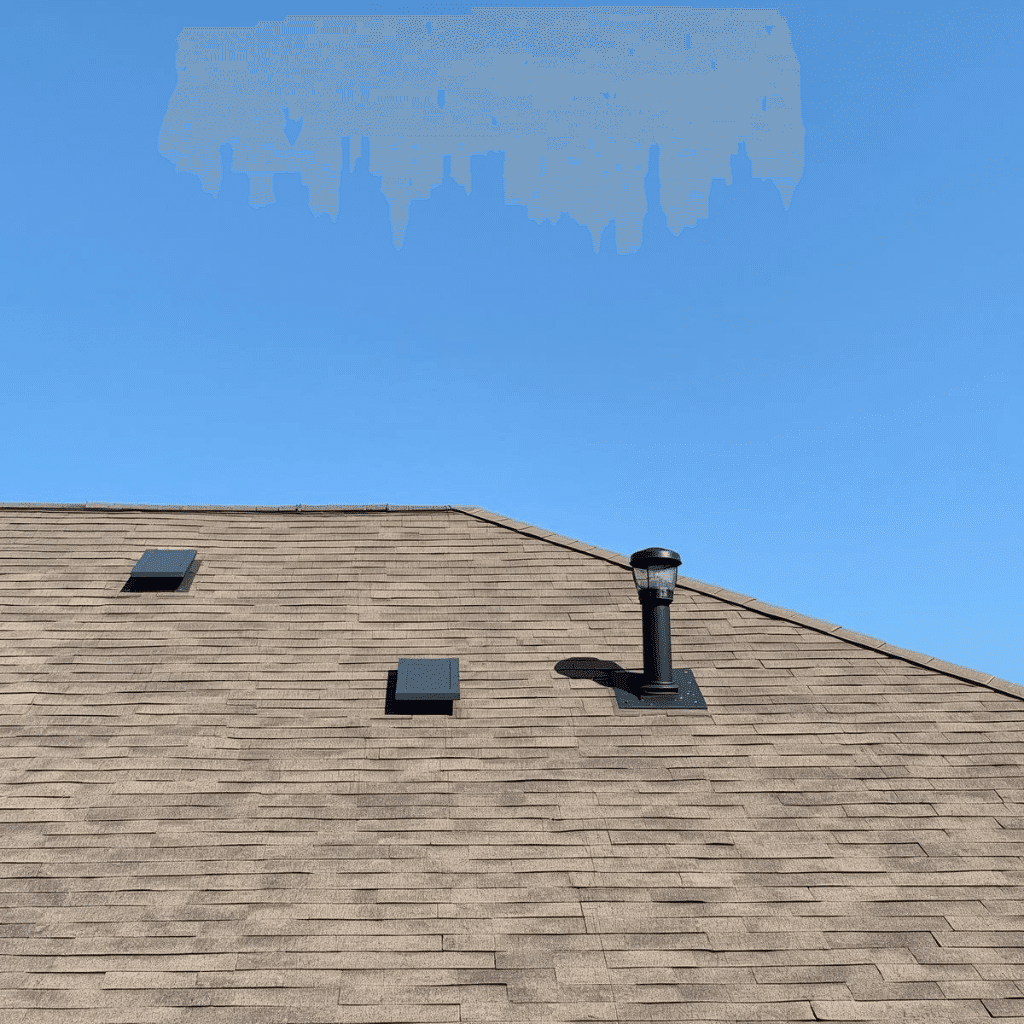
Exhaust vents sit at or near the roof’s peak. Ridge vents run along the entire roofline. Box vents and turbines are individual units placed near the top.
As the sun heats your roof, the air inside your attic warms and rises. It exits through exhaust vents at the peak. This creates negative pressure that pulls fresh air in through the soffit vents below.
The 1/150 Rule Explained
Building codes establish minimum ventilation requirements through the 1/150 rule:
For every 150 square feet of attic floor space, you need 1 square foot of ventilation area.
This total should be split approximately 50/50 between intake and exhaust vents.
| Attic Size | Total Ventilation Needed | Intake (Soffit) | Exhaust (Ridge/Box) |
|---|---|---|---|
| 1,000 sq ft | 6.7 sq ft | 3.3 sq ft | 3.3 sq ft |
| 1,500 sq ft | 10 sq ft | 5 sq ft | 5 sq ft |
| 2,000 sq ft | 13.3 sq ft | 6.7 sq ft | 6.7 sq ft |
| 2,500 sq ft | 16.7 sq ft | 8.3 sq ft | 8.3 sq ft |
Pro tip: Calculate your attic square footage by measuring your home’s footprint. A 1,500 square foot single-story home typically has a 1,500 square foot attic.
Why Proper Ventilation Matters in Missouri’s Climate
Missouri’s dramatic temperature swings put significant stress on your roof. Our climate combines hot, humid summers with cold, snowy winters, creating year-round ventilation challenges.
Summer Heat Management
Without proper ventilation, summer attic temperatures can exceed 150 degrees. This extreme heat:
- Radiates down into your living space, forcing your AC to work harder
- Bakes your shingles from underneath, accelerating aging
- Can warp roof decking and damage insulation
- Increases energy bills by 10 to 25 percent
With proper ventilation, you can reduce attic temperatures by 30 to 50 degrees on hot days.
Winter Moisture Control
In winter, warm air escaping from your living space meets the cold underside of your roof. Without ventilation, this creates condensation that:
- Soaks into insulation, reducing its effectiveness
- Saturates roof decking, leading to rot
- Creates conditions for mold and mildew growth
- Can cause ice dams by warming roof sections unevenly
Spring’s Critical Transition
Spring brings the perfect storm for ventilation problems. According to Missouri spring storm season data, Southwest Missouri experiences 50 to 70 thunderstorm days annually, with April through June bringing the most severe weather. Missouri typically experiences 35 to 45 tornadoes per year, with May being the peak month.
Temperature swings of 40 degrees or more in a single day are common. These swings cause repeated condensation cycles that stress your attic environment.
| Season | Primary Ventilation Challenge | Key Risk |
|---|---|---|
| Winter | Moisture condensation | Ice dams, wood rot |
| Spring | Moisture + warming temps | Mold activation |
| Summer | Extreme heat buildup | Shingle damage, energy waste |
| Fall | Temperature swings | Condensation cycles |
The Hidden Costs of Poor Ventilation
Many homeowners don’t realize their ventilation is inadequate until expensive damage appears. Understanding these costs helps justify preventive action.
Premature Roof Failure
Shingles designed to last 25 to 30 years often fail in 15 to 20 years when ventilation is poor. The combination of baking heat from above (sun) and below (trapped attic air) essentially cooks the shingles.
Manufacturers may void warranty claims if inspectors determine inadequate ventilation contributed to premature failure.
Structural Damage
Moisture trapped in your attic eventually damages structural components:
- Roof decking warps, buckles, or rots
- Rafters and trusses weaken over time
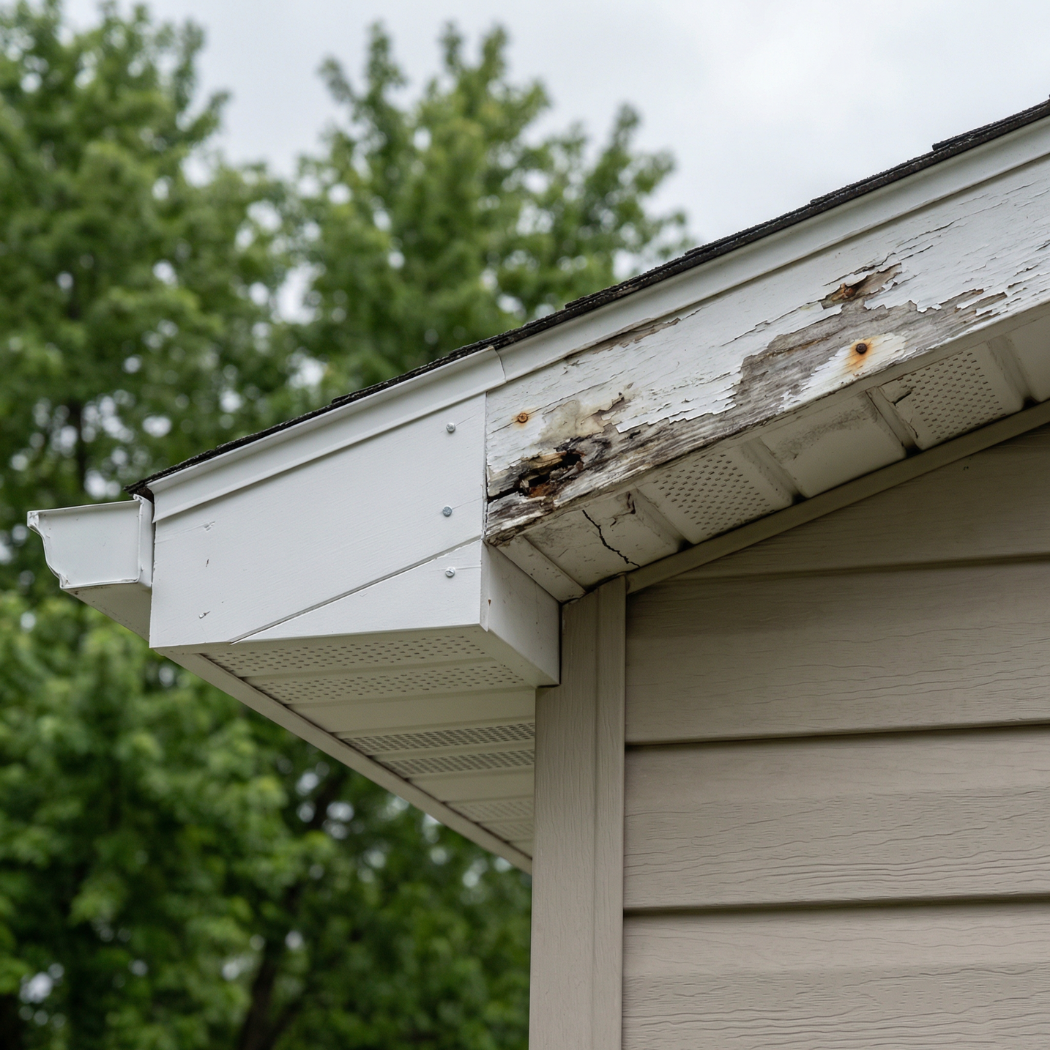
- Fascia boards deteriorate
- Paint peels on exterior surfaces
Real example: A Bolivar homeowner noticed paint peeling on their soffits in spring 2023. An inspection revealed severe condensation damage in the attic. Three rafters needed replacement along with 400 square feet of decking. Total cost: $11,200.
Energy Waste
Poor ventilation forces your HVAC system to work harder year-round:
| Ventilation Status | Summer Impact | Winter Impact | Annual Cost Increase |
|---|---|---|---|
| Adequate | Normal cooling load | Normal heating load | Baseline |
| Marginal | 10-15% higher AC use | 5-10% higher heating | $150-$300/year |
| Poor | 20-30% higher AC use | 10-15% higher heating | $300-$600/year |
| Failed | 30%+ higher AC use | Significant heat loss | $500-$900/year |
Mold Remediation
Mold growth from ventilation problems can cost $3,000 to $15,000 or more to remediate, depending on severity. This doesn’t include repairing the underlying damage or fixing the ventilation problem itself.
18 Warning Signs Your Ventilation Needs Attention This Spring
Knowing what to look for helps you catch problems early. These signs indicate your ventilation system may be struggling.
Signs in Your Attic (10 Warning Signs)
Schedule a professional roof assessment if you notice any of these:
- Excessive heat when you enter the attic on a mild day
- Damp or compressed insulation that feels wet or matted
- Dark staining on roof decking visible from below
- Moisture or water droplets on rafters or decking
- Frost on the underside of the roof in winter
- Visible mold growth on any surface
- Musty or moldy smell when you enter
- Rusted nail tips poking through the decking
- Dark streaks on rafters indicating water flow
- Orange resin beads on wood surfaces (sign of moisture stress)
Signs on Your Roof (3 Warning Signs)
These exterior signs often indicate ventilation problems:
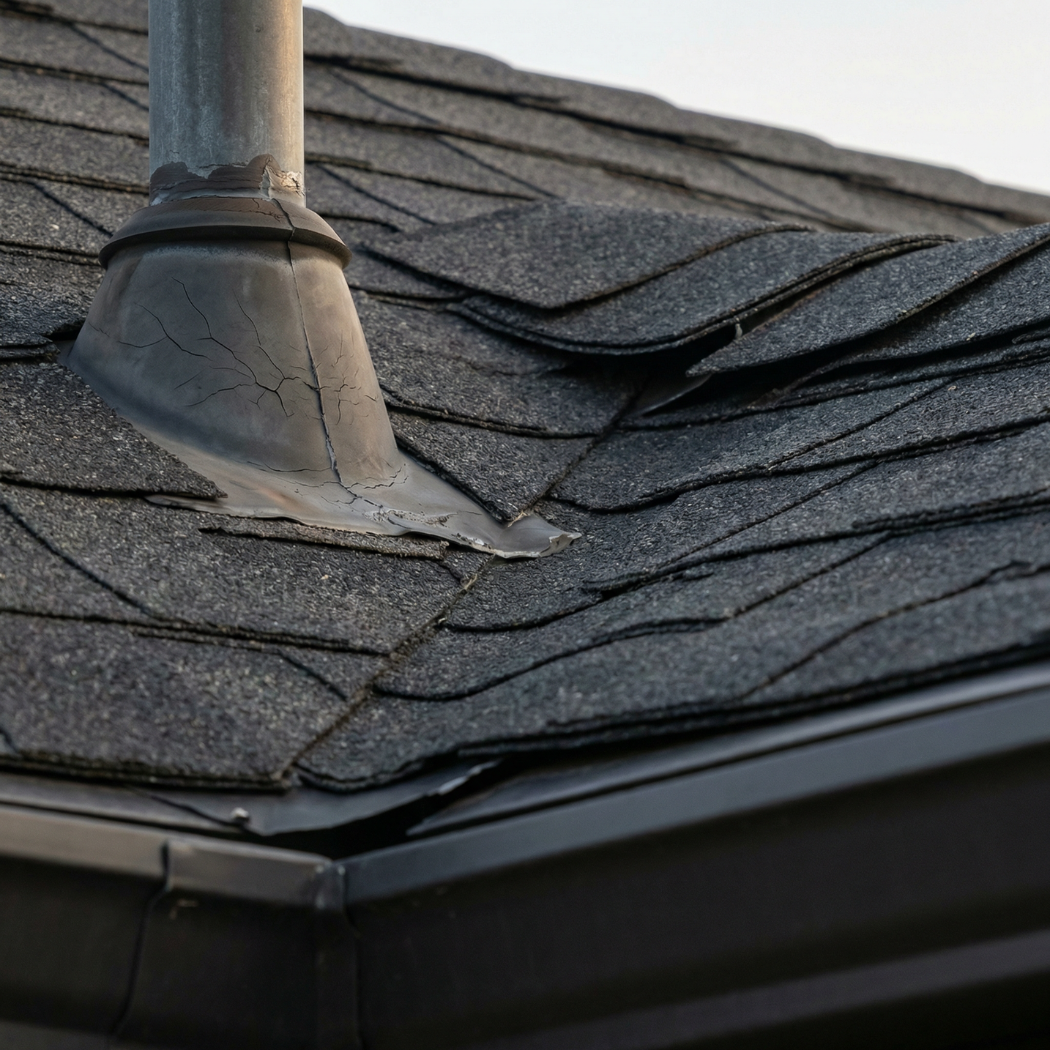
- Curling or buckling shingles that warp at the edges
- Premature shingle aging compared to neighbors’ roofs of similar age
- Ice dams in winter that form along roof edges
Signs Inside Your Home (5 Warning Signs)
These interior symptoms can trace back to ventilation issues:
- Peeling paint or wallpaper on ceilings or upper walls
- Warped or buckled wood trim near the ceiling
- Musty odors in rooms directly below the attic
- Temperature fluctuations with hot spots in certain rooms
- High energy bills that keep increasing without explanation
How Ventilation and Insulation Work Together
Many homeowners think more insulation is always better. But ventilation and insulation must be balanced for optimal performance.
The Partnership Principle
Insulation slows heat transfer between your living space and attic. Ventilation removes heat and moisture that accumulate despite insulation.
Too much insulation without adequate ventilation traps moisture. Too much ventilation without adequate insulation wastes energy. You need both working together.
Common Mistakes to Avoid
Blocking soffit vents with insulation: When adding attic insulation, contractors sometimes cover soffit vents. This cuts off air intake and cripples the entire system. Insulation baffles should keep vents clear.
Sealing the attic too tightly: Air sealing between your living space and attic is good. But the attic itself needs to breathe. Don’t seal vents or block airflow paths.
Mismatched intake and exhaust: Installing a powerful ridge vent without adequate soffit intake creates negative pressure that can pull conditioned air from your home through ceiling fixtures.
| Component | Function | Spring Check |
|---|---|---|
| Soffit vents | Air intake | Verify not blocked by insulation or debris |
| Ridge vent | Primary exhaust | Check for damage or blockage |
| Insulation | Heat barrier | Confirm baffles keep vents clear |
| Vapor barrier | Moisture control | Verify intact on warm side of insulation |
Common Ventilation Problems and How to Fix Them
Understanding typical issues helps you communicate with contractors and make informed decisions.
Blocked Soffit Vents
Problem: Insulation, debris, paint, or wasp nests block air intake.
Symptoms: Hot attic, moisture problems, ice dams.
Solution: Clear blockages, install insulation baffles, add soffit vent screens.
Cost: $200 to $600 for professional cleaning and baffle installation.
Inadequate Exhaust
Problem: Not enough ridge vent or box vents to move air out.
Symptoms: Extreme attic heat, moisture accumulation at the peak.
Solution: Add ridge vent (best) or additional box vents.
Cost: $400 to $1,200 depending on roof size and access.
Mixed Vent Types
Problem: Different exhaust vent types (ridge, box, turbine, powered) compete instead of cooperate.
Symptoms: Short-circuiting where air enters one exhaust vent and exits another without moving through the attic.
Solution: Standardize on one exhaust type, typically ridge vent.
Cost: $600 to $1,500 to remove old vents and install continuous ridge vent.
Vapor Barrier Issues
Problem: Missing, damaged, or incorrectly placed vapor barrier allows excessive moisture into the attic.
Symptoms: Severe condensation even with adequate ventilation.
Solution: Install or repair vapor barrier on the warm side of insulation.
Cost: $300 to $800 depending on attic size and accessibility.
Real example: A homeowner in Ozark had a ridge vent and soffit vents installed during a previous roof replacement. But the contractor never cleared insulation blocking the soffits. For three years, the family dealt with ice dams and attic moisture. A thorough property evaluation revealed the blocked vents. A $400 fix solved problems that had caused $2,800 in previous repairs.
Spring Ventilation Checklist: What to Do Now
Use this checklist to assess your ventilation system this spring. You can complete the exterior items yourself. Attic inspection is safer with a professional.
Exterior Inspection (DIY Safe)
Complete these checks from the ground or a stable ladder:
- [ ] Soffit vents visible: Look under your roof’s overhang. You should see vents every few feet.
- [ ] Vents appear clear: No paint, debris, or wasp nests blocking openings.
- [ ] Ridge vent intact: Check the roof peak for continuous ridge vent or evenly spaced box vents.
- [ ] No sagging or damage: Look for any section where the roof line dips or materials appear damaged.
Attic Inspection (Consider Professional Help)
If you can safely access your attic:
- [ ] Temperature reasonable: On a 60-degree day, the attic should feel slightly warmer than outside, not hot.
- [ ] No musty smell: Fresh air movement should prevent stale odors.
- [ ] Insulation dry and fluffy: Wet or matted insulation indicates moisture problems.
- [ ] Daylight visible at soffits: Looking toward the eaves, you should see light coming through vents.
- [ ] No condensation: Check rafters and decking for moisture droplets or staining.
- [ ] No mold: Look for any dark growth on wood surfaces.
When to Call a Professional
Contact Roov for a ventilation assessment if:
- You notice any warning signs from the 18 signs listed above
- Your roof is more than 10 years old and ventilation has never been evaluated
- You’ve experienced ice dams in winter
- Energy bills have increased without explanation
- You smell musty odors in your home
- Your attic feels extremely hot even on mild days
Frequently Asked Questions
Q: How do I calculate how much ventilation my attic needs?
A: Measure your attic’s square footage (typically your home’s footprint). Divide by 150. That’s the total square feet of ventilation needed. Split this 50/50 between soffit intake and ridge or box vent exhaust. A 1,500 square foot attic needs 10 square feet total: 5 at the soffits and 5 at the ridge.
Q: Can I have too much ventilation?
A: In most cases, more ventilation is better than less. However, ventilation must be balanced. Too much exhaust without enough intake can actually pull conditioned air from your home. The 1/150 rule with 50/50 balance provides optimal performance.
Q: How much does it cost to fix ventilation problems?
A: Minor fixes like clearing blocked soffit vents cost $200 to $600. Adding ridge vent runs $400 to $1,200. Complete ventilation system upgrades range from $1,000 to $3,000. Compare this to mold remediation ($3,000 to $15,000) or premature roof replacement ($8,000 to $25,000).
Q: Will improving ventilation really lower my energy bills?
A: Yes. Proper ventilation can reduce summer cooling costs by 10 to 30 percent by keeping attic temperatures manageable. In winter, it prevents moisture buildup that degrades insulation effectiveness. Most homeowners see $150 to $400 annual savings.
Q: Can I add ventilation myself?
A: Clearing blocked soffit vents is a DIY project for handy homeowners. Adding new vents requires cutting into your roof, which risks leaks if done incorrectly. Professional installation ensures proper flashing and sealing.
Q: My home has a powered attic fan. Is that enough?
A: Powered fans can help but aren’t ideal as the only exhaust method. They can create negative pressure that pulls conditioned air from your home if intake is inadequate. Federal attic ventilation guidelines recommend balanced intake and exhaust ventilation for optimal roof performance. Ridge vents with proper soffit intake provide continuous, passive ventilation without electricity costs.
Q: How do I know if blocked soffit vents are causing my problems?
A: Enter your attic on a sunny day and look toward the eaves. You should see daylight through the soffit vents. If you see insulation or darkness, the vents are blocked. Also check from outside for visible obstructions.
Q: Does my roof warranty require specific ventilation?
A: Most shingle manufacturers require adequate ventilation (typically the 1/150 rule) to maintain warranty coverage. GAF, CertainTeed, and Owens Corning all include ventilation requirements in their warranty terms. According to roof moss removal guidelines, proper ventilation also helps prevent moisture-related growth that voids warranties.
Q: We just bought our home. How do we know if ventilation is adequate?
A: Request a professional roof inspection that specifically includes ventilation assessment. Home inspectors often provide only a cursory check. A qualified roofer can calculate whether your system meets the 1/150 requirement and identify any deficiencies.
Q: Should I address ventilation before or after a roof replacement?
A: Always address ventilation during roof replacement. This is the most cost-effective time to upgrade because the roof is already being worked on. If your roof has years of life remaining, fixing ventilation issues now protects your existing investment.
Key Takeaways
- Spring timing is critical: Winter moisture trapped in your attic activates mold growth as temperatures rise. March and April offer the ideal window for inspection and repairs.
- The 1/150 rule: One square foot of ventilation per 150 square feet of attic space, split 50/50 between intake and exhaust.
- Balance matters: Intake and exhaust vents must work together. Blocked soffits render even the best ridge vents ineffective.
- Watch for warning signs: Musty odors, peeling paint, high energy bills, and attic moisture all indicate ventilation problems.
- Prevention costs less: A $600 ventilation upgrade prevents $8,000+ in mold remediation and structural repairs.
- Professional assessment: If your home is more than 10 years old or you notice any warning signs, schedule an inspection before summer heat arrives.
Ready to Protect Your Home This Spring?
Your roof’s ventilation system works silently in the background, but its failure creates expensive, disruptive problems. Spring is your opportunity to ensure everything is working properly before summer heat and humidity make conditions worse.
Roov has helped hundreds of Branson, Battlefield, and Southwest Missouri homeowners identify and fix ventilation problems before they cause serious damage. As a GAF Master Elite contractor, we understand how ventilation affects every component of your roofing system.
Here’s what we offer:
- Free, no-pressure ventilation assessments
- Honest evaluation of whether repairs are needed
- Expert installation that meets building codes and manufacturer requirements
- Warranty protection through proper system design
If storm damage contributed to your ventilation problems, we can help you work through the insurance process to cover repairs.
Ready to get started? Contact us today:
???? Call: 417-370-1259
✉️ Email: [email protected]
???? Visit: roovmo.com
We serve Lebanon, Aurora, and all of Southwest Missouri. Schedule your free spring ventilation check today. Don’t let hidden moisture problems become expensive repairs.
Disclaimer: Attic inspection involves working in confined spaces with potential hazards including unstable footing, exposed nails, insulation fibers, and extreme temperatures. If you are uncomfortable accessing your attic, lack proper safety equipment, or have any health concerns, contact a professional. Roov is not responsible for injuries resulting from DIY inspection attempts.
Roov | Roofing with a Purpose | Serving Southwest Missouri