
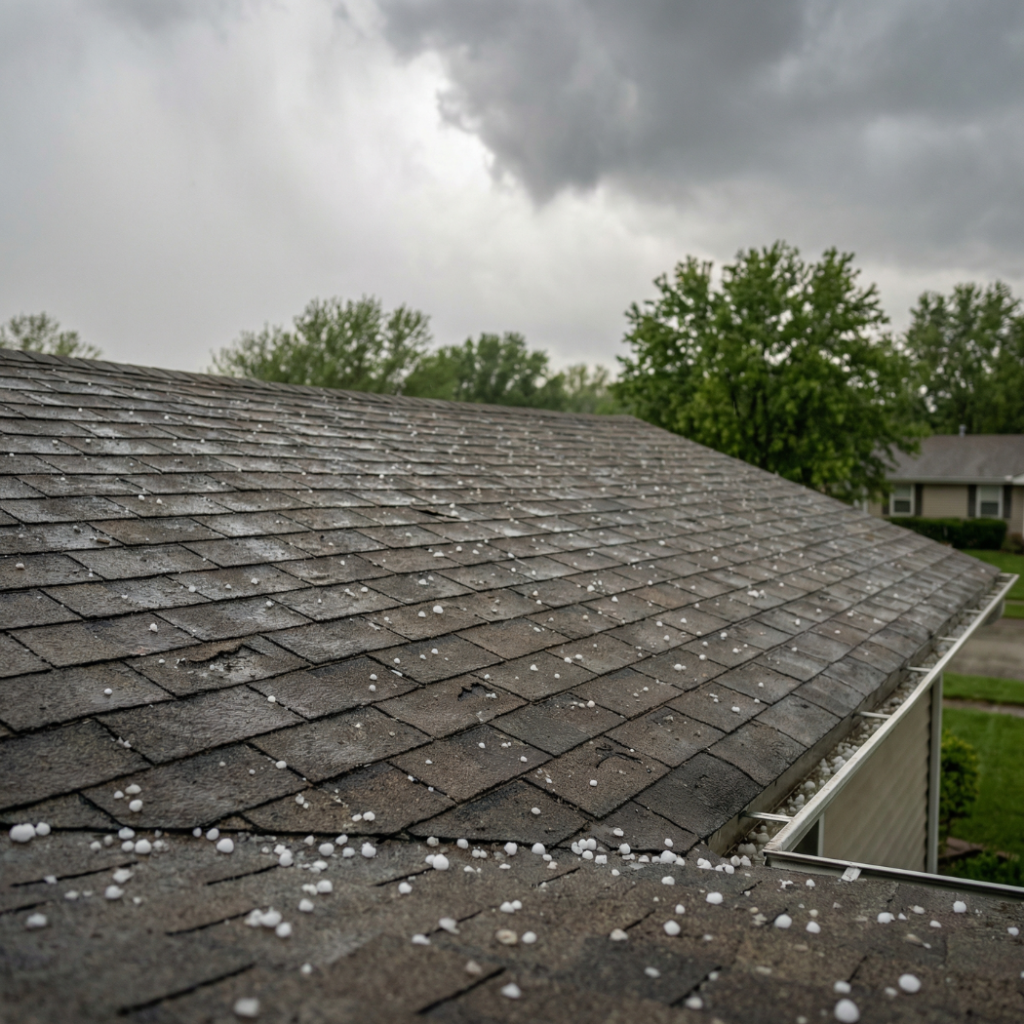
The storm rolled through Nixa and the hail was loud enough to wake you up. The next morning you walked outside, saw the dents on the car and the marks on the gutters, looked up at the roof, and thought it looked fine. No shingles in the yard, no water dripping from the ceiling. So you went back inside and moved on with your week. This guide is for that exact situation: the roof that looks okay from the driveway but absorbed a hailstorm, and the question of how long you can actually count on it before the hail damage you cannot see becomes the leak you cannot ignore.
TLDR: Hail damages asphalt shingles in ways that often have no visible effect for months or years. The real risk is not the immediate aftermath but what Missouri’s heat cycles and freeze-thaw winters do to bruised shingles over the next one to three seasons. Whether your hail-damaged roof Nixa MO has two years of life left or is ready for immediate replacement depends on hail size, your roof’s age, and the extent of functional damage, none of which you can assess from the ground. A free inspection from Roov gives you a real answer instead of a guess.
The gutters told you something happened. So did the window screens, the AC unit fins, and the car hood. But the shingles looked intact, and without water coming in, you assumed the roof was fine. Most homeowners in Christian County make this same assessment after every significant hailstorm. Most of them are working from incomplete information.
Understanding why requires knowing what hail actually does to asphalt shingles and how that damage evolves over time through Missouri’s specific climate patterns.
Hail Just Hit Nixa: What Most Homeowners Notice and What They Miss
When hail strikes a roof, the visible aftermath depends heavily on hail size. Stones under three-quarters of an inch in diameter tend to leave no obvious marks on shingles visible from the ground. Stones at one inch and above begin to leave impact craters with granule loss that trained inspectors can identify from the roof surface. Stones at one and a half inches and above can crack shingles, fracture the fiberglass mat beneath the surface coating, and loosen the self-seal strip that holds shingles down in wind.
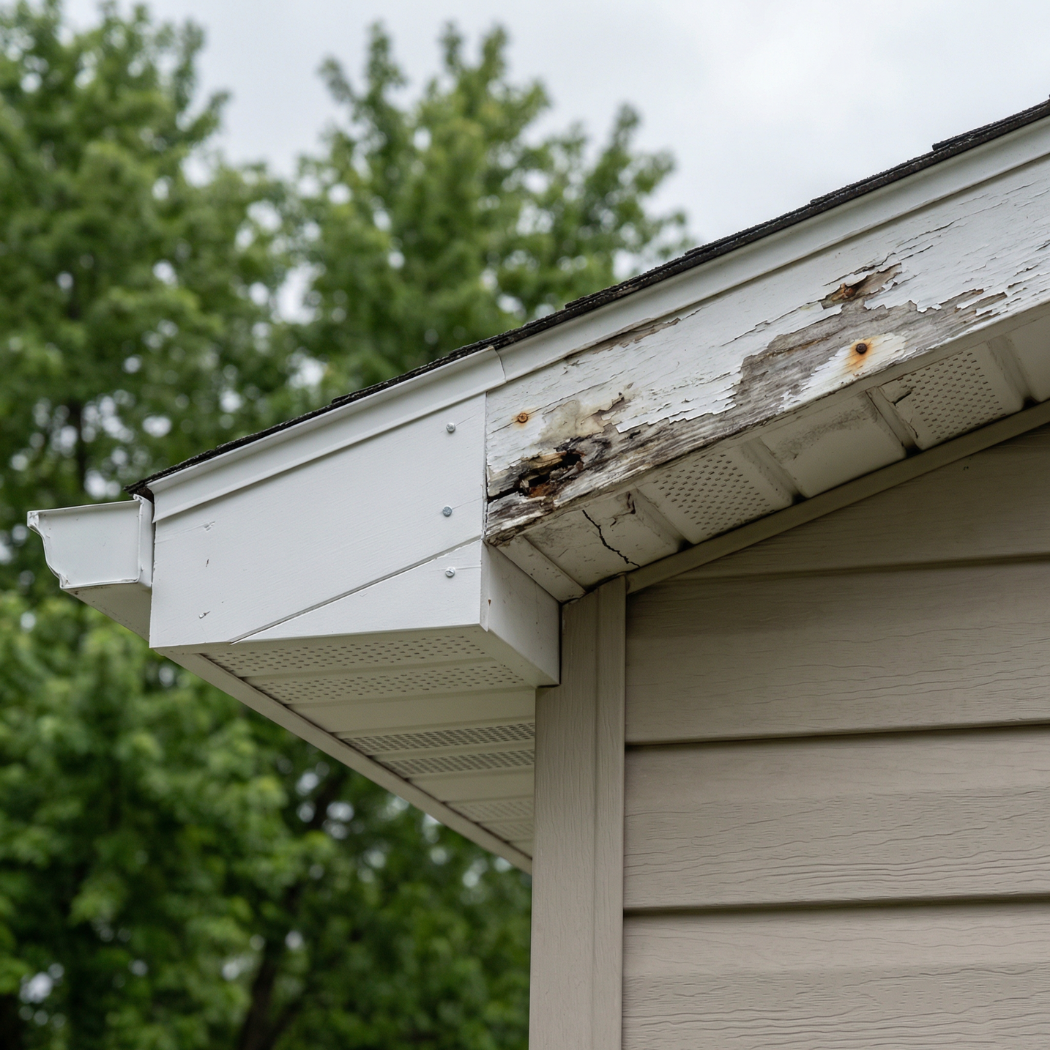
What most Nixa homeowners see after a storm: dented aluminum gutters, dings on the AC condenser fins, marks on the wooden deck furniture, and maybe some marks on the fascia. None of that directly shows them what happened on the roof surface six feet above them, because they cannot safely get up there to look, and even if they could, the most significant hail damage is not visible to untrained eyes. The mat fractures and hairline cracking that shorten a roof’s remaining life most dramatically do not look like anything distinguishable from normal shingle texture unless you know exactly what you are looking at.
The dangerous assumption is that an absence of visible damage from the driveway means the roof survived intact. Gutters dented by hail are soft aluminum. Shingles are also softer than they appear, and the damage to them does not look like a dent. It looks like a bruise, a darkened circle of disturbed granules where the impact knocked the protective coating loose and fractured the asphalt or fiberglass below it.
Pro tip: Check the soft metals on your home after any significant hailstorm. Gutters, downspouts, AC condenser fins, and metal fascia caps all show impact marks more visibly than shingles. If those surfaces show clear denting, your shingles absorbed the same energy. The gutters are telling you something the shingles are hiding.
What Hail Does to Asphalt Shingles Over Time
A standard asphalt shingle has three functional layers working together: a fiberglass mat at the core for strength, an asphalt coating for waterproofing, and a granule surface that protects the asphalt from UV degradation. All three can be compromised by hail in different ways, and the effects compound over time as Missouri’s climate works on the damaged areas.
According to GAF’s technical guidance on hail damage to shingles, granule loss from hail is more than a cosmetic issue. When granules are knocked away from impact points, the underlying asphalt is directly exposed to UV radiation. That asphalt then ages significantly faster than the protected areas around it. Fractures in the fiberglass mat may not be immediately visible but can manifest as cracks and tears at a later point as the shingles wear. The self-seal strip that binds shingle courses together can also loosen, making those shingles vulnerable to wind uplift in the next storm.
| Hail Effect | What It Looks Like on the Shingle | Short-Term Result | Long-Term Risk Without Repair |
|---|---|---|---|
| Granule loss at impact points | Dark circular spots with exposed black asphalt visible | Reduced UV protection at those points immediately | Accelerated aging and cracking at impact sites; cracked asphalt opens to water within one to three seasons |
| Bruised or fractured fiberglass mat | Soft or spongy feel when pressed; hairline cracks not visible without close inspection | Structural weakness at impact points below the surface | Cracks widen with freeze-thaw cycles; water entry begins well before full shingle failure is visible |
| Cracked surfacing radiating from impact | Visible radial cracks on shingle face, sometimes only on the underside | Direct UV and water exposure at the crack | Water wicks under shingle at the crack; underlayment saturation; deck damage |
| Loosened self-seal strip | Not visible from the ground | Shingle can lift in wind events that would not have moved it before | Wind-driven rain enters under unsealed shingles in subsequent storms |
The following table gives a practical reference for the range of hail sizes common in Southwest Missouri and their typical effect on standard asphalt shingles at different stages of age.
| Hail Size | Visual from Ground | Typical Effect on Newer Roof (Under 10 Years) | Typical Effect on Older Roof (15+ Years) |
|---|---|---|---|
| Under 3/4 inch | Rarely visible on shingles | Cosmetic at most; minor granule disturbance | May produce functional mat damage on brittle older asphalt |
| 3/4 to 1 inch | Granule disturbance visible at close range | Cosmetic to minor functional depending on density | Functional damage likely; mat bruising probable across multiple squares |
| 1 to 1.5 inch | Impact craters with clear granule loss visible from ladder | Functional damage confirmed in most inspections; mat fractures likely | End-of-life condition likely; full replacement warranted in most cases |
| Over 1.5 inch | Visible cracking, obvious impact marks from ground possible | Significant functional damage; self-seal strip loosening common | Immediate replacement warranted regardless of remaining rated age |
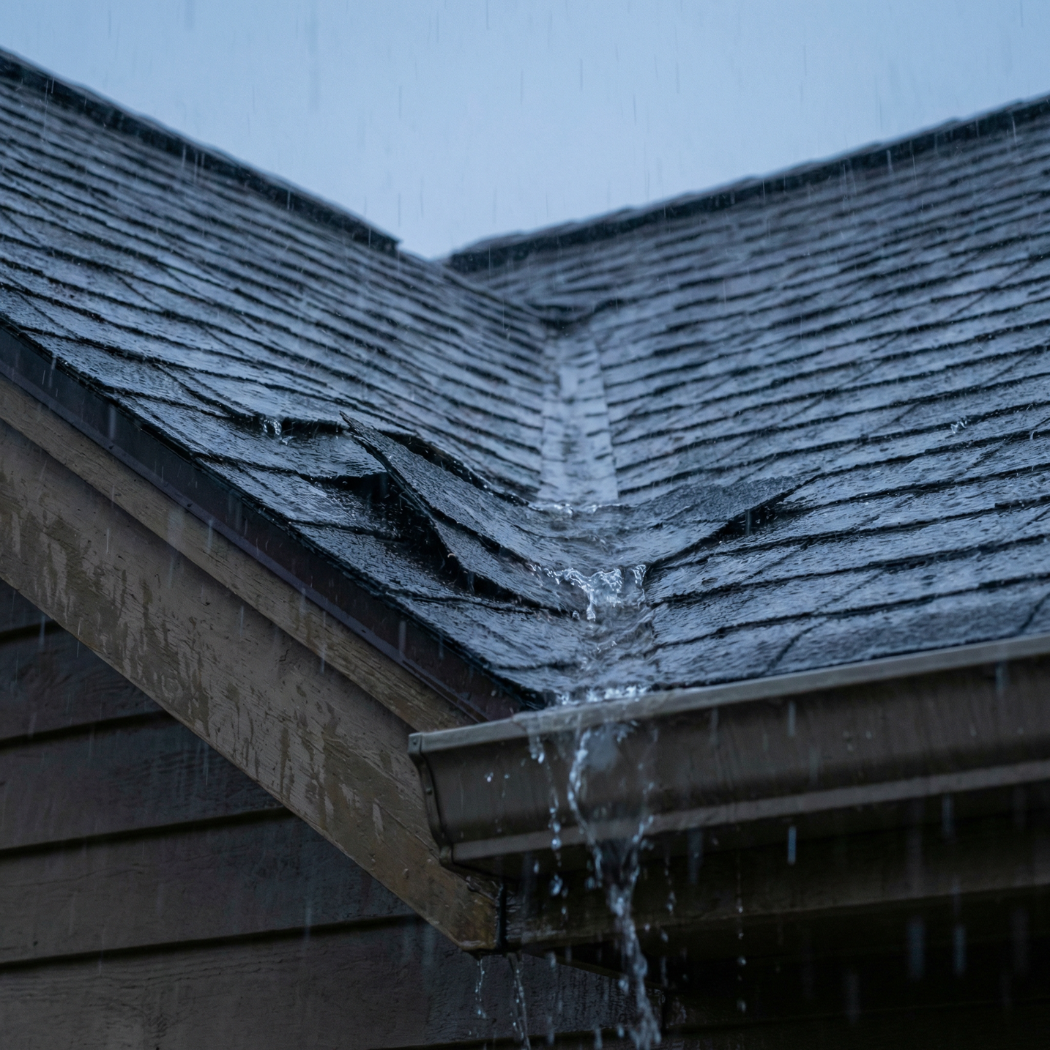
Understanding this table explains why a roof can absorb hail in May and not show a ceiling stain until the following February. The bruised mat cracks slightly during the first summer heat cycle. That crack opens a bit more during the first winter freeze. By spring, water is entering at what was once just a soft impact mark.
Pro tip: The timeline from hail impact to active leak varies based on hail size, the age of the shingles, and how many freeze-thaw cycles the bruised areas go through. A roof with fresh damage in a mild autumn may not show interior effects for 18 months. That is not a sign the damage is minor. It is a sign you have a narrowing window to document and address it.
Roof Age and Condition Before the Storm Matter Enormously
The same hailstorm does not affect every roof the same way. A ten-year-old roof with eight years of life remaining that takes minor hail damage is a different situation than a nineteen-year-old roof taking the same storm. The older roof was already near the end of its rated life; any functional damage accelerates a timeline that was already short.
This is the central concept that most homeowners miss when they look at their roof after a storm: the question is not just “did the hail damage it” but “how much did the hail shorten what was already left.” A professional hail inspection evaluates both the damage from the storm and the pre-storm condition of the roof to give a realistic picture of remaining useful life.
Consider three scenarios Roov encounters regularly across Southwest Missouri:
A newer roof, installed within the last five to seven years, with light hail impact showing cosmetic granule loss at scattered impact points but no mat fracture. This roof likely still has meaningful life ahead of it. An inspection documents the condition and establishes a baseline, but immediate replacement may not be warranted if functional damage is minimal.
A ten-to-fifteen-year-old roof, partway through its expected life, with moderate hail impact including bruised mat areas across multiple squares. This roof had remaining life before the storm but that remaining life has been meaningfully shortened. The inspection determines whether the damage crosses the threshold for functional impact and whether an insurance claim is appropriate.
An older roof, eighteen to twenty-two years old, already showing signs of age like granule loss from normal wear and brittle shingles, that takes the same storm the newer roof survived without significant damage. Here, hail that would have been minor on a newer roof becomes the event that ends the roof’s serviceable life. The age plus the damage together justify replacement, and the claim documents both the pre-existing age context and the storm’s contribution to the end-of-life determination.
Pro tip: Roov assesses both the hail damage and the pre-storm condition in every inspection. If a roof was five years from its natural end and hail accelerated that timeline, the inspection makes that case clearly. If a newer roof with minimal functional damage can still live out most of its rated life, Roov says that too. Honest guidance about roof lifespan after hail Missouri homeowners can actually use requires both pieces of information.
How Long Can a Hail-Damaged Roof Actually Last in Missouri?
There is no universal answer to this question, and anyone who gives you a precise number without inspecting the roof is guessing. What can be said with confidence is based on damage severity, roof age, and what Missouri’s climate does to compromised shingles.
The table below shows the range of outcomes Roov typically identifies during hail inspections across Christian County and the surrounding region.
| Damage Assessment | Roof Age at Time of Storm | Realistic Remaining Life After Hail | Key Risks to Monitor |
|---|---|---|---|
| Cosmetic only: granule loss at scattered impacts, no mat fracture | 5 to 10 years old | May be able to complete most of remaining rated life | Granule-depleted spots age faster; recheck after each subsequent storm |
| Functional: mat bruising confirmed in multiple squares, some granule exposure | 5 to 10 years old | Remaining life shortened; 2 to 5 years depending on extent | Bruised mat areas will crack with freeze-thaw; active leak risk by year two or three |
| Functional: mat bruising confirmed in multiple squares | 12 to 18 years old | End-of-life condition; replacement warranted within current season | Each subsequent storm increases leak risk; insurance claim window applies |
| Significant: widespread mat fracture, cracked surfacing, loosened seal strips | Any age | Replacement warranted; do not carry through another winter | Immediate leak risk in next significant rain or first hard freeze |
The critical variable in this table is Missouri’s climate. Southwest Missouri puts specific stresses on bruised shingles that accelerate the damage timeline compared to milder climates. Summer heat pushes temperatures on dark asphalt shingle surfaces well above ambient air temperature, causing repeated thermal expansion. Winter freeze-thaw cycles, especially the kind Southwest Missouri experiences in February and March with multiple thaw-freeze transitions in a single week, work repeatedly on any hairline crack in the mat. These are not mild conditions for a compromised shingle to withstand.
According to Owens Corning’s guidance on hail damage and shingle performance, shingles that have lost granules face a higher risk of failing prematurely, and not all hail damage is visible on the surface. Some impacts cause splits that are only apparent when the underside of the shingle is examined. This is precisely why a professional inspection looking at the correct indicators is the only reliable basis for estimating remaining life after a hailstorm.
Pro tip: Hail impacts follow the physics of the storm, which means they tend to concentrate on slopes facing the primary wind direction during the storm. After any hailstorm, look specifically at the south and west slopes of your home since most Missouri spring storms approach from the south-southwest. Concentrated impact marks on one slope that look minimal on another is a normal pattern, not evidence that only the impacted side needs attention.
Pro tip: A roof that looks intact from the driveway the day after a storm may look meaningfully different twelve months later, after one full cycle of Missouri summers and winters. If you are trying to decide whether to document damage and file a claim, the right time to make that decision is weeks after the storm, not after that first post-storm winter has done its work.
Insurance Claim Windows and Why Waiting Too Long Can Cost You
Missouri homeowners have a general window to file property insurance claims after a storm event, but the specific deadline depends on your policy’s language. Many policies require notice of a loss within a year of the event. Some impose shorter reporting windows in their specific policy language. Missouri’s statute of limitations on insurance contract claims is longer, but your specific policy terms control when you must report the damage, and those terms can be significantly shorter than the statutory limit.
The practical implication for a hail-damaged roof in Nixa that is not yet leaking: the clock on your ability to file a claim starts on the day the storm occurred, not on the day the leak appears. A homeowner who notices no interior damage in May 2025 but develops a ceiling stain in January 2027 may be completely outside the claim window for the storm that caused the underlying shingle damage. At that point, the repair cost comes entirely out of pocket, and the opportunity to document and claim the functional damage that the hail caused has closed permanently.
The documentation argument for filing promptly is equally important. An inspector who arrives two weeks after a storm can point to specific fresh impact marks, correlate them with the soft metal evidence on the gutters, and reference the verified storm date and hail size from National Weather Service Springfield records. An inspector who arrives two years later is trying to document storm damage that has now been further altered by two additional years of weathering. The damage may still be attributable to the original storm, but establishing that attribution becomes harder with every passing season.
This does not mean every hailstorm requires an immediate claim. Minor cosmetic impacts on a newer roof may not meet the threshold for a functional damage claim, and filing a claim that gets denied or that results in a premium increase for minimal payout is not always the right move. The correct sequence is: get a professional inspection to assess actual damage, receive an honest assessment of whether the damage is functional or cosmetic, and then make an informed decision about whether a claim is appropriate.
Roov’s position on this is straightforward: we inspect the roof honestly, document what we find, and tell you what the damage actually is. If the evidence supports a claim, we help you document it. If a newer roof with cosmetic impacts does not support a claim, we say that too, with specifics. No claim padding, no manufactured damage, and no pressure.
Pro tip: Before the inspector arrives, note whether your neighbors have had their roofs inspected or are in the process of filing claims. If multiple homes on your block have confirmed hail damage from the same storm, that neighborhood pattern supports your own documentation and is often referenced during the adjuster review.
Pro tip: If a significant hailstorm hits your area, schedule an inspection within 30 days regardless of whether you see any interior effects. The inspection establishes the condition immediately after the storm, which is your strongest documentation position for any future claim or repair decision. Inspections cost nothing with Roov.
Pro tip: Check your specific homeowners policy for the notice requirement, not just the general state statute. “Notice within a reasonable time” language in many policies has been interpreted by insurers to mean weeks to months, not years. Your policy documents are the controlling source, not general rules.
Real Missouri Examples of Hail and Roof Lifespan
Real example: A homeowner in Nixa had a one-inch hailstorm come through in April. The gutters showed clear denting and the AC fins were marked, but from the driveway the roof looked untouched. The homeowner did not schedule an inspection. Two and a half years later, after two full Missouri winters, ceiling stains began appearing in the northeast bedroom directly below an area that had received the most hail exposure. Roov inspected and found mat fractures across the northeast slope that were clearly hail-related and had progressed through multiple freeze-thaw cycles. The claim filing window under the policy had closed. The replacement was out of pocket.
Real example: A homeowner in Ozark called Roov three weeks after a spring storm that produced three-quarter-inch hail. The inspection found scattered cosmetic granule loss with no mat fracture confirmed across the test squares. The roof was seven years old with a remaining rated life that gave it meaningful runway. Roov documented the condition, noted it as cosmetic-only damage, and advised monitoring rather than immediate replacement. The homeowner filed the documentation with their insurance company to establish the storm-date condition record but did not pursue a claim. Two years later, a subsequent storm produced larger hail, the roof was reinspected, and functional damage in that second event supported a successful replacement claim.
Real example: A homeowner in Republic had an eighteen-year-old roof that took a storm with hail averaging one to one and a quarter inches. The inspection found widespread mat bruising, cracked surfacing at multiple impact points across three slopes, and loosened seal strips on the south-facing section. The roof was already near the end of its rated life and the storm had clearly advanced it to a functional end-of-life assessment. Roov documented everything, helped the homeowner file a claim with accurate storm-date records and inspection photos, and the replacement was approved and completed before the following winter. That homeowner did not spend the next two winters wondering when the first leak was going to appear.
Real example: A homeowner in Springfield called Roov after seeing a Roov truck in their neighbor’s driveway following a storm. They had not planned to get an inspection. Their roof was twelve years old. The inspection found functional mat bruising across two slopes, consistent with the hail size documented for that storm event. Without the neighbor’s trigger, this homeowner would likely have let the claim window run while the damage progressed. The claim was filed, approved, and the homeowner replaced the roof for the cost of the deductible.
Real example: A homeowner in Marshfield had a newer roof, installed four years prior, that took a storm with hail up to one inch. The inspection found cosmetic granule loss at scattered impact points with no mat fracture confirmed. Roov was honest: this roof did not meet the threshold for a functional damage claim, and filing would likely result in denial while raising premiums. The documentation was kept for reference and the homeowner monitored the roof through the next season. No claim was filed, and the roof continued performing normally.
How a Professional Hail Inspection Actually Answers the “How Long” Question
When Roov performs a hail inspection, the process is more systematic than a visual walkthrough. The inspection follows a documented protocol that produces defensible conclusions about functional versus cosmetic damage.
On each slope, inspectors evaluate test squares, typically two-foot-by-two-foot sections, counting the number of confirmed functional hail impacts within each square. The threshold for functional damage varies by insurer and adjuster methodology, but the standard professional reference point is typically eight or more functional impacts per ten-foot-by-ten-foot section. Functional impacts are distinguished from cosmetic impacts by the presence of mat bruising or fracture, not just surface granule disturbance.
Soft metal evidence is evaluated at every accessible point: gutters, downspouts, fascia caps, AC unit fins, pipe boot base flanges, ridge vent caps, and flashing metal. The pattern, density, and size of dents on these surfaces corroborates the hail size and intensity assessment for the storm, which is important context for the claim documentation and for the adjuster’s review.
The inspection also assesses the pre-storm condition of the shingles: existing granule loss patterns from normal aging, any prior repair areas, shingle brittleness consistent with age, and any previous impact marks from earlier storm events that can be distinguished from the current storm’s damage.
From all of that, Roov delivers a written Roof Condition Report with photographs of test squares, soft metal evidence, specific impact points, and a plain-English conclusion about what the damage means for remaining roof life. That conclusion falls into one of three categories: the roof has primarily cosmetic damage and can be monitored, specific repair areas can address localized functional damage, or the roof has sustained functional damage that advances it to an end-of-life condition consistent with a full replacement claim. For the full guide to storm damage assessment and claims in Missouri, the documented inspection report is your strongest starting point regardless of which conclusion applies to your roof.
Pro tip: Keep a simple record of every significant storm that affects your area. Write down the date, any hail reports you heard about, and any visible exterior effects like gutter dents or marks on outdoor furniture. This record becomes useful evidence if a later inspection needs to attribute damage to a specific event rather than general aging.
Pro tip: Ask your inspector specifically about the test square methodology and what count of functional impacts was found. A professional hail inspection should be able to give you specific numbers, not just a general “looks like hail damage” conclusion. Those specifics are what make a claim documentation stand up to adjuster review.
Pro tip: The inspection also tells you about the condition of your pipe boots
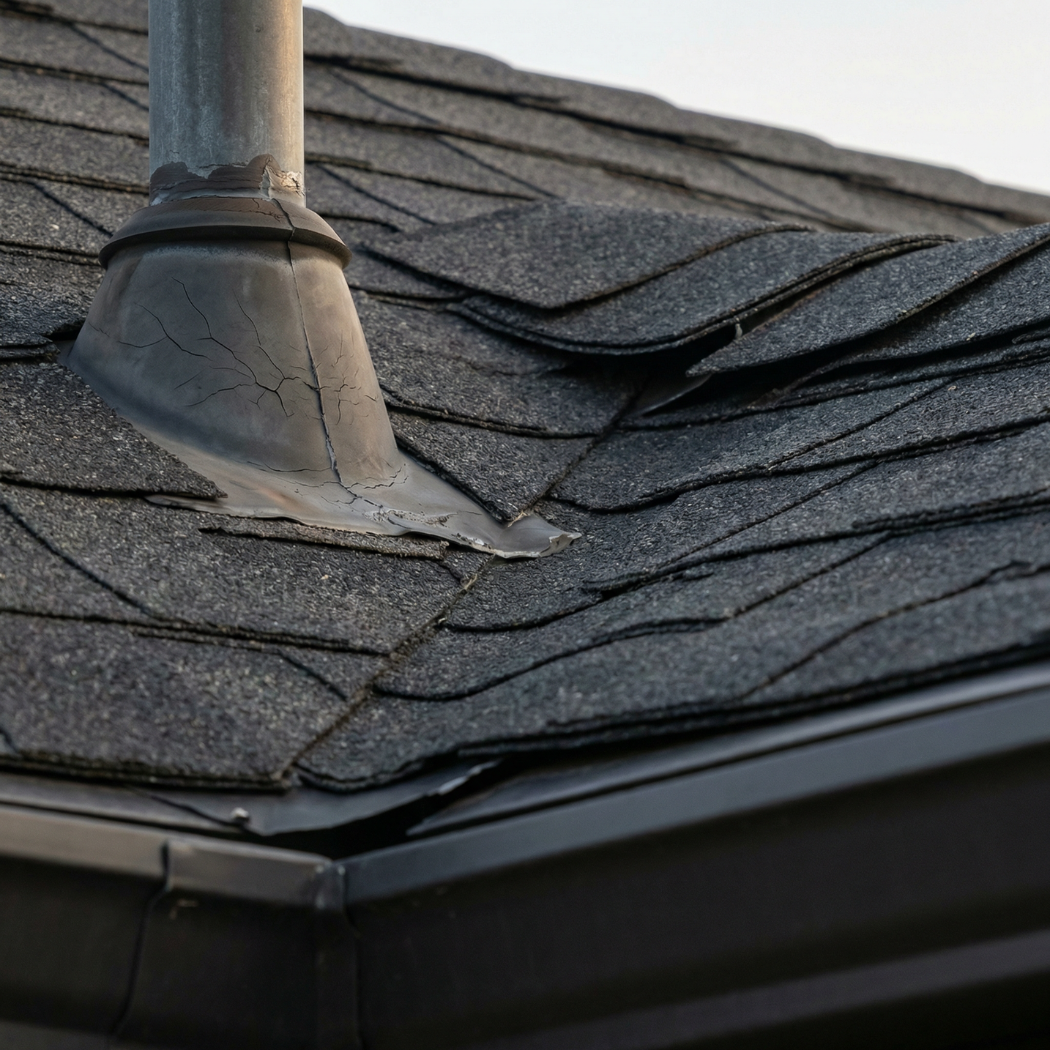
Pro tip: Hail storms do not just damage shingles. A thorough inspection after hail also covers the ridge cap shingles, which sit at the highest and most exposed point; the pipe boot collars, which are rubber and crack more easily under hail impact than metal; and the flashing metal at all chimneys and wall transitions. A claim that documents only shingle damage while missing these components is often incomplete., ridge caps, and flashing at every penetration point. These accessories show hail damage more clearly than shingles in many cases, and their condition is part of the complete damage picture that supports or clarifies the shingle assessment.
The inspection findings and their implications for your specific roof produce one of the following conclusions, which drives the claim and repair decision.
| Inspection Conclusion | What It Means | Recommended Action | Claim Appropriate? |
|---|---|---|---|
| Cosmetic damage only | Granule disturbance without mat involvement; roof function not compromised | Document and monitor; recheck after next significant storm | Generally no; insurer may deny cosmetic-only claims |
| Minor functional damage: isolated squares | Mat bruising confirmed in limited areas; rest of roof in reasonable condition | Targeted repair to affected sections; document for future reference | Depends on policy terms and number of impacted squares |
| Functional damage: multiple slopes | Mat fractures confirmed across significant portion of roof; remaining life shortened materially | File claim; replacement warranted before next winter | Yes, with proper documentation from inspection |
| End-of-life functional damage | Widespread mat fracture, cracked surfacing, loosened seal strips; roof cannot reliably perform its function | Immediate replacement; claim should be filed promptly | Yes; strongest claim position is documented early |
Frequently Asked Questions
Q: How do I know if hail actually shortened my roof’s remaining life? The only reliable way to know is a professional inspection using the test square methodology described above. From the ground, you can look for granule loss visible as darker circular patches on the shingle face, dents on soft metals that confirm hail size and intensity, and any visible cracking. But the mat fractures and bruising that most directly shorten roof life are not visible from the ground and require close-up inspection by someone who knows what to look for. An honest inspection report tells you whether functional damage occurred and gives you a realistic range for remaining life given the storm’s impact and your roof’s age.
Q: Can my roof have hail damage even if I do not see any leaks? Yes, and this is the most important concept in this entire article. Hail damage that shortens roof lifespan often produces no leak for one to three years following the storm. The bruised mat areas and exposed asphalt from granule loss create vulnerability that Missouri’s heat cycles and freeze-thaw winters then exploit progressively. By the time a ceiling stain appears, the damage has been working for multiple seasons and the claim window for the original storm event may have already closed.
Q: Will my insurance company pay if my roof is not leaking yet? Most standard Missouri homeowners policies cover sudden storm damage regardless of whether leaks have appeared yet. The threshold is functional damage to the shingles, meaning damage that compromises their ability to protect the roof, not damage that has already produced visible interior effects. This is why a professional inspection immediately after a storm, which documents functional damage before leaks occur, is the correct sequence for a legitimate claim.
Q: Does small hail matter or only large hailstones? Hail size matters, but smaller hail is not automatically harmless. Three-quarter-inch hail on a newer roof may produce primarily cosmetic effects. The same three-quarter-inch hail on a fifteen-year-old roof with already-brittle asphalt may produce functional mat damage that the older material could not withstand. The National Weather Service in Springfield defines severe thunderstorms as producing hail one inch or larger, but damage inspectors regularly find functional impacts from sub-severe-size hail on older roofing systems. Roof age and pre-storm condition determine whether a given hail size produces cosmetic or functional results.
Q: Can hail damage void my shingle manufacturer warranty? Manufacturer warranties for asphalt shingles typically cover manufacturing defects, not storm damage. Hail damage is generally a separate matter addressed through homeowners insurance, not the shingle warranty. However, if a hail event damages a roof system and the homeowner files an insurance claim that results in a full replacement, the new shingles come with a fresh manufacturer warranty from the installation date. That is one of the practical reasons that addressing a legitimate end-of-life hail claim promptly is financially advantageous.
Q: How soon after hail should I have my roof inspected? Within 30 days of the storm is the practical guidance. This allows time for the storm to be documented in weather records, gives the roof surface time to settle, and keeps you well within any notice requirements under your policy while still having a fresh damage record. Do not wait for leaks to appear before scheduling the inspection. By then, the damage has progressed through one or more seasons and the documentation is harder to connect cleanly to the original storm event.
Q: What is the difference between functional and cosmetic hail damage? Functional damage is damage that impairs the roof’s ability to perform its waterproofing function, specifically mat fractures, deep granule loss exposing asphalt to UV, cracked surfacing, and loosened seal strips. Cosmetic damage is impact that changes the appearance of the shingles without compromising their protective function, typically superficial granule displacement without mat involvement. Some insurance policies exclude purely cosmetic damage from coverage. A professional inspection distinguishes between the two and documents which category applies to your specific roof.
Q: What happens if I completely ignore hail damage on my roof? The damage does not resolve on its own. Bruised mat areas crack with each freeze-thaw cycle. Granule-depleted spots age faster under UV exposure through every subsequent summer. Loosened seal strips allow wind-driven rain entry in the next storm season. The trajectory is toward progressive failure, with the timing depending on the severity of the original damage and your roof’s remaining age. When leaks eventually appear, they will likely be accompanied by deck damage and insulation saturation that adds repair scope. And if the storm that caused the original damage is outside the claim window by the time repair is needed, all of that cost is out of pocket.
Key Takeaways
- Hail damage is a lifespan issue, not just a leak issue. The most significant effect of a hailstorm on asphalt shingles is not the immediate aftermath but the accelerated aging that follows over subsequent seasons.
- Roof age before the storm determines the stakes. The same hailstorm is a minor cosmetic event on a five-year-old roof and a functional end-of-life event on a seventeen-year-old one. Both need a professional assessment.
- The no-leak period is not a safe period. Bruised shingles typically do not produce ceiling stains for one to three years. The gap between hail impact and visible leak is when the claim window is open and the documentation case is strongest.
- Claim windows are real and finite. Missouri policy language varies, but many policies require notice of loss within a year of the storm event. Waiting for leaks to appear before filing can permanently close the claim option.
- Ground-level assessment is not enough. Granule loss visible from the driveway is only the surface. Mat fractures, which most directly shorten roof life, require close professional inspection to identify and document.
- Honest documentation comes before filing. The correct sequence is inspection, assessment, documentation, then a decision about whether a claim is appropriate. Not every hailstorm produces a claimable roof, and Roov will tell you that if it applies to your situation.
- Cosmetic versus functional damage is a meaningful distinction. Professional inspection tells you which category your roof falls into, which determines both the claim decision and the realistic remaining life estimate.
Hail Hit Your Neighborhood? Find Out What It Did to Your Roof.
The driveway assessment is not enough. Roov serves Nixa and all of Christian County, along with Ozark, Springfield, Republic, Marshfield, and communities across all eight counties of Southwest Missouri. Every free inspection after a hailstorm includes a full test-square evaluation, soft metal assessment, and a written roof inspection report with photographs and a plain-English conclusion about what the damage means for your roof’s remaining life.
Call 417-370-1259 or schedule your free hail inspection online.
Roov | Roofing with a Purpose | Serving Southwest Missouri